Inside Denver Zoo: A Century Without Bars
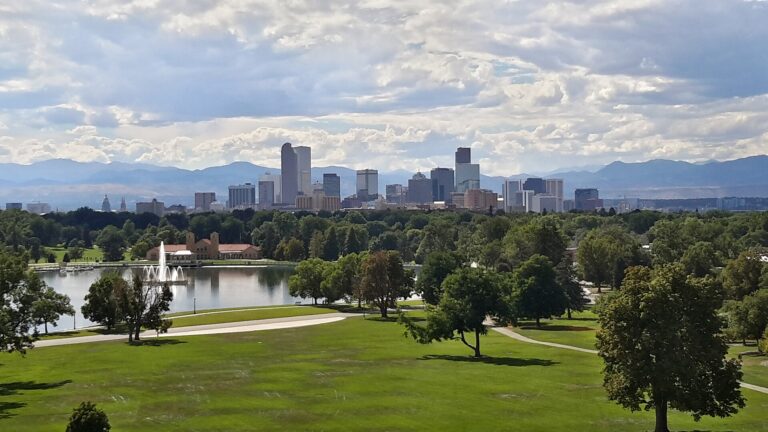
In the middle of Denver, Colorado, an 80-acre stretch of green that was for a long time just City Park now holds one of the most quietly influential animal collections in the country. The Denver Zoo did not start as a landmark. It started as a gift.
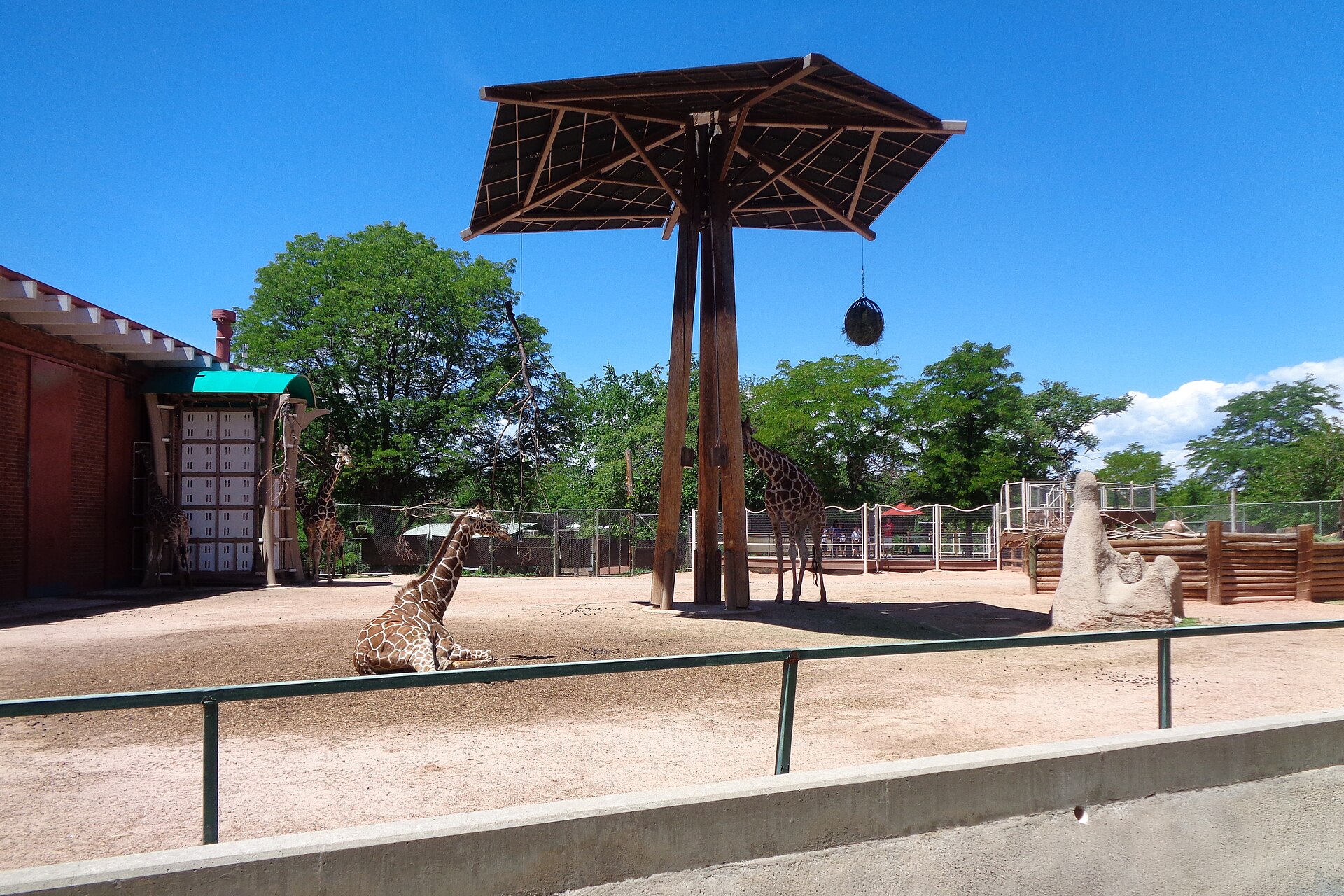
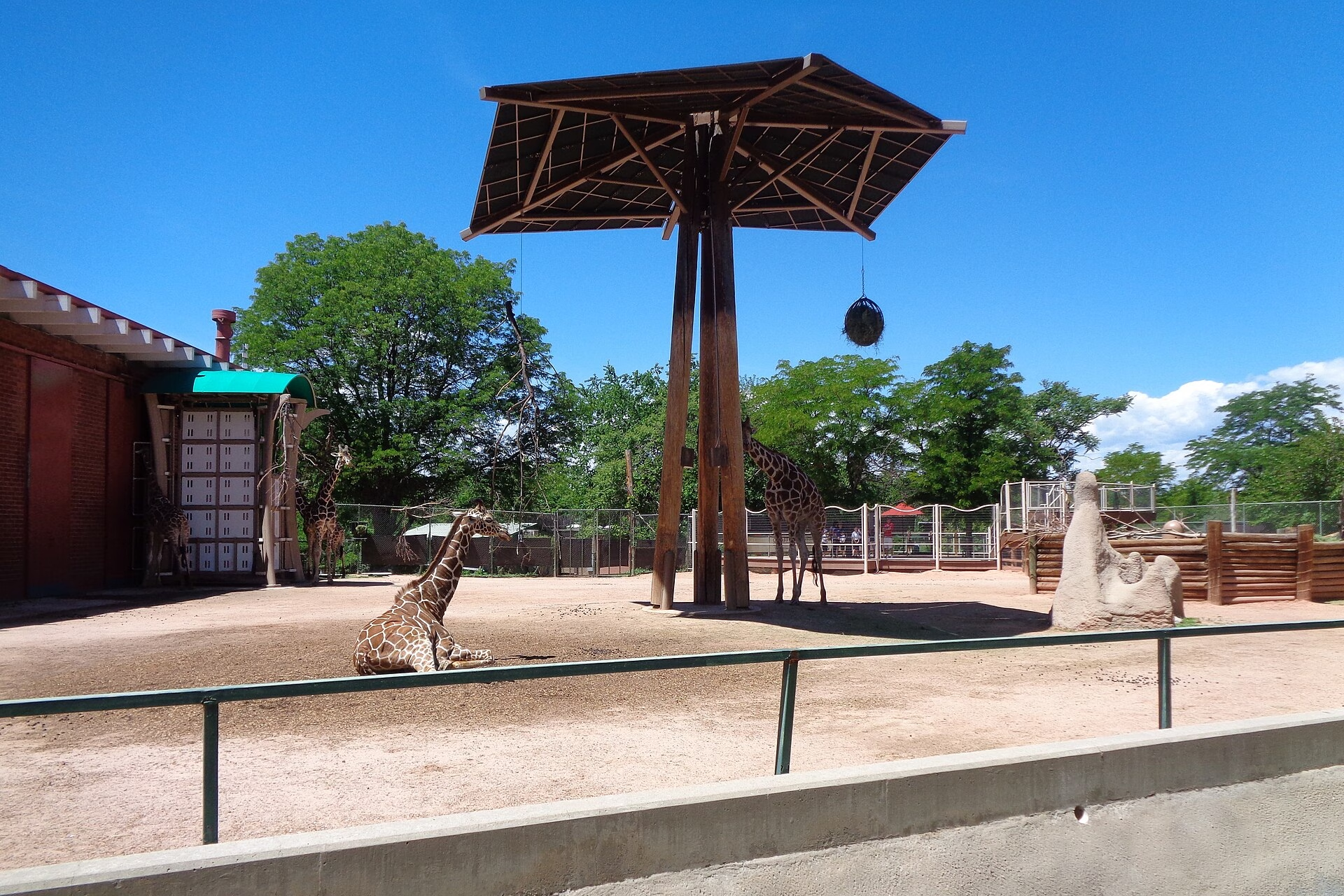
The enclosure in the photo is one of the easiest to spot from the main paths: a wide, sunlit yard where a handful of giraffes move through the day, a wooden feeding tower rising over sandy ground, and a short green rail that keeps visitors at a careful distance without ever feeling like a cage. That gap – the sense that something is close but no longer anything is set between you and it – is the whole idea at the heart of the place.
A century without bars
The first story of the zoo is the smallest one. In 1896 an orphaned black bear cub named Billy Bryan, after the statesman of the day, was given to the mayor of Denver as a present. Billy was the beginning. By the turn of the century the grounds were filled out with monkeys, elk, bison and birds, but the collection still read as a menagerie rather than a zoo.
The change of philosophy came in 1918, when the zoo opened Bear Mountain. Its landscape designer carried over an idea pioneered by the German landscape architect Carl Hagenbeck: animals are best seen at eye level, in settings that look like home, with neither bars nor lattice set between the visitor and the wild. Bear Mountain is today on the National Register of Historic Places, and the principle it carried – open enclosures instead of cages – spread across American zoos and far beyond them.
Beyond the classic layout
Today the grounds hold something on the order of 3,000 animals from more than 600 species, and the newer exhibits are built more around an animal’s instinct than around a visitor’s ticket. The 50 million dollar Toyota Elephant Passage, opened in 2012, spreads two miles of trails across ten acres where Asian elephants, greater one-horned rhinos and Malayan tapirs all move through a landscape designed to feel like a real East Asian village. Down at Predator Ridge, a five-acre recreation of the African savanna rotates African lions and spotted hyenas between enclosures so that each group scents a fresh territory day by day. The mesh-tented Primate Panorama gives apes and monkeys a tall, open world of their own, and 1993’s Tropical Discovery added a steamy, open-air house of fish, amphibians, reptiles and invertebrates.
Worth the detour
Denver Zoo is one of Colorado’s most-visited cultural attractions, and it runs every day of the year rather than only in the warm months. It is small enough that a full day there feels both manageable and rich at the same time, and it sits in the City Park and downtown corridor in a way that makes it one of the more convenient of a city’s great natural-history escapes. It is at 2300 Steele Street, Denver, Colorado 80205, operated by the Denver Zoological Foundation. The zoo’s own website carries current hours and pricing.
Whatever you come for, there is usually one thing you leave with: the feeling that the gap you keep measuring between yourself and the animals is closing, not the other way around.