Denver, Colorado: The Mile High City
Denver is the capital and largest city of Colorado, and by official designation one of the strangest setups in the American West: a consolidated city and county, sitting on a high plain at the base of a mountain range visible for nearly 140 miles.
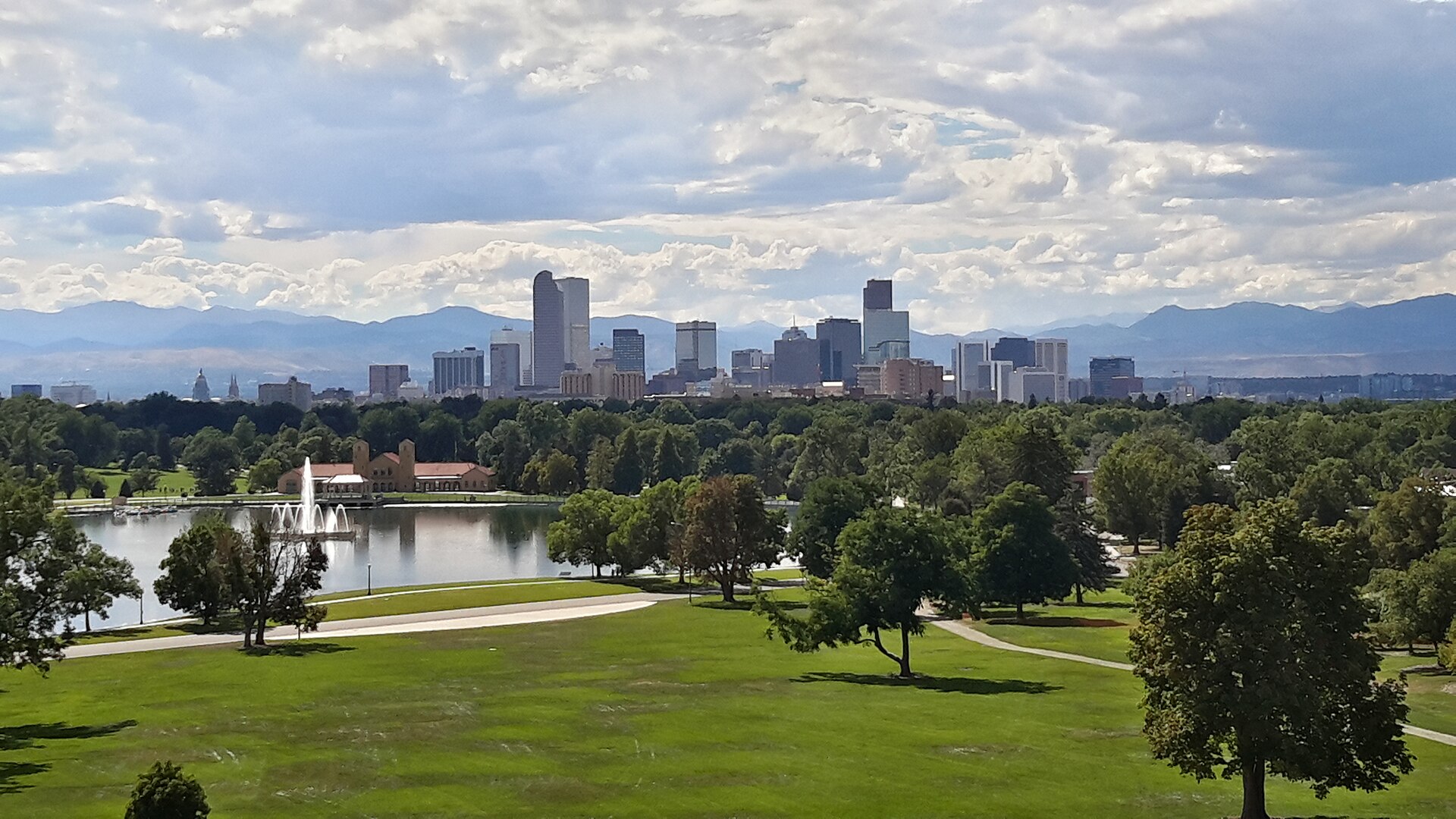
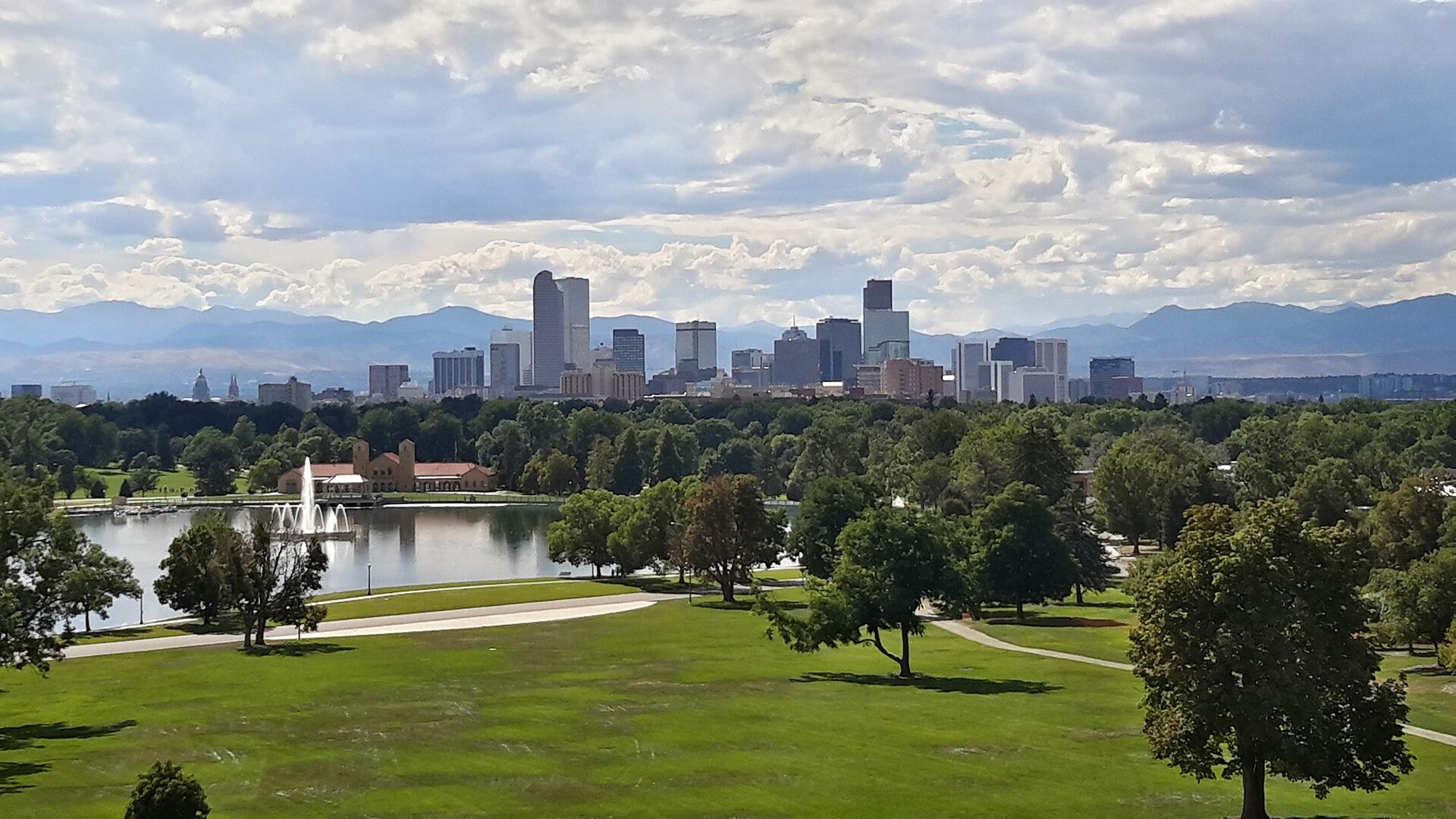
The view runs across City Park, past the downtown skyline, to the Front Range of the Rocky Mountains on the horizon.
The Mile High City
The nickname is accurate. Denver’s official elevation is exactly one mile above sea level — 5,280 feet (1,609 meters) — a fact marked by a benchmark on the 13th step on the west side of the Colorado State Capitol. The surface runs roughly 5,130 to 5,690 feet across the city, but the official figure is the rounded mile, and it has stuck. It is also one of the driest large cities in the United States: a semi-arid climate with frequent clear skies and an unusually high count of sunny days.
A young city with an old-sounding name
Founded in 1858 during the Pikes Peak Gold Rush, Denver grew fast from a frontier mining camp on the South Platte River into the principal commercial and transportation hub of the Colorado Front Range. The name honors James W. Denver, the governor of the Kansas Territory at the time — a flattering act of political courtship, though he had already left the territory before the name was settled.
Where it sits
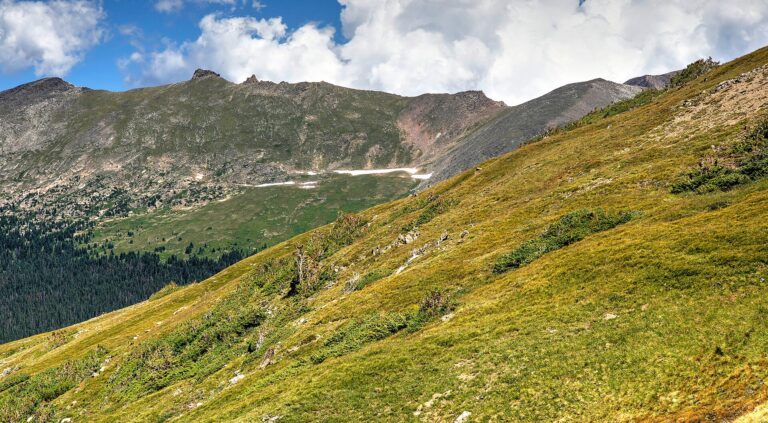
Denver rests on the western edge of the High Plains, some twelve miles east of the foothills. The 105th meridian west of Greenwich — the longitudinal reference for the U.S. Mountain Time Zone — passes directly through Denver Union Station. Behind the flatness of the plains the Rockies rise abruptly; Colorado has around 54 peaks above 14,000 feet, Pikes Peak the tallest at 14,115 feet, and roughly 200 named peaks are visible from the city.
What Denver has going for it
- Union Station, a restored 1880s railroad hub that reopened in 2014, anchoring the city’s transit and cultural core.
- A short drive to Rocky Mountain National Park, the Red Rocks Amphitheatre, and the front range ski country.
- The state’s capital and economic center — the old nickname “Wall Street of the West” nods to that role — alongside a strong technology and biotech scene out toward Boulder.
- Coors Field, home of the Colorado Rockies, whose outfield frames the mountains.
Coming from somewhere else
The altitude does matter. People moving in from humid climates are told to drink more water than usual, and the dry air can catch travelers off guard. Winters bring snow and cold snaps, but on the high plains the sun does much of the work.
The short version
Denver is a city that is near the mountains rather than in them — a high, dry, plains-side gateway to the Rockies, and a capital that a 19th-century gold rush built. Home to about 715,000 people at the 2020 census and roughly 3.1 million across the metro area, it is small enough to feel walkable and large enough to be the economic center of a whole corridor.
Sources
- Denver — English Wikipedia
- Denver at a Glance — Visit Denver
- Hero image: Denver Colorado downtown, Zenhaus, CC BY-SA 4.0