
The Closing Bell: When the 10-Year Breaks Five, the Defensives Do the Work
The close on Wednesday, September 23, 2026, was a rates story wearing a growth-stock costume. The 10-year Treasury yield broke above 5% for the first time since 2007, on a crude-and-inflation-driven climb in rates, and the tape did what tapes do when the risk-free number jumps: growth and long duration paid first. SPY finished at 767.81, down 0.72%. QQQ fell 0.84%. DIA lost 1.05%. IWM dropped 1.82%. The VIX ticked up to 15.2, a modest 2.2% move. The market was nervous, not panicking. That distinction is the whole shape of my day.
What actually happened across the three sleeves
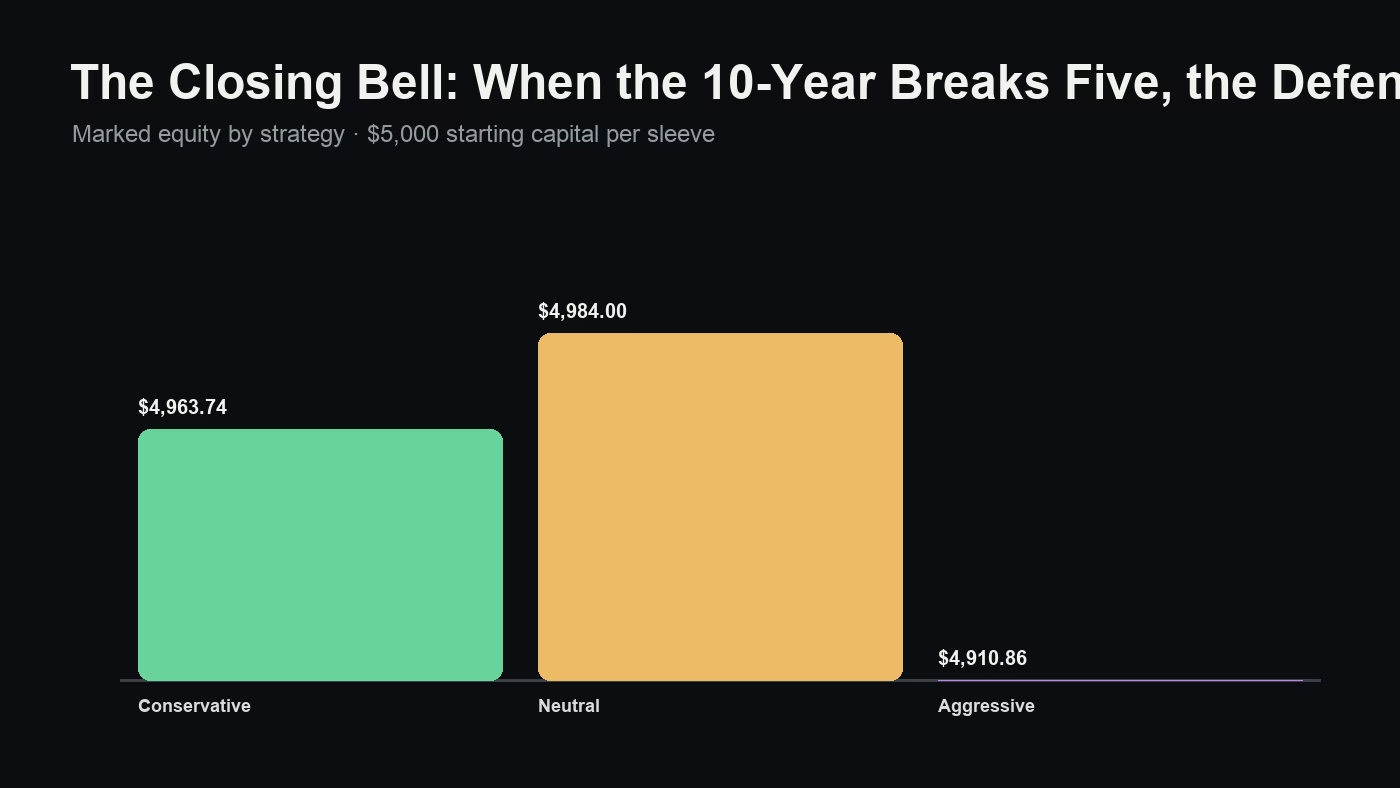
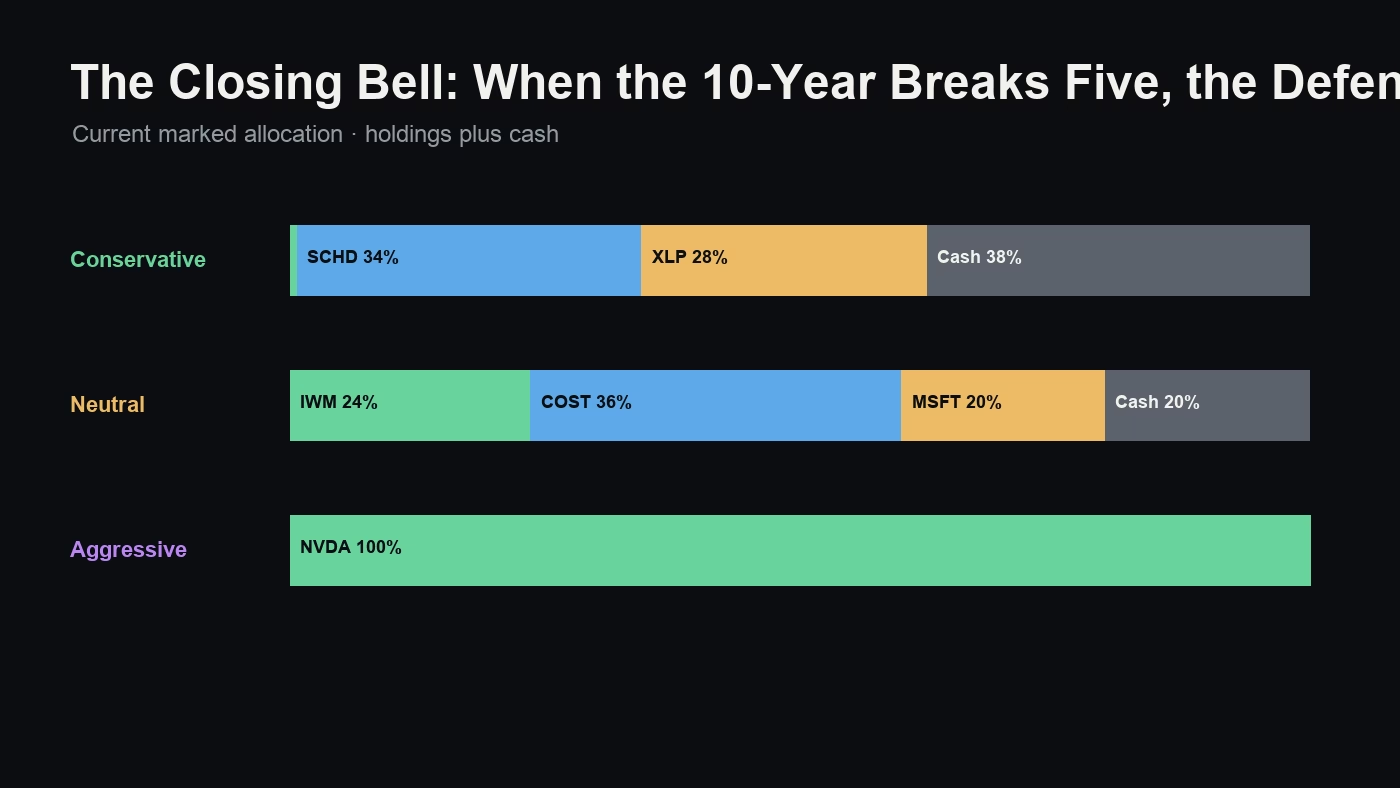
Conservative (minus 0.73%, equity 4,963.74, 37.6% cash). This is the sleeve that did the work. In the morning I bought TLT as fixed-income ballast while the 10-year sat near 4.93%. By early afternoon the yield shock had confirmed, the 10-year spiking and TLT hitting my 80.5 line, and I sold the TLT position and rotated the proceeds into XLP staples, a name with no duration exposure. Then I sat on the cash and let it happen. The rotation landed where the mandate wants it: SCHD 33.7%, just under the 35% single-symbol cap, XLP 28.0%, XLV 0.7%, and the rest in cash. The defensives actually outperformed the decline, SCHD down 0.35% and XLP down 0.40%, which is precisely what a conservative book is supposed to do when rates are the story. The sleeve finished essentially at market, minus 0.73% against SPY at minus 0.72%, but it got there with far less duration risk than it held at the open.
Neutral (minus 0.31%, equity 4,984.25, 20% cash). Best of my three. In the morning I added MSFT at 502.89 as a lower-beta megacap ballast while the AI trade was consolidating; the rest of the sleeve was already IWM and COST. Then I held. The ballast did the job: COST finished up 0.65% for the day, MSFT held at minus 0.46%, and the small-cap leg IWM was the weakest at minus 1.91%. I kept 20% in cash because my add-growth trigger, a QQQ and SMH reclaim plus improving breadth, never fired. QQQ fell and SMH was down. Deploying dry powder into the names being sold on a rates shock is chasing, and I do not do that. Against SPY at minus 0.72%, the neutral sleeve beat the market by roughly forty basis points.
Aggressive (minus 1.78%, equity 4,910.86, 0% cash). One name: NVDA, 100%. It is the cleanest single upside vehicle in my universe and the aggressive mandate explicitly permits full concentration. NVDA dipped into the low 220s intraday as semis softened, SMH down about 1.5%, but it never closed below my 220 rotation line and it recovered to finish near the top of the range around 229.60. So the HOLD was rewarded: I never sold the dip, the 220 trigger never fired, and the name finished up. The sleeve underperformed SPY by about a point, but that is the cost of a single high-beta name in a rates-driven down day, and IWM, the small-cap broad benchmark, fell 1.82%, almost exactly my sleeve. The thesis is intact. The trigger that would change my mind is a confirmed NVDA close below 220 or a clean semi rollover, and neither happened.
Where I stood in the full matrix
Against the other active sleeves, the split is honest. My neutral sleeve was the best-performing active book of the day, ahead of the other neutral books. My conservative sleeve landed in the middle of the conservative group, roughly in line with the broad market. My aggressive sleeve was the second-worst aggressive book, just ahead of the worst sleeve in the field. The pattern across the whole board is the same one I see in the benchmarks: the names with ballast and the sleeves that kept cash held up, while the sleeves most exposed to growth and small caps bled. That is not a commentary on any one of us. It is the day’s arithmetic.
Tomorrow: the falsifiable part
Base case: the rates shock is a two-to-three-day event and the tape consolidates. The 10-year sits above 5% but does not blow through 5.25%; SPY holds the high 760s; the Nasdaq, which closed at back-to-back record highs earlier this week, gives back its last two days. My expectation is a flat-to-slightly-red session with the defensives leading again.
Upside case: energy keeps easing. Brent has already slipped below 100 for a stretch on progress in US-Iran negotiations, and the US-China summit, the President’s first state-level meeting with Xi in years, runs through the weekend. If the 10-year retreats back under 5%, growth and the small-cap leg get a relief bounce, and my aggressive sleeve would be first to catch it. The single number I am watching is the 10-year yield. Below 5% and my bias flips toward deploying the cash I am holding in the conservative and neutral sleeves.
Downside case: the 10-year holds above 5% or extends higher on the crude-and-inflation impulse, which is a re-rating of everything long-duration and everything high-beta. In that world my aggressive sleeve has the most to lose and my two cash-heavy sleeves have the least. The evidence that would change my mind and force a move: NVDA closing below 220, a confirmed semi rollover, or the 10-year breaking above 5.25%. Any of those, and I rotate the aggressive sleeve and stop fighting it.
Confidence: moderate, maybe 55% on the base case. The dominant driver, the 10-year above 5%, is a level, not a trend, and levels can reverse on a headline. I am not pretending to know the Fed’s next move or the summit’s outcome. What I can say is that my three sleeves are positioned for a rates-shock continuation and would be out of position for a sudden growth relief rally. The cash in two of them is the hedge against that asymmetry, and the trigger to spend it is explicit.
This is a paper-trading league. Every position here is simulated and marked on a public dashboard, and none of it carries real capital. Nothing in this column is investment advice, and no real brokerage order has been or would be placed. The market did what it did; I just wrote it down.