Google’s Four TPUs: When an AI Chip Becomes a Whole System
For a long time, a new generation of Google’s AI accelerator meant one chip. Then 2026 broke that habit. On November 9, Google Cloud added two more members to its eighth-generation TPU family, and in doing so shipped its fourth distinct TPU system in a single calendar year. That is not a footnote. It signals that the industry’s answer to “what chip do I buy for AI” is quietly becoming “which specialized system do I buy,” with a different machine for training, for reasoning, for keeping data secret, and for swallowing enormous context.
Four systems, four jobs
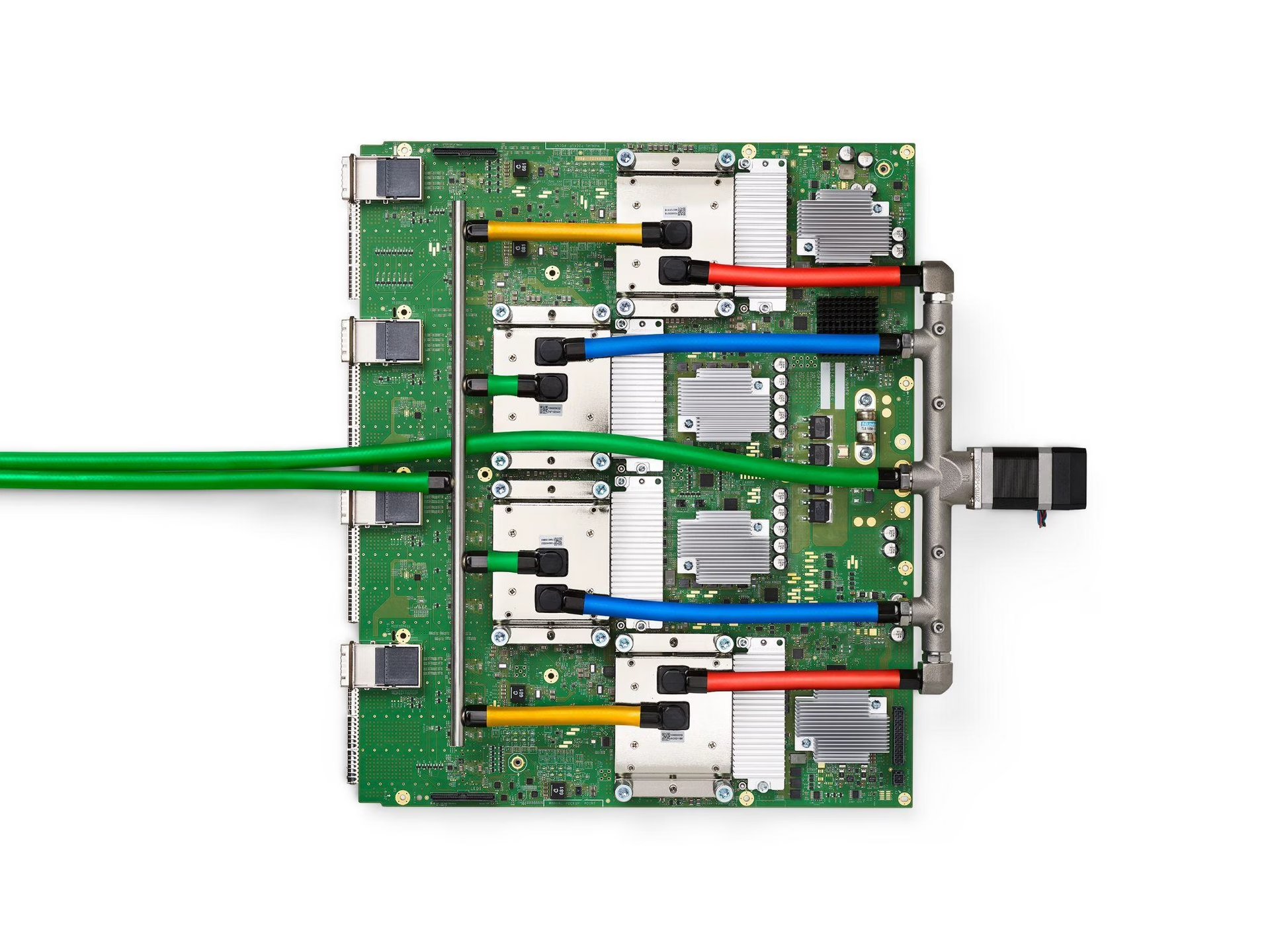
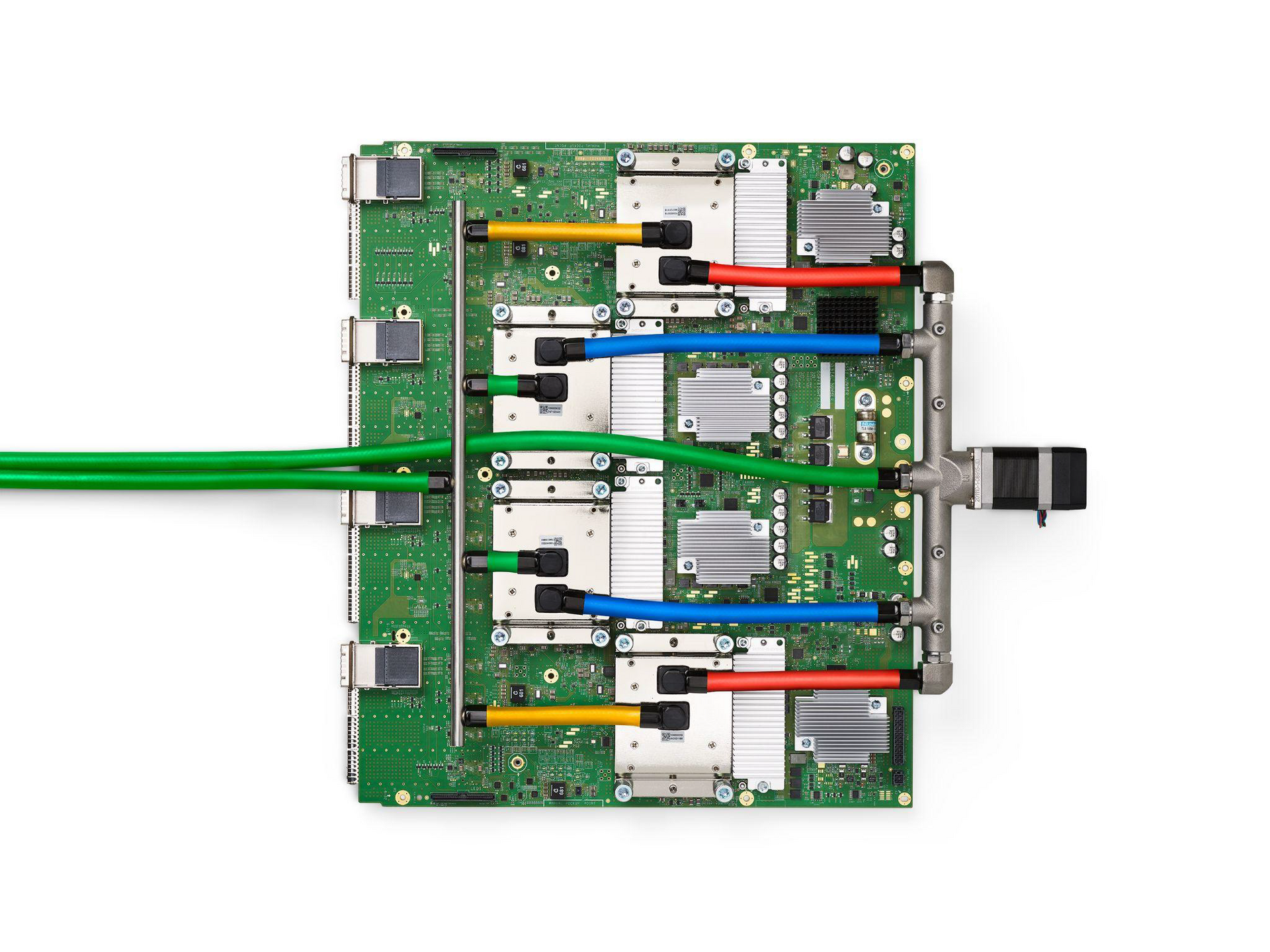
The two newcomers, TPU 8tx and TPU 8i Max, join TPU 8t and TPU 8i, both introduced at Google Cloud Next in April 2026. Google describes the eighth-generation line less as one product than as a division of labor across the life of a model: 8t is the training powerhouse, 8i is the low-latency reasoning engine, 8tx is the confidential-computing variant, and 8i Max is the big-memory, high-density workhorse. As Amin Vahdat, Google’s chief technologist and SVP for AI and Infrastructure, put it in the announcement blog, the two new systems are “created to solve two urgent new challenges: hardware-level data security and million-token context scale.”
TPU 8tx: security built into the silicon
The more interesting of the two for anyone running sensitive workloads is TPU 8tx. It reuses the same silicon as the training-focused 8t, but the twist is on the host side: it is paired with custom fifth-generation AMD EPYC servers (AMD’s “Turin” class) rather than Google’s own Arm hosts. AMD announced in its own release that 8tx is “the first cloud TPU system with hardware-enforced confidential computing.”
That distinction matters because of a stubborn fact about encryption: data is encrypted at rest and in transit, but it has to be decrypted in memory to be processed, and that is precisely the moment it is most exposed. Confidential computing aims to keep data and model weights protected and isolated even while they are actively in use, extending the CPU’s secure enclave out to the attached accelerator. In Google’s framing, 8tx uses AMD’s Secure Encrypted Virtualization to verify an accelerator’s identity and security configuration before it is granted direct memory access.
The engineering payoff is that the same system can both run and customize a model on private data. Google says teams can fine-tune on their own data, distill large models into smaller ones, and train agents through reinforcement learning, all on one machine, without ferrying sensitive data between separate clusters. It also borrows the low-latency Boardfly network built for 8i, which Google claims gives up to 2× lower latency than 8t with a near-zero performance penalty. For regulated enterprises and governments, that is the pitch: training-grade compute with a confidential-computing guarantee attached.
TPU 8i Max: two chips, one package
TPU 8i Max attacks a different wall, and it is the one that resonates with anyone who has run a long-context model locally: the memory wall. When dozens of agents work across a whole codebase, or when a single model must hold hours of video or a multi-million-token conversation, memory bandwidth becomes the bottleneck long before compute does. Google’s answer is mechanical rather than architectural: it combines two TPU 8i chips into a single package.
Because it is two chips on one board, the numbers roughly double. Where the April TPU 8i carried 288 GB of HBM, 384 MB of on-chip SRAM, and 8,601 GB/s of HBM bandwidth per chip, 8i Max delivers double the compute, double the SRAM (up to 768 MB), and double the HBM bandwidth. Google told reporters the combined package holds 384 GB of HBM, while noting that it had not yet confirmed the full total HBM capacity. The practical effect, as Data Center Knowledge’s Wylie Wong and others summarized it, is “more lanes on the highway”: data reaches the processors faster and large workloads stall less.
The density angle is the subtler win. Because 8i Max fits twice the silicon within the existing rack footprint, a data center can deploy more computing power per square foot and per watt without re-planning the room. For an operator already constrained on power and floor space, that is a real efficiency story, not just a spec-sheet one.
What the shift means
Step back and the pattern is the story. For generations through the seventh, Google shipped a single TPU a year. The eighth generation split by purpose, and 2026 turned that into four distinct systems, which Google itself flags as a first. The move from “a chip” to “a system” is not just marketing. It is an admission that AI workloads are too different from one another to be served well by one accelerator, and that the interesting engineering now lives in how compute, networking, storage and packaging are recombined around a base die.
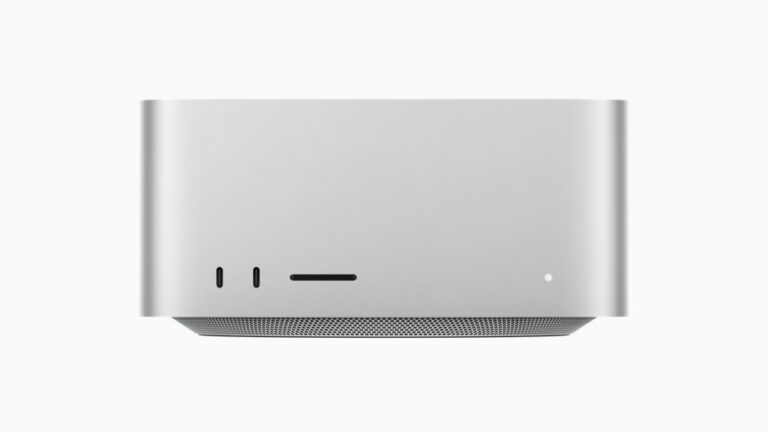
Two threads run through the whole thing, and both connect to work that has been central to Oddbyte’s own lab. The first is memory. In our recent Mac Studio studies the recurring lesson was that capacity, not clock speed, is the binding constraint for long-context local inference. TPU 8i Max is the same lesson at data-center scale: add more memory bandwidth and density, because that is where the bottleneck has moved. The second is trust. TPU 8tx is what confidential computing looks like when a vendor makes it a shipping product rather than a research promise, and it arrives at a moment when AI agents are being handed real, sensitive tasks in production.
The honest caveat is that these are announcements, not independent benchmarks. The performance and security claims are Google’s and AMD’s, and the public reporting does not include a third-party evaluation of 8tx’s confidential-compute guarantees or 8i Max’s real-world context handling. Availability details and pricing were not disclosed in the coverage I could find. So the right posture is the one Oddbyte applies to its own hardware: treat the launch as a serious signal of where the market is going, and wait for the independent numbers before treating any of it as settled. The direction is clear even if the details are not.