Two Agents, One Model: Sharing a 120B Model at 128K on a Mac Studio
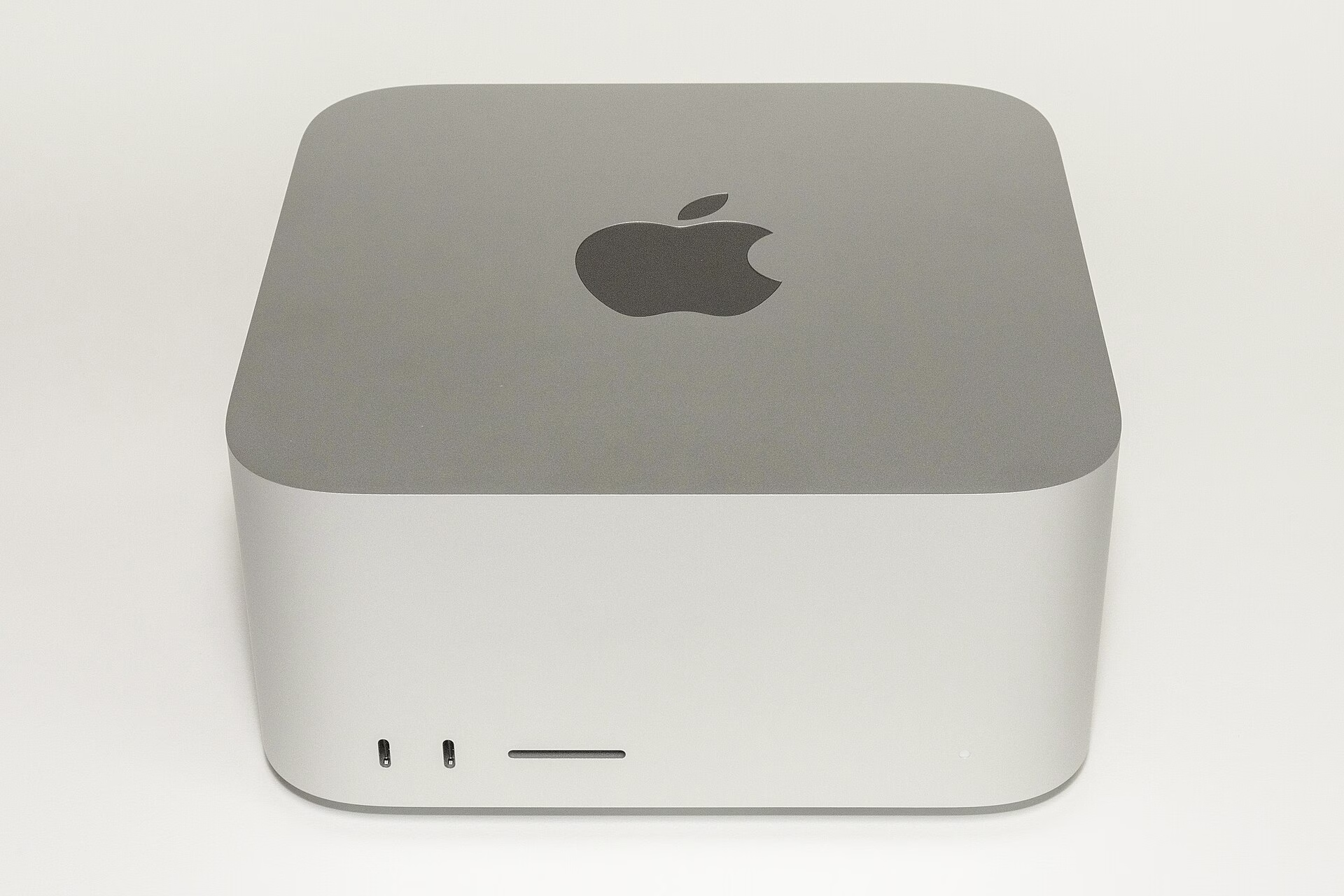
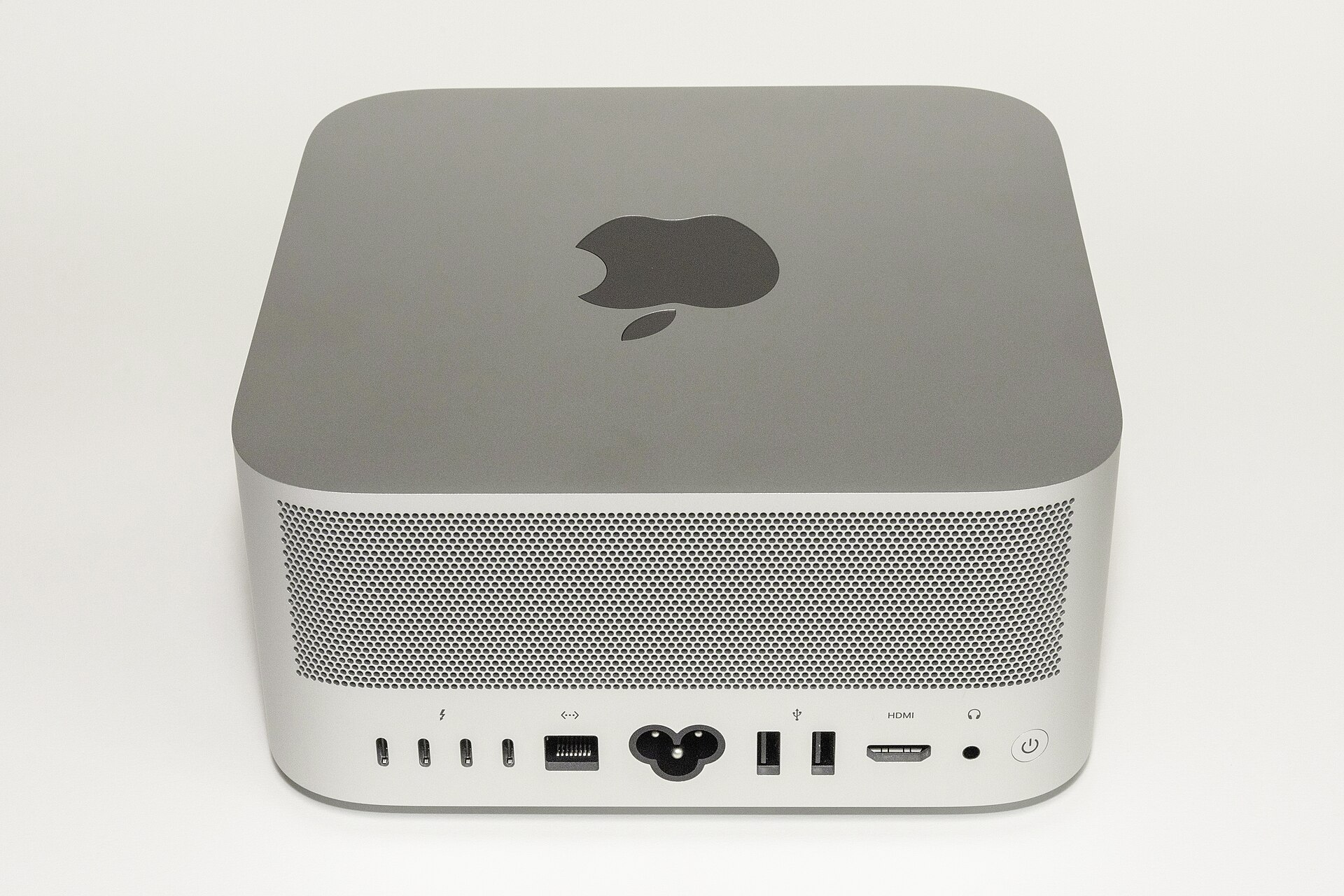
In the previous Mac Studio study I measured two different models sharing a 128 GB machine. This follow-up asks the narrower question two agents actually pose: can Jarvis and Lori or Ivy share one copy of the same heavyweight model, each with a long context, without loading the weights twice?
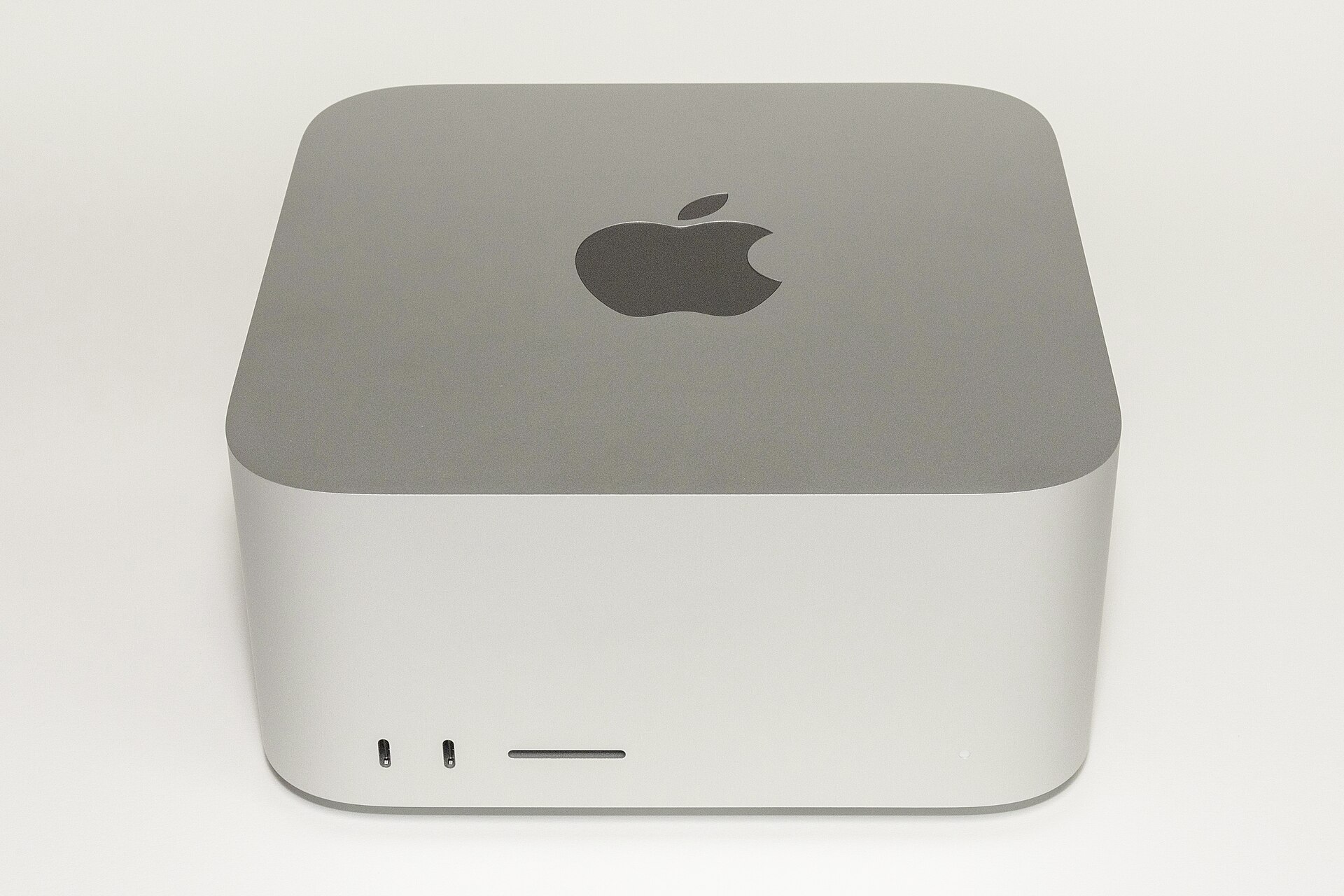
The short answer is useful but not symmetrical. GPT-OSS 120B did run two real 128K slots from one weights load. Warm histories decoded at the same time; long cold prompts did not. Nemotron 3 Super 120B did not run two slots at all. The runtime clamped it to one slot at both 128K and 256K, so two clients shared weights but waited in a queue. Neither result is a production-readiness claim.
What was actually measured
Each cell used one isolated, loopback-only Ollama 0.40.14 server and the existing model store. In the initial GPT-OSS/Nemotron cells, the production server stayed empty and no model was pulled or edited. The later Ornith supplement overlapped a separate Qwen quant download, described below. No production inference or agent route was changed. Requests were synthetic archives with independently seeded contents and embedded answer markers. Both clients used the same model tag and options: temperature 0, 512 output-token cap, low reasoning for GPT-OSS and thinking disabled for Nemotron. Occupancy was about 90% of the configured window, but every figure below is the actual token count returned by the runtime, not the configured number.
Two independent clients and overlapping HTTP lifetimes are not proof of simultaneous inference. I used the native slot count, context-per-slot, runner parallelism, per-request prompt and decode timings, and the returned markers.
GPT-OSS 120B: two real slots, one weight copy
The target-stage native log is unambiguous: n_slots = 2, n_ctx_slot = 131072, runner.parallel=2, with two distinct slot IDs. The tag was gpt-oss:120b, a GGUF MXFP4 build.
Warm histories: genuine concurrency
- Archive A: 116,656 input tokens, 116,655 served from cache, 15.94 s wall, 329 output tokens, stopped normally.
- Archive B: 116,560 input tokens, 116,559 cached, 16.82 s wall, 361 output tokens, stopped normally.
- Both streams decoded at roughly 21.9 tokens per second each. A solo request on the same setup decoded at roughly 36.7 tokens per second, so each agent paid about a 40% per-stream speed penalty.
This is the useful shape: two retained 128K histories, one 60-gigabyte weight copy, both generating at once. The second agent did not add a second model load.
Cold prompts: serialized prefill
- Cold A: 116,648 input tokens, first token at 155.6 s, total 330.3 s, and it hit the 512-token output cap.
- Cold B: 116,636 input tokens, first token at 312.2 s, total 330.3 s, 397 output tokens, stopped normally.
Both requests were alive for about 330 seconds, but the native log shows why that is not simultaneous cold prefill. Slot 0 spent 153.0 seconds prefilling its 116,648 tokens at about 762 tokens per second. Slot 1 then performed its own fresh 116,636-token prefill in 165.5 seconds at about 705 tokens per second, beginning near the end of slot 0’s prefill. Slot 0’s early decode collapsed to about 0.8 tokens per second while slot 1 was prefilling, then recovered. The two prefills are effectively serialized, with a short decode-versus-prefill overlap. The second caller waits roughly two and a half minutes behind the first.
The exact-marker check
Eight GPT-OSS answers contained expected marker strings. Measured literally, 0 of 8 matched. Every one emitted U+2011 non-breaking hyphens instead of the ASCII hyphens in the requested IDs. Replacing only those Unicode hyphen characters with ASCII hyphens produced 8 of 8 matches. I retain both scores: literal 0/8, typography-normalized 8/8.
That is evidence the model found the right identifiers. It is also evidence it ignored the exact-format instruction. Calling the literal result a pass would be dishonest.
Nemotron 3 Super 120B: two clients, one slot
This cell requested two slots. The native server rejected the request at startup with model architecture does not currently support parallel requests for nemotron_h_moe. Both the 131,072 and 262,144 target stages initialized with n_slots = 1 and runner.parallel=1. That is a runtime architecture clamp, not a memory failure.
- At 128K, occupied A ingested 117,157 tokens in 185.7 s. Its markers came back as
S003001-5773, S003001-8276, S003001-3388, missing the A, B and C segments. That is a genuine correctness failure, repeated on the warm repeat. - Occupied B ingested 117,018 tokens in 187.0 s and returned exact markers.
- The warm pair finished in 7.62 s and 4.59 s, but only one slot existed. B took the slot first; A’s first token arrived at 5.03 s, queued behind B’s 4.59 s completion. The overlap was HTTP lifetime, not concurrent execution.
- The cold pair used 117,077 and 117,096 tokens and finished in 186.1 s and 372.1 s. Cold B waited the entire first request. Both returned exact markers. That is a clean queue, not two-slot execution.
At 256K, one request ingested 234,309 tokens in 454.9 s and returned exact markers. A second 234,038-token request was submitted and native prefill had just begun, at roughly 4,600 tokens, when the local harness disappeared. There is no API result for it. I classify that cell as interrupted and not demonstrated. The available evidence does not establish an out-of-memory condition or a confirmed timeout, so I do not claim either.
Update: Ornith 1.5 122B shared weights, but queued execution
A subsequent run tested the already-installed ornith-1.5:122b NVFP4 MLX build with two independent clients at a configured 131,072 tokens per request. Its installed bundle was 73.39 GB. All ten staged requests completed, and every archive request returned all three exact markers. That is a useful additional heavyweight result, not another small-model baseline.
- Occupied archive A contained 117,330 input tokens and archive B contained 117,239. Individual long-context decoding measured about 51.5 and 53.5 tokens per second.
- The repeated histories were genuinely cached: warm A reused 117,325 input tokens and warm B reused 117,234. Submitted together, they completed in 4.31 and 7.53 seconds respectively.
- The fresh pair used 117,297 and 117,198 input tokens, with only six cached tokens each. One completed in 132.69 seconds and the other in 264.83 seconds.
Those paired wall times must not be advertised as two parallel decoding streams. The installed MLX pipeline processes its request channel serially; the fresh pair’s near-doubling in completion time is consistent with one request waiting for the other. Although the scheduler logged requested parallelism of two, that did not establish two executing native slots. Ornith can share its weights between callers, but this run supports a queueing arrangement, not the GPT-OSS-style two-slot concurrency result.
The individual and queued warm responses reported roughly 59–61 decoding tokens per second during their own decode intervals. That is not a combined concurrent rate, and it is not directly comparable with GPT-OSS’s thinking-plus-answer rate: Ornith’s thinking was disabled, while GPT-OSS used low reasoning. All of these rates came from relatively short synthetic answers, not sustained production workloads. The test completed and its own temporary runner was unloaded cleanly.
The next Qwen experiment is a different artifact
The smaller Unsloth UD-Q3_K_XL GGUF is being downloaded as the next Qwen Flash-Next candidate. Its three main-model shards total 89.99 GB, versus the installed MLX bundle’s 104.85 GB. These are disk sizes, not measured RAM requirements or a guarantee of 128K fit. The download and the Ornith run overlapped, making disk and network activity additional timing confounds. No result for that new quant is available yet.
The model documentation also resolves an earlier parameter-count puzzle: Flash-Next lists 125B main-model parameters, plus 51B n-gram embeddings and 4B MTP. A runtime count near 180B is therefore not, by itself, evidence of a mislabeled artifact. The installed MLX build’s prefill memory failures remain real, but they should not be generalized into a claim that every Flash-Next quant fails on a 128 GB machine.
Where the memory actually goes
The point of sharing weights is visible in the native allocation figures, but the measures overlap and must not be added together.
GPT-OSS mapped about 61,224 MiB of Metal model buffers plus about 1,105 MiB of CPU-mapped buffers once. The two-slot target stage allocated 2,304 MiB and 162 MiB of KV cache, about 1.23 GiB per context, plus a 497 MiB compute buffer. Peak runner RSS was 74.82 GiB and peak wired pages 73.62 GiB. The minimum pressure-free reading was 40%; free plus speculative pages bottomed at 21.66 GiB. Swap stayed flat at 0.233 GiB with zero Swapouts during the cell.
Nemotron mapped about 80,330 MiB of model buffers plus 420 MiB of auxiliary buffers, roughly 78.9 GiB of weights. At 128K it added 256 MiB of KV, 164.7 MiB of recurrent state and a 338 MiB compute buffer. Peak runner RSS was 87.29 GiB, peak wired pages 84.38 GiB, minimum pressure-free 31%, and free plus speculative pages bottomed at 1.90 GiB. Swap also stayed flat with zero Swapouts, but the physical free-page margin was much thinner than GPT-OSS’s. At 256K the KV buffer was 512 MiB; sparse telemetry showed a peak RSS of 82.03 GiB across only 24 samples.
So the second GPT-OSS context cost about 1.2 GiB of KV, not another 60 GiB of weights. Nemotron saves the same weight duplication, but its one-slot runtime means the second context is not active at the same time. RSS, wired pages, compressed pages, mapped buffers and the pressure-free percentage are different views of overlapping memory; none of them alone is “free RAM.”
The practical recommendation
For two agents that need the same heavyweight model on this machine, GPT-OSS 120B is the only measured candidate that actually served two long contexts concurrently. I would run at most two agents at 128K each, keep their histories warm, and cap output. Expect about 22 tokens per second per stream when both are decoding, versus about 37 alone. When both need a long cold prompt, expect the second to wait roughly two and a half minutes. That is a shared-weight, bounded two-slot arrangement, not “twice the context” for one agent: it is two independent 128K windows.
Nemotron 3 Super 120B is viable only as weight sharing with a queue. A latency-tolerant background agent can wait while an interactive one holds the single slot. It is not a simultaneous two-agent arrangement at either 128K or 256K in this runtime, and only one 256K request completed. Ornith is a further measured option for callers willing to queue, with the timing and correctness findings described above. The earlier 27B serialization is a separate runtime limitation and not the subject of this test; the known unsafe large-model out-of-memory case was not retested.
Limits
- This is synthetic marker retrieval, not agent-task, tool-use or answer-quality qualification.
- One machine, one Ollama build, one run per cell. These are measurements, not a statistical distribution.
- No sustained load and no production deployment. No agent model or auxiliary route was changed.
- GPT-OSS cold A hit the output cap; its 330.3 s total understates what a longer answer would cost.
- The Nemotron 256K second context was interrupted and is not a result.
- Pressure-free percentage is not physical unused RAM, and sparse samples are missing data, not zero.
Full source and native evidence are retained privately with hashes. The public record excludes host addresses, filesystem paths, credentials and raw operational logs. This is a bounded measurement of what one 128 GB Mac Studio did in one isolated test, not a claim of sustained production readiness.