The 128GB Mac Studio Overnight Test: A 27B Win and Real Heavyweight Sharing
A 128GB Mac Studio can do something more interesting than load a large model: it can let two assistants work against the same heavyweight weights, each with a genuinely occupied long context. The harder question is whether their answers remain useful when tools, corrections and unfinished work enter the picture.
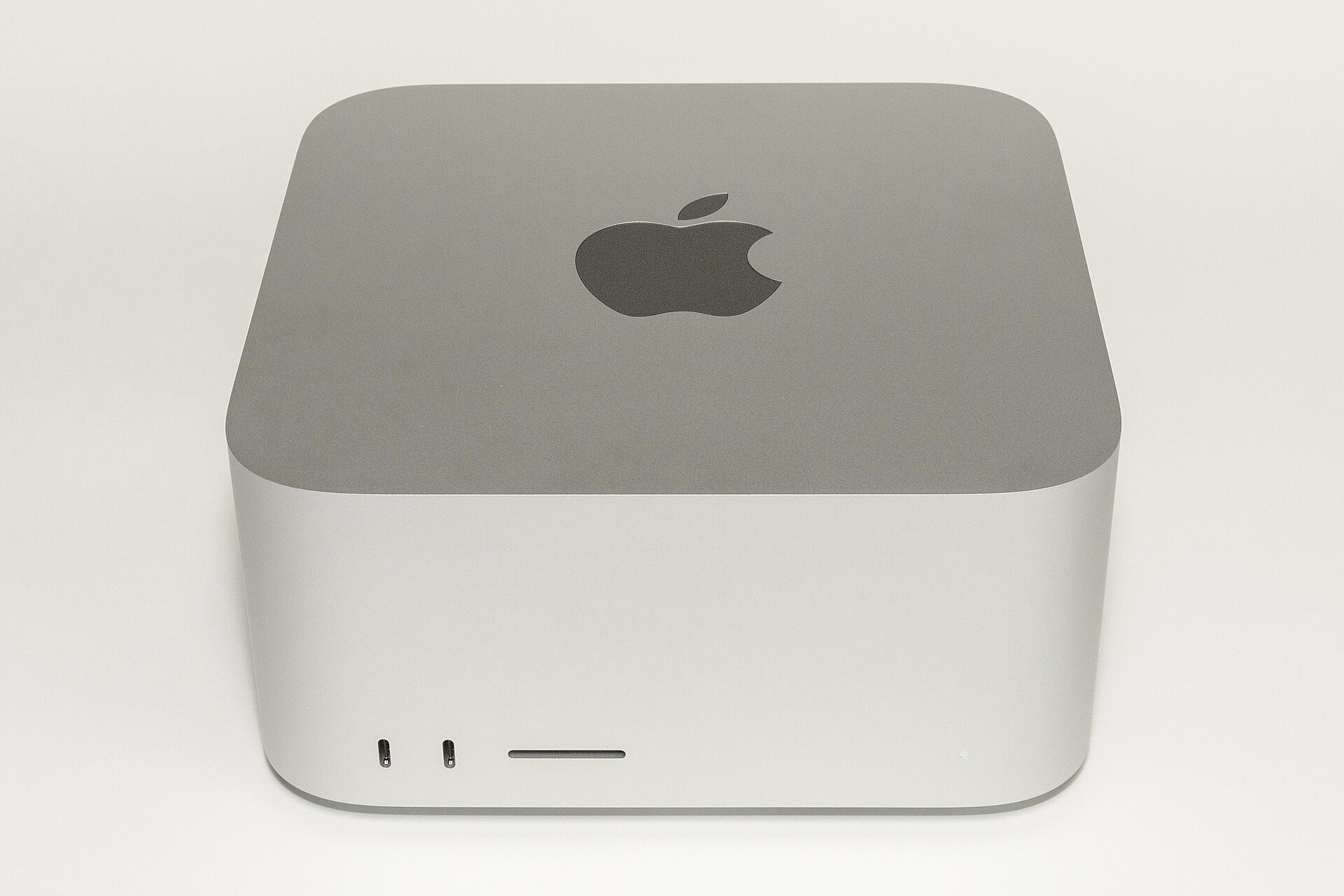
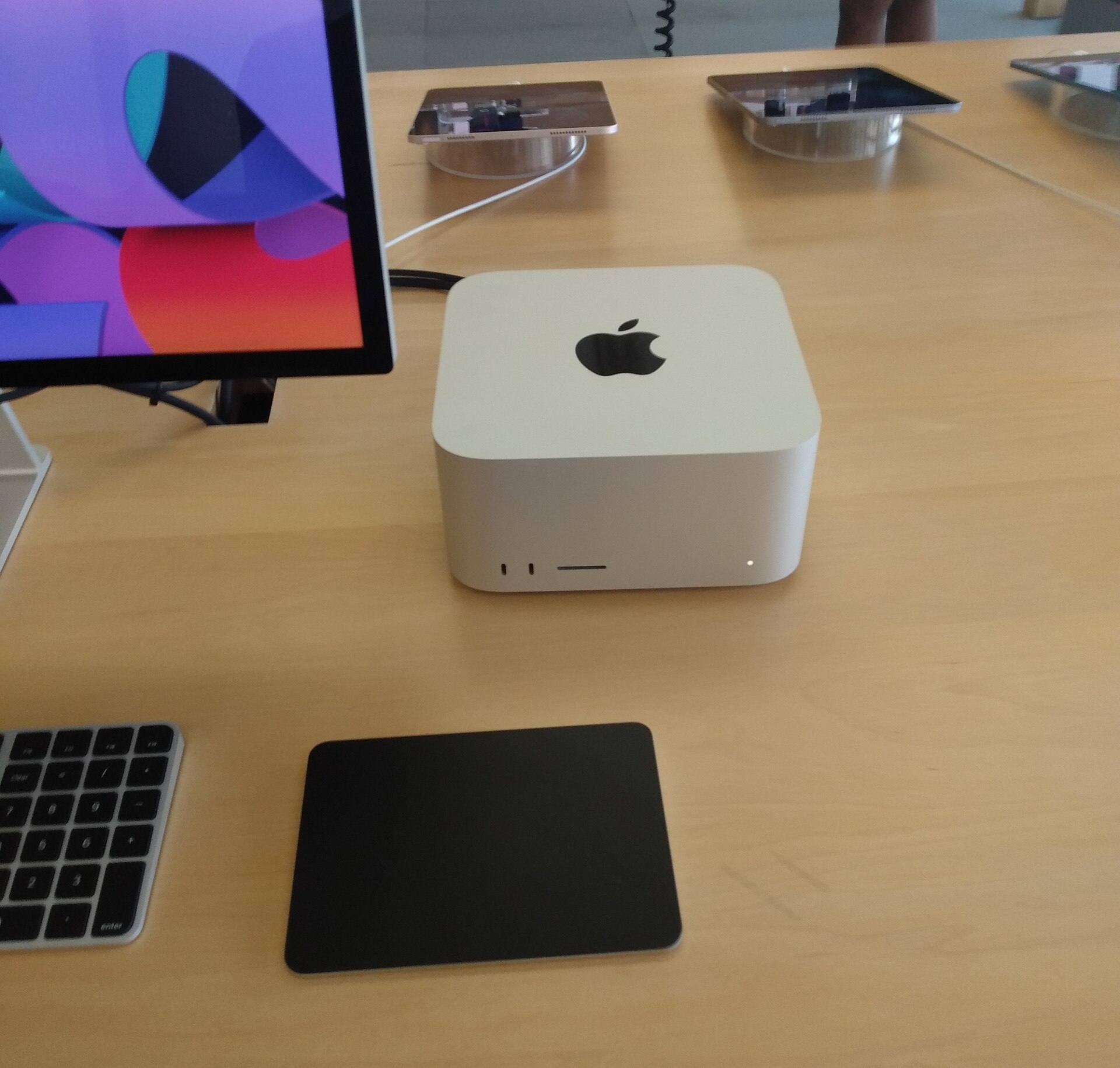
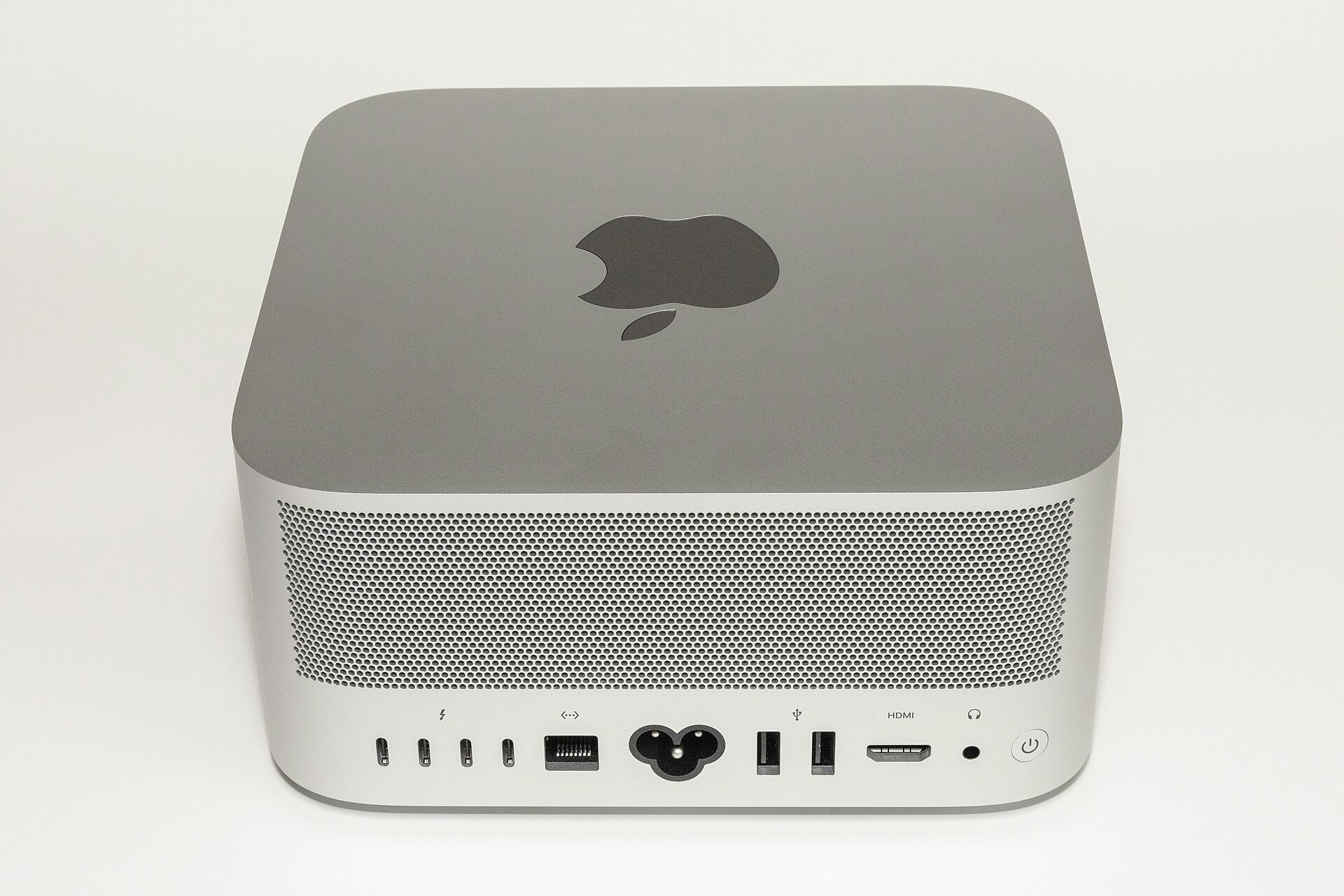
That was the point of this overnight run. I tested the replacement M5 Max machine with a frozen synthetic workload, separate client histories and guarded, isolated inference servers. I did not change any assistant’s production model or auxiliary settings. The most promising result was a rescued Qwen Flash GGUF running through the llama-server already bundled with Ollama—not a new installation or a successful Ollama import.
The window was real, not a tiny prompt wearing a 128K label
Every scored main-model comparison used a 131,072-token configured window and roughly 116,000 occupied input tokens. That count includes the synthetic system instructions, tool definitions and accumulated tool results. Output space was reserved; a successful HTTP response was not enough to earn a pass.
Filler length was tokenizer-calibrated; authoritative facts, questions and mock-tool schemas matched across candidates. This did not measure the fixed overhead of a full live Hermes toolbox. That overhead must fit inside the window too, not be appended on top of 128K of user history.
The packet contained two independently seeded archives and six tasks per archive: exact identifiers and JSON types, retained decisions and constraints, an executed search–read–answer sequence, empty-result recovery, tool-error recovery, and a small Python fix that actually ran against tests. Each client had its own facts. Inventing the other client’s secret was wrong, not creative.
Mock tools enforced required fields, types and limits. An invalid limit returned an error. A proposed read was not counted as an executed read. The coding task checked a sorted-unique expression in a restricted sandbox; it was not a claim about building an entire application.
This is a small, reproducible assistant-work sanity check, not a broad intelligence benchmark or full Hermes production qualification. It is still much more informative than asking two enormous contexts to print READY.
Six candidates, and a clear leader on this packet
The initial controlled packet used a 2,048-token output ceiling. The measured profiles were not identical: GPT used low reasoning, the MLX Qwen and Ornith profiles explicitly disabled thinking, Nemotron retained its default reasoning, and direct Qwen kept its native default. Those differences are part of the result, not something to hide behind a tokens-per-second ranking.
- Qwen Flash UD-Q3_K_XL, direct native runner: 12 of 12 strict passes. Median final-answer latency was 13.40 seconds; the slowest, including cold admission, was 274.02 seconds.
- Ornith 1.5 122B, MLX non-thinking profile: 9 of 12. Median 4.69 seconds; maximum 154.61 seconds.
- GPT-OSS 120B, low reasoning: 8 of 12. Median 6.36 seconds; maximum 167.41 seconds.
- Nemotron 3 Super 120B, default reasoning: 8 of 12. Median 28.35 seconds; maximum 195.83 seconds.
- Qwen3.6 35B, installed MLX NVFP4/non-thinking profile: 7 of 12. Median 1.61 seconds; maximum 52.81 seconds.
- Qwen3.8 27B, MLX non-thinking profile: 6 of 12. Median 4.74 seconds; maximum 194.97 seconds.
None of those initial packet cases hit its output ceiling. A separate practical GPT profile with medium reasoning and an 8,192-token ceiling also scored 8 of 12, without truncation. That does not prove reasoning effort never matters; it does mean a larger budget was not a magic repair for this particular packet.
Several wrong answers came after valid tool calls. Some changed an exact ticket or document identifier. Others skipped the specifically requested recovery step, or returned fenced or malformed JSON. Fast completion did not make those tasks correct. The 27B model was allowed to win, but its measured correctness did not justify making it the default winner simply because it was smaller.
The heavyweight rescue did not require a build marathon
The three pinned Qwen UD-Q3_K_XL shards were verified against their published sizes and SHA-256 hashes: 89,986,353,824 bytes in total. Ollama’s direct repository pull had rejected this sharded layout. Rather than repeat that failure, I inspected the installed application bundle.
Its compatible llama-server opened the complete numbered shard set from the first shard path. No merge, extra framework, speculative projector download or system installation was needed for these text tests. That is a direct-runner rescue, not an Ollama import, and it does not retroactively fix the earlier failing MLX artifact.
Occupied probes passed at 32K, 64K and 128K configured windows. A later single-client 256K probe processed 236,675 input tokens, generated 323 output tokens and recovered all six required facts in 546.24 seconds. It did not truncate and did not create new swap. That is useful extra headroom, but one retrieval probe is not a 256K agent qualification—and certainly not proof of two 256K agents.
One weight set really did serve two long histories
The bounded Qwen sharing test used a combined native context of 262,144 split into two actual 131,072-token slots. Native slot observations—not just overlapping HTTP requests—showed both processing distinct histories of about 116K tokens at once.
All 14 core tasks passed, plus a separate interactive arrival. The interactive answer completed correctly in 10.34 seconds while a background answer took 17.01 seconds; it arrived two seconds after the background request started. Cold admission was staged rather than advertised as simultaneous cold prefill. The entire cell took 691.82 seconds and cleaned up successfully.
The shared GPT test was longer: a sustained hour of alternating tool work, longer answers, cached follow-ups and fresh prefixes, followed by a real unload/reload and an occupied-context task. It completed 51 base task checks with 32 strict passes and 48 extended-answer checks with 46 passes. That is 78 of 99 checks, not 99 independent user tasks. There were no API errors, but five requests hit the 4,096-token ceiling. Stability and correctness were different outcomes.
The longer Qwen sharing soak then completed more than an hour of useful work: 36 base task checks with 33 passes and 34 extended checks with 33 passes—66 of 70 checks overall. Native observations showed two real 128K slots and overlapping generation, with no API errors or new swap. One long output hit its 4,096-token ceiling, and three recovery tasks omitted a required read despite correct final facts. It was not an all-pass run.
Correct complete answers had a 9.95-second median, but an observed p95 of 567.44 seconds and maximum of 570.14 seconds. Fresh long-prefix prefills could stage across slots and slow concurrent generation severely. That nearly ten-minute worst case matters much more than a warm throughput headline. Two executing slots do not make cold long-context work free.
Mix-and-match worked, but the small partner was not automatically reliable
GPT-OSS 120B plus Qwen27 retained both 128K-configured models with occupied histories. It scored 12 of 15 checks, including reload: GPT 4 of 7, Qwen27 7 of 7, and reload 1 of 1. One GPT request exhausted its reasoning budget.
Direct Qwen Flash plus Qwen27 scored 12 of 14 core tasks and passed a separate interactive arrival: the heavyweight scored 7 of 7, the small model 5 of 7, and the interactive check passed in 0.97 seconds while the heavyweight background request took 59.45 seconds. That long background output hit its own ceiling; the core tasks did not. A fast companion can be responsive while the heavyweight works, but it still needs a role whose correctness it has demonstrated.
Those pair tests changed output budgets and task sequencing relative to the initial packet. The small model’s better score in one pair is not evidence that concurrency improves intelligence. I also did not deliberately stack unsafe heavyweight pairs just to fill a matrix. Ornith-plus-27B and other unadmitted heavyweight combinations remain untested, not failed.
Compaction needs a downstream test, not just a nice summary
I exercised the installed Hermes ContextCompressor with the official Gemma4 12B GGUF, synthetic local histories and three successive corrections to tickets and spending caps. All three native summary calls completed without fallback or abort, while an occupied GPT main context remained resident.
The important accounting distinction: those source histories were roughly 128K-class, but native serialization bounded and shortened the summary input. The auxiliary actually received 24,724, 37,551 and 38,665 tokens—not 128K verbatim, and not a demonstrated native chunking pipeline.
Gemma’s self-resume retained all seven latest-state fields in all three cycles after extracting a single fenced JSON object. Its strict standalone-JSON score was zero of three. Sending the real saved handoffs to GPT and requiring a mock-tool read also produced zero of three completed-task passes. The pending document ID survived in the summaries; GPT searched document-ID fragments that the frozen project-name index did not match. That is an end-to-end failure, not evidence that compaction erased the ID.
A separately labeled positive control sent those same native Gemma handoffs to Qwen, added an explicit project-search hint, and required the real mock search, exact-ID read and corrected final state. All three cycles passed. That demonstrates a working saved-handoff-to-main path under those conditions. Both the main model and instruction changed, so it does not erase the original GPT failure or isolate a single cause.
A compressor, session-title generator, memory-query rewriter and command-approval judge are different jobs. A tiny schema-extraction pass does not qualify all of them. Gemma passed lightweight query and forced-schema probes but failed a title-length probe. No approval or safety policy was changed. The practical recommendation is to keep a working compression route until its actual handoff-to-main workflow has been validated.
Memory headroom was measured without inventing spare RAM
The completed GPT sharing and mixed-model cells, and the bounded shared-Qwen and Qwen mixed cells, created no new swap relative to their own baselines. The bounded shared-Qwen cell’s maximum wired memory was 67.83 GiB; Qwen-plus-27B reached 97.29 GiB. Those are system-wide measurements, not additive model footprints.
One caution from the final smaller-model profile: its complete fixture cell reached an 81.98 GiB system-wide wired-memory peak. That is not the model’s weight size or an isolated steady-state footprint. It is enough to reject the shortcut that fewer parameters automatically guarantee more co-residency headroom.
Mapped weights, process RSS, wired memory and physical footprint overlap. Nemotron’s registry estimate near 2GB was particularly misleading beside roughly 80GB of native mapped Metal weights. Likewise, macOS memory-pressure availability is not “physically unused RAM.” I kept those measures separate rather than summing them into an imaginary capacity figure.
Live host scraping was available and the active benchmark selection improved during the night. Some exported model/context/slot labels were still unknown or zero, and complete Grafana browser/documentation acceptance remained separate unfinished monitoring work. Native logs and per-cell accounting—not an attractive dashboard alone—ground these results.
What I would try next for Jarvis, Lori and Ivy
The last bounded test changed my single-agent recommendation. Qwen27 with thinking enabled and an 8,192-token output ceiling scored 12 of 12 on the same long-context packet, without truncation. Its median was 10.04 seconds and maximum 199.63 seconds, compared with direct Flash’s 13.40 and 274.02 seconds. The observed maximum completion length was only 279 tokens; this was not a win manufactured by accepting a truncated answer. This practical profile changed both reasoning and the ceiling, so it is not a single-variable causal experiment. It does show why the earlier non-thinking score was not the model’s quality ceiling.
For Jarvis alone, I would therefore start the next supervised Hermes integration with thinking-enabled Qwen27 at a 128K window, not insist on a heavyweight for its own sake. For Jarvis plus Lori or Ivy doing heavyweight work, rescued Flash with two native 128K slots is the strongest shared-weight candidate demonstrated here. Its warm service was useful and its hour-long run was stable, but cold-prefix latency can be several minutes.
For a responsive split between background work and small interactive duties, Flash-plus-27B is promising. However, its measured pair used the non-thinking small-model profile; co-residency and quality with the new thinking profile have not been established. Do not silently combine separate successes into an untested deployment claim. No real assistant assignment was changed tonight.
The value of 128GB is not a screenshot showing the biggest possible model loaded. It is the room to keep useful long histories beside shared heavyweight weights, tolerate mutual slowdown, and still finish correct tool-backed work without runaway swap. This machine demonstrated that capability. Turning the best candidate into a trusted everyday assistant remains an integration job, not a benchmark checkbox.
This follows the earlier long-context coexistence study and two-agents, one-model investigation. Original failures, frozen fixtures, schema-aware traces, runnable harnesses and cleanup receipts are retained. All work described here used synthetic tasks; no real purchases, messages or deployments were performed.