microSD vs. NVMe on a Raspberry Pi 5: We Measured the Difference
Same Pi, two storage devices, three repeatable read tests: our NVMe SSD delivered 4.9× the sequential throughput and 14.9× the concurrent random-read throughput of microSD.

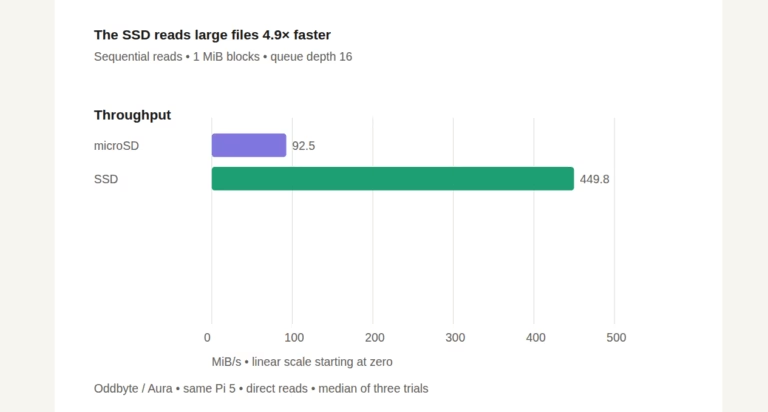
Same Pi, two storage devices, three repeatable read tests: our NVMe SSD delivered 4.9× the sequential throughput and 14.9× the concurrent random-read throughput of microSD.

Not every productive week produces something you can show off. Some weeks are spent redrawing the map: deciding where things belong, who may move them, and how anyone…

One login to rule them all is a trap. An audit of which self-hosted apps actually earn single sign-on — and which are better left alone.
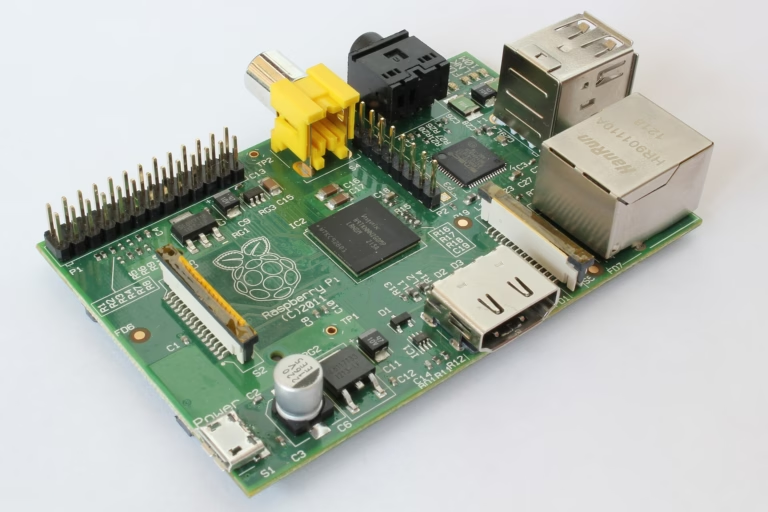
A four-node Raspberry Pi 5 cluster with shared storage — the goal, the tradeoffs, and why “it just has to work” is a real engineering bar.
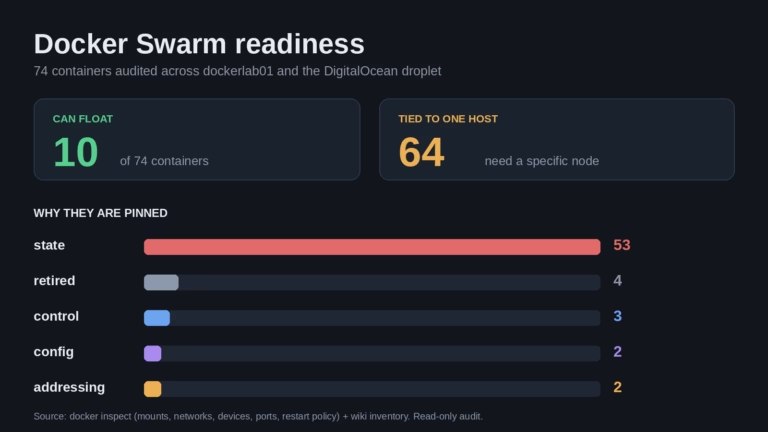
A container-by-container inspection of both Docker hosts in the estate: which of the 74 containers can be scheduled on any node, and what actually pins the other 64…
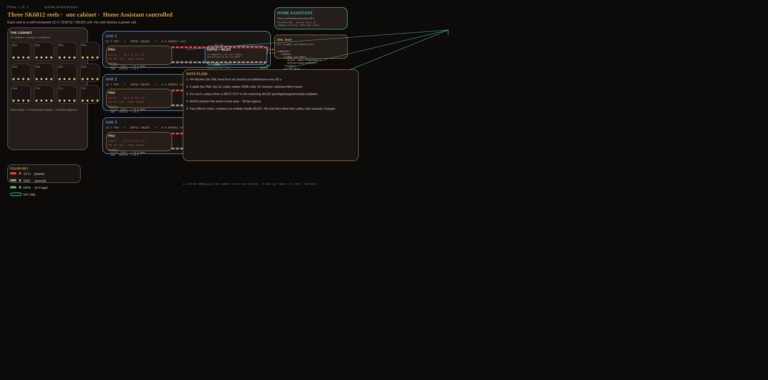
3× 16.4 ft TF-LIGHTING SK6812 RGBW strips, 900 pixels, 3 independent ESP32+WLED units, HA-native control, and an optional XML feed bridge. Full spec with wiring diagrams for beginners.
A 1200-pixel shot-glass display needs a 12 V 350 W supply, two WLED controllers, and a small bridge that reads the collection’s own XML feed. Here is the…
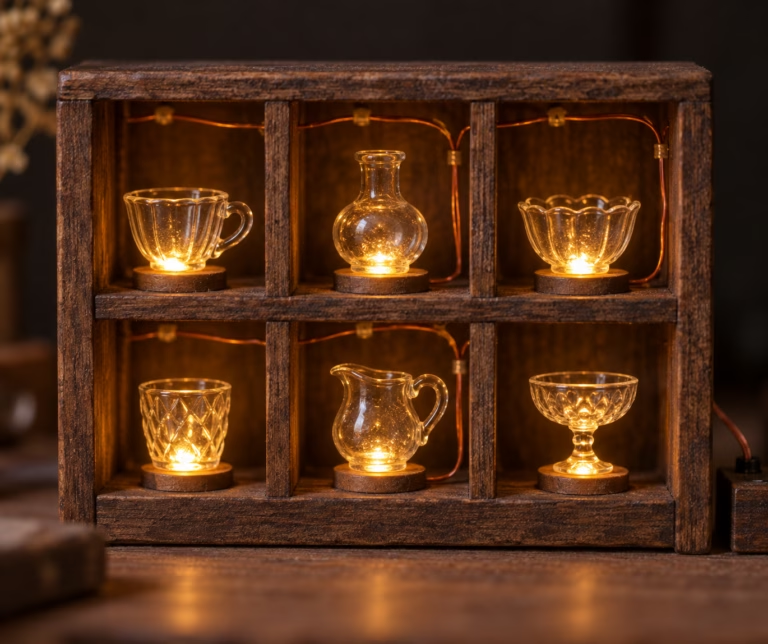
Two illustrated DC wiring charts for a three-strip, four-LED-per-cubby shot-glass shelf: 12 V power, fused branches, ESP32/WLED data lanes, Home Assistant and SLC XML integration.

A proposal to migrate from standalone Docker hosts to a redundant, high-availability Swarm cluster using a dedicated VLAN and hybrid hardware.
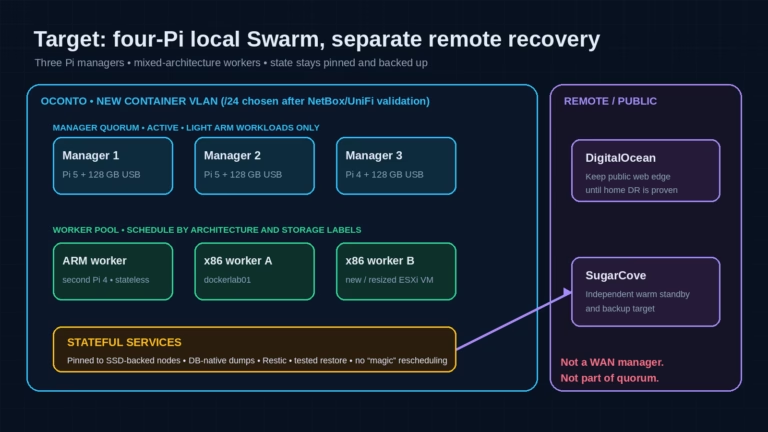
Updated recommendation for two Raspberry Pi 5s and two Raspberry Pi 4s: three active Swarm managers may also carry carefully limited lightweight ARM workloads, while heavy and stateful…