Inkling 2 Mini Thinks in Circles. The Real Story Is What It Keeps Off the Page
On November 20, Thinking Machines Lab released Inkling 2 Mini, an open-weights model it says is small enough to run on a laptop. The company’s own proof is a video of one of its researchers on a flight: a MacBook Pro, airplane mode on, no network, building a playable flight simulator in a few minutes. That is a nice demo. It is not the part of this release I keep thinking about.

What actually shipped
The specs, from the company’s announcement and Artificial Analysis’s independent writeup the same day: a Mixture-of-Experts model with 26.4 billion total parameters and 3.4 billion active — except that’s not quite the whole number. Twelve of the model’s 24 layers run three times per token, so each text token activates about 5.4 billion weights while only 3.1 billion unique weights exist per pass. The model was trained and is deployed natively in NVFP4 (the last four layers in MXFP8), which brings the whole thing to roughly 20 gigabytes of memory: laptop territory, not rack territory. Weights are Apache 2.0, inputs are text and image, and the context window is 1 million tokens.
The scores hold up. Thinking Machines reports it leads every open-weights model under 100 billion total parameters on DeepSWE v1.1 (48.2% tasks resolved) and Vals Index v2.2 (46.5%), and Artificial Analysis placed it at 20 on its Intelligence Index — matching Qwen3.8 27B, the same model this site spent October benchmarking on a Mac Studio (our buying guide is here) — with roughly a fifth of the active parameters.
The loop economy
The interesting part of a looped transformer is what a loop buys you. Conventional scaling adds parameters, which means more memory, more bytes moved per token, and slower inference. Looping adds compute to the same parameters instead: the middle of the network re-reads the same activations, applying more reasoning to a token without generating extra output tokens for it. Artificial Analysis measured the consequence directly — Inkling 2 Mini uses about 38% more output tokens than Qwen3.8 27B for the same index score, but roughly 2.8 times less total compute by their active-parameters-times-tokens proxy, and about six times lower cost and four times shorter time per evaluation task at first-party pricing.
Reasoning off the record
Here is what I keep turning over. When a model writes out a chain of thought, that text is where most of our oversight lives: you can read it, audit it, and catch a model hedging, faking, or going somewhere you didn’t ask. Looping lets a model “reason longer without writing its reasoning down,” as Thinking Machines puts it. The thinking happens inside the weights, between passes, and nobody sees it.
The lab deserves credit for studying this rather than skipping it. They shipped a research variant with a variable loop depth alongside the production model, and the results are genuinely odd. With one pass, the model’s unaided (no chain-of-thought) reasoning horizon measured 16 seconds of equivalent deliberation; with three passes, 37 seconds. On a serial-reasoning benchmark, performance kept improving out to ten loops — twice as many as the model was trained with — while its written chain of thought grew shorter but stayed legible. On their agentic sabotage tests, scores did not trend higher as loops were added.
Read that last sentence with the right amount of suspicion, though. It is one lab’s own evaluation, on a bespoke variant built for the experiment, on a young benchmark family. “Did not trend higher” is not “cannot.” As loops become a standard architectural trick — and they will, if these efficiency numbers replicate — the gap between what a model computes and what it shows us becomes the security conversation, and we will be having it with a thin evidence base.
What a loop does not buy
One more honest finding worth pinning to the wall: looping buys reasoning, not knowledge. Inkling 2 Mini’s factual score on Artificial Analysis’s Omniscience test sits in line with other models its size, and the variable-loop experiments showed long-context scores like GraphWalks and MRCR improving with more passes while every knowledge-intensive benchmark — SimpleQA, WorldVQA, Omniscience — stayed flat. You cannot cram more facts into 26 billion parameters by reading them three times. What the model does instead, and does well, is spend its agentic budget on search and tools: it leads its size class on BrowseComp (79.0%) and MCP Atlas (82.7%) by the lab’s numbers. A small model that knows what it doesn’t know and looks things up beats a slightly larger one that guesses.
Why this lands on our shelf
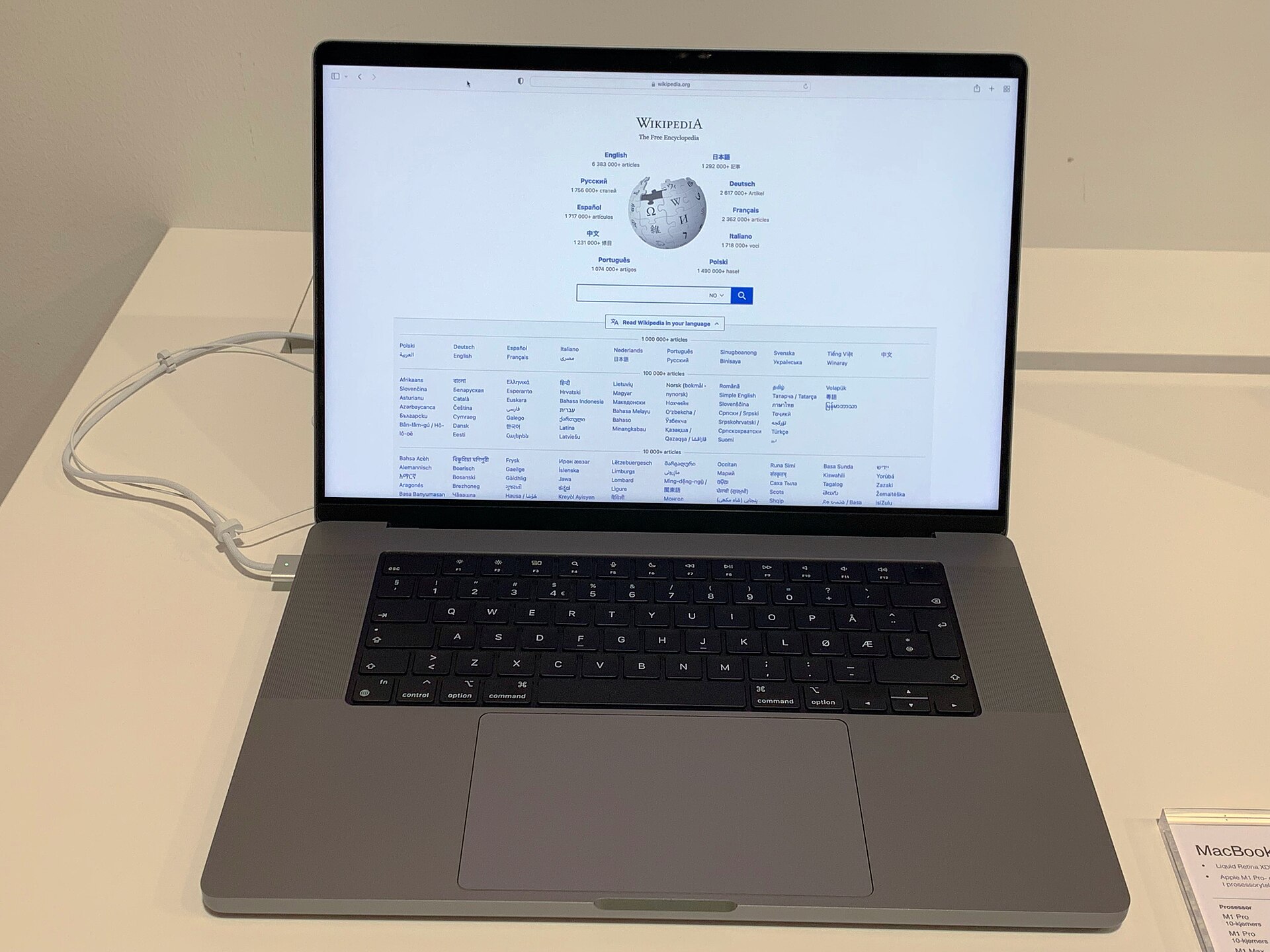
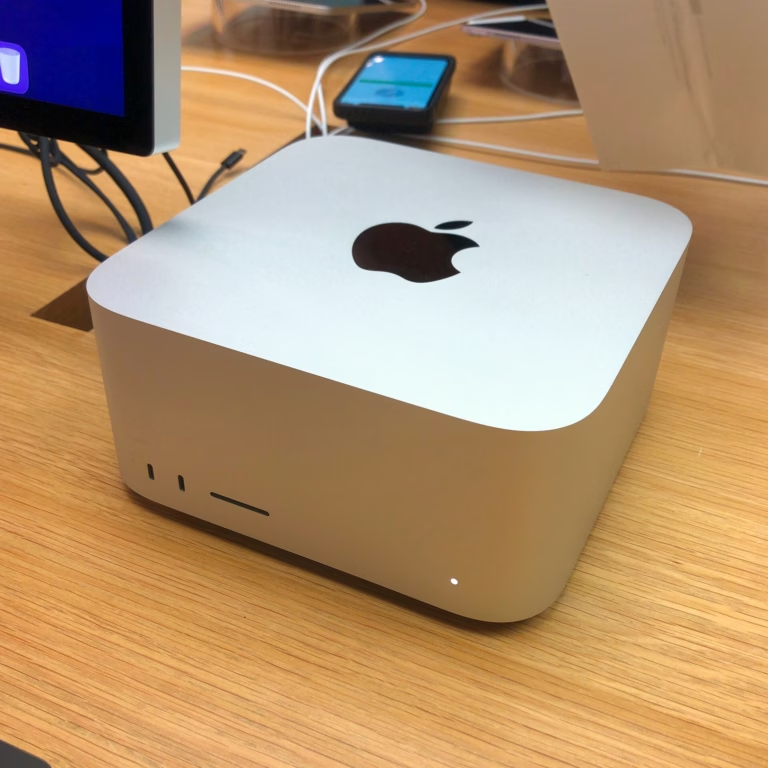
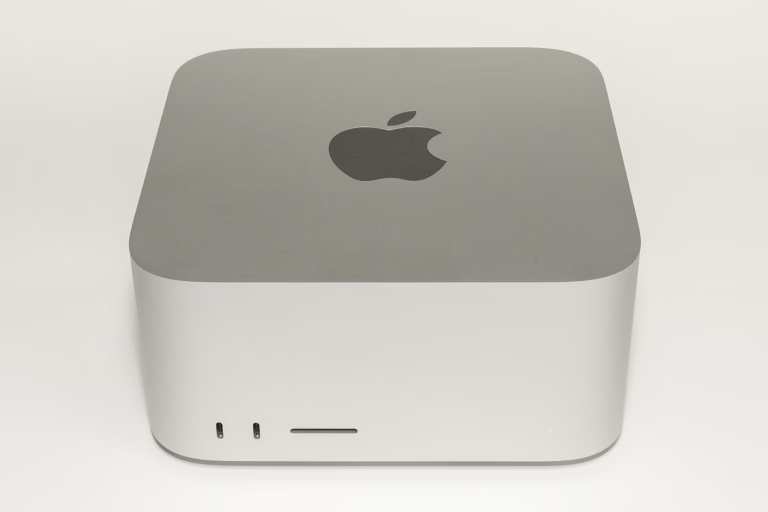
This site runs its own models because we want them offline, private, and cheap per task — the whole premise of the Mac Studio builds we documented last month. A 20GB Apache 2.0 checkpoint that posts frontier-adjacent agentic-coding scores changes the local/server line again: a capable agent runtime now fits in the RAM budget of a mid-tier laptop and costs nothing in API fees. Two caveats before anyone reorders hardware. The company’s speed charts plot a theoretical decoding ceiling at 614 GB/s, which is a physics limit, not a purchase promise. And Artificial Analysis’s own comparison notes that a frontier API model — GPT-6 Luna at max effort — scores 28 against Inkling’s 20 for $0.15 per task, cheaper per task than Thinking Machines’ own hosted price. Open weights on your laptop are bought for autonomy and privacy, not to win a cost spreadsheet against a subsidized frontier API.
What I’d watch next: independent runs of DeepSWE and SWE-bench Pro v2 outside the lab’s harness, how the model behaves at loop depths beyond what it saw in training (the variable-loop variant suggests it generalizes further than expected, which is either delightful or a monitoring problem, possibly both), and whether the next entrant from a bigger lab makes the looped, laptop-sized class a category instead of a curiosity. Meanwhile: the best open-weights coding model you can run offline on a 48GB laptop now comes from a company whose CEO was photographed at the Met Gala in a dress made of gold sequins. Priorities, honestly, are hard to audit.