KORA: The Operating System That Wants to Make Your Whole Network One Computer
On November 10, 2026, KORA Systems Inc. unveiled KORA, a Linux desktop operating system whose pitch is unapologetic: intelligence belongs inside the operating system, and the only platform that can actually hold it is Linux. The company comes out of Playtron, the team that built GameOS, and its founders have already shipped three operating systems, Cyanogen, Android and GameOS, to more than a billion devices. KORA is, in their framing, not an AI feature bolted onto a familiar desktop but a ground-up reimagining of the desktop for machines that run models and agents as native citizens.

That framing is the story. On Windows and macOS, KORA argues, intelligence lives in a browser tab or an app sandbox that cannot see the machine it runs on, schedule the silicon beneath it, or reach the files, memory and applications around it. Those platforms are closed, so the integration stops at the app boundary. KORA is built on Linux from the kernel to the shell so that the integration can go all the way down. Its central component, Cortex, is described as a “hybrid inference engine” optimized for local models that treats the CPU, GPU and NPU as a single pool of compute, and then reaches out to other machines on the local network so that, in the company’s words, “every chip in the machine, CPU, GPU and NPU, and every machine on the network [becomes] one computer.” Local models run on the user’s own silicon by default; frontier models join only when a task calls for them.
The network as one computer
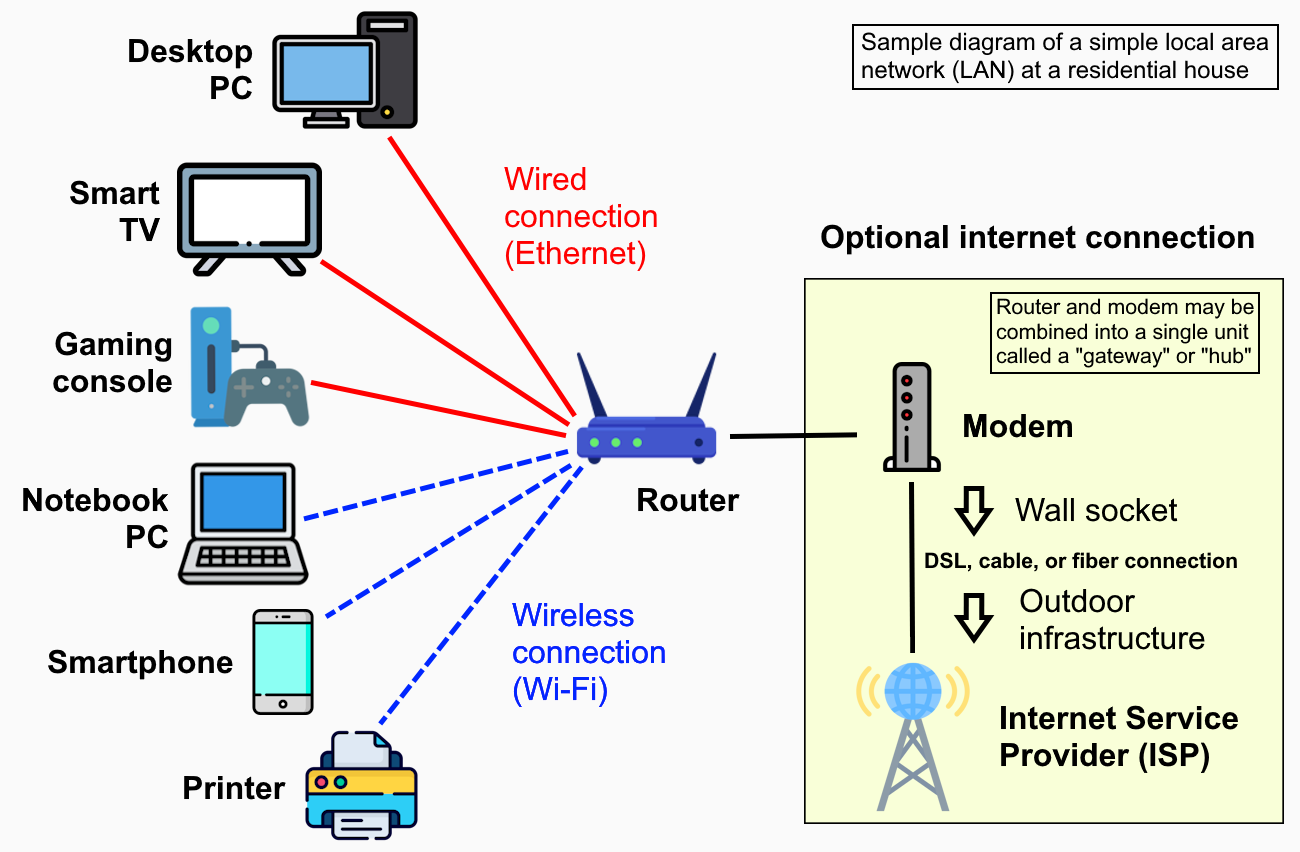
The LAN piece is the part that separates KORA from yet another “local AI” claim. Most local-model projects stop at a single device. KORA explicitly treats the home or office network as part of the compute fabric: a workflow can be scheduled across the whole machine and, beyond that, across the networked machines around it, with memory and context staying on the user’s own equipment. For the people who already run local models, that is the difference between a model on a laptop and a model on a small cluster they control. It is also why the project reads as a direct answer to the fleet-of-local-models crowd that Oddbyte has been measuring for months: KORA wants the operating system itself to be the scheduler, not a sidecar.
What the team actually has
KORA is a thesis first and a shipping product second. The company is in Palo Alto, it has been in development since November 2025, and it says KORA is coming to PCs in 2027. The enterprise variant, Humain OS, built with Saudi AI company Humain, is due first and is expected to be commercially available on OEM PCs using Qualcomm’s Snapdragon X2 Elite; the consumer KORA follows later in 2027 and is meant to be downloadable for “most modern PCs,” with a recommended 64GB of RAM that is not a hard requirement. KORA ships three modes, Work, Create and Play, and its Play mode, GameFrame, is GameOS reborn: one click turns the desktop into a game console running the PC catalog.
The numbers, with the right grain of salt
KORA has released performance numbers, and they are the kind a careful reader should enjoy reading skeptically. Kirt McMaster, the company’s CEO, told Tom’s Hardware that on the Snapdragon X2 Elite the system runs Google’s Gemma 4 26B model entirely on the Hexagon NPU at about 25 tokens per second for decoding and 550 tokens per second for prefill, with a 32,000-token context window. Those are respectable figures for a 26-billion-parameter model that activates roughly 4 billion of its parameters per token, but McMaster did not disclose the RAM configuration or the specific X2 Elite chip, and the company recommends 64GB of memory even though it is not required. KORA predominantly supports the GGUF format, and its inference engine, Lemma, is built on llama.cpp, whisper.cpp, stable-diffusion.cpp and ONNX, which means the promise is really an integration story rather than a new model: it is about where models run and who schedules them, not about a smarter model.
NPU support is a similar story of a clear first target and a longer road. Qualcomm’s Hexagon NPU in the Snapdragon X2 Elite is supported today through llama.cpp’s Hexagon backend; AMD’s XDNA 2 in Ryzen AI is planned for launch over ONNX, likely for embedding and speech-recognition models rather than language models; and Intel NPUs are “in progress.” McMaster said Intel and AMD NPUs will not be used for language models, which tells you where the team’s priorities actually sit today: on the Qualcomm route, and on the network, not on a broad multi-vendor NPU matrix.
Why it matters for the local-first crowd
KORA’s backers are a good tell for where the market is going: Samsung, Square Enix, Polychain, VanEck, Circle and Alumni Ventures. The ambition, stated plainly in the release, is that “an operating system was once something only a giant could build” and that the era has ended, with a claim that “50 superpowered engineers can take on Windows.” For the people running local fleets, the interesting question is not whether KORA will be ready in 2027, but whether the thesis holds: whether an operating system can genuinely make a small network of consumer machines behave like a scheduler that picks the right chip for the right workload and keeps the user’s context on their own hardware. If it does, the next big local-AI story is not a model but the machine that runs it.
None of this is a release you can install today. KORA is a 2027 product from a company that has not yet shipped it, and the figures are early and unverified by anyone outside the company. But it is a rare piece of local-AI news that is about the system layer instead of the model layer, and that is worth watching closely.