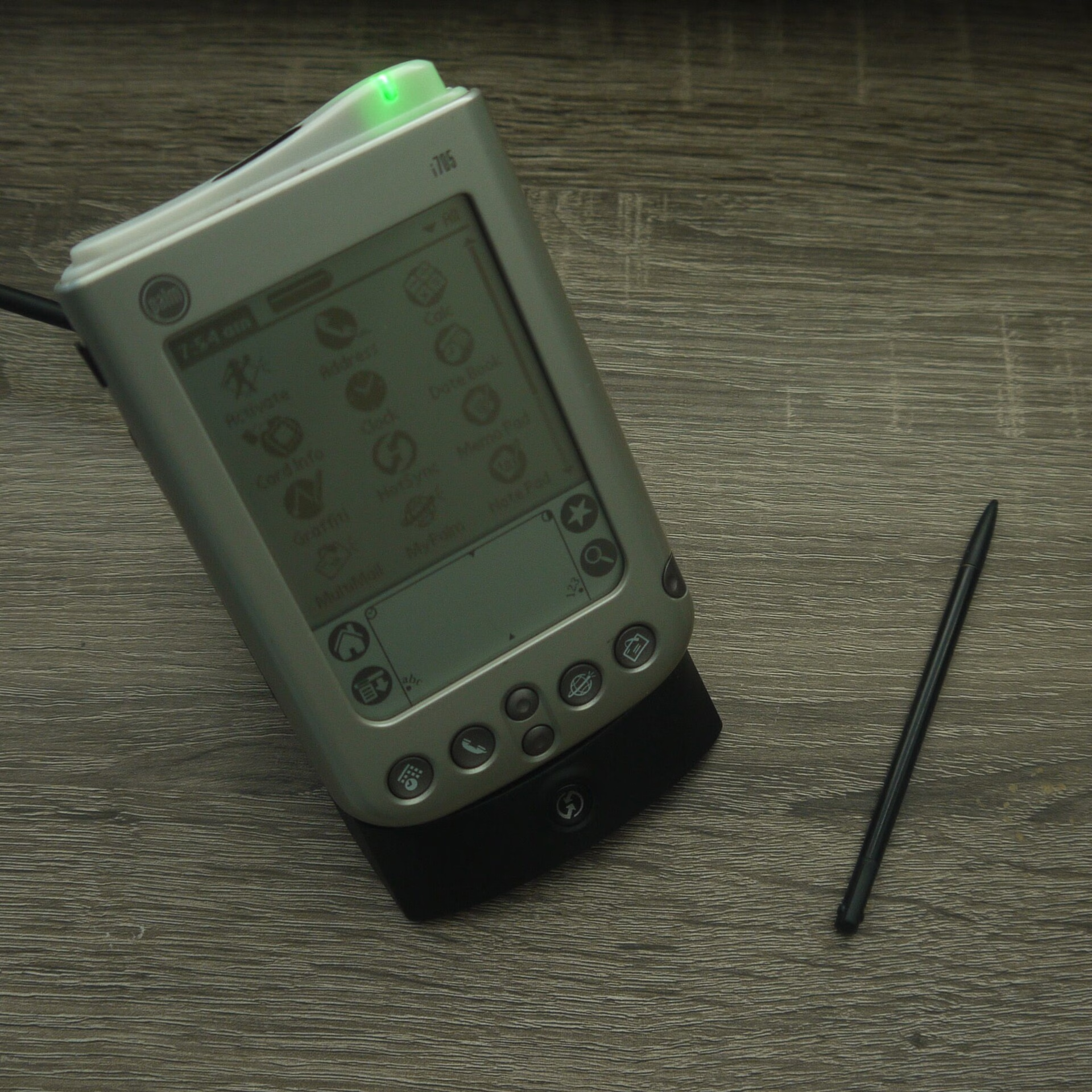
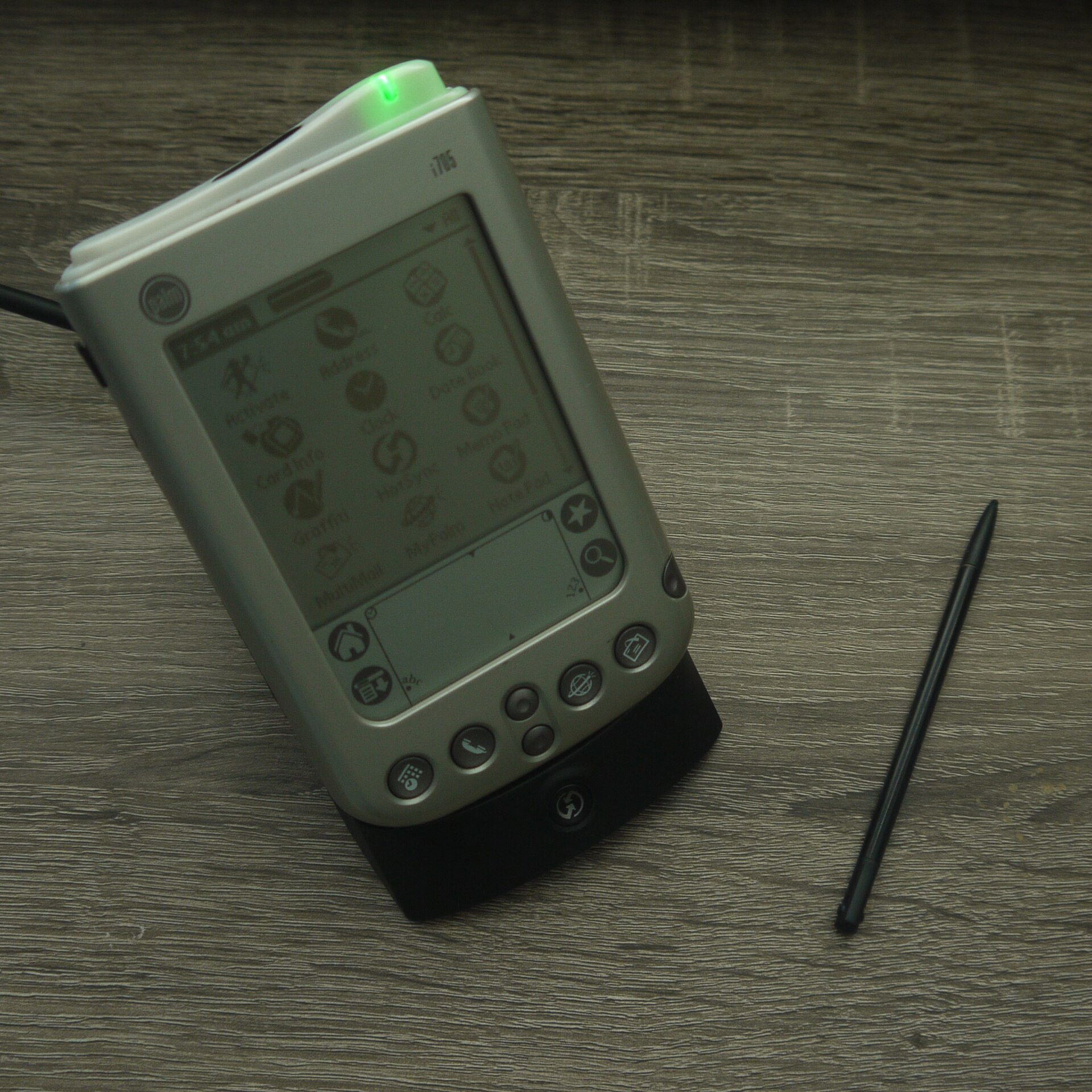
The Palm Pilot: The Original “Digital Life”
Long before the glass-slab ubiquity of the iPhone and Android, there was a device that fundamentally changed how we thought about the “office in your pocket.” Launched in 1996, the Palm Pilot didn’t just introduce a new product; it introduced the concept of the Personal Digital Assistant (PDA) to the masses.
The 1996 Revolution
Founded by Jeff Hawkins, Palm Inc. released the original Pilot starting at $299. By today’s standards, the specs were humble—a Motorola 68000-series CPU running at 16MHz, a monochrome 160×160 resolution touchscreen, and a meager 128KB to 512KB of RAM. Yet, it sold over a million units in its first year and a half, dominating the market by focusing on an intuitive, simplified user experience.
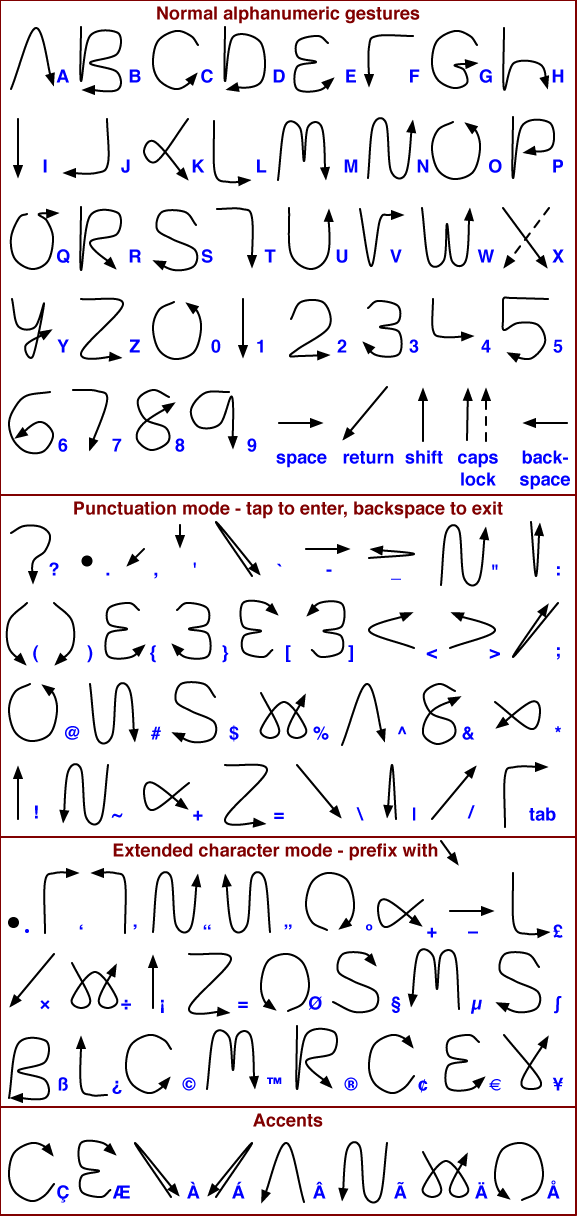
Graffiti: The Art of the Gesture
One of the most distinctive features of the Palm experience was Graffiti. Rather than attempting to let users write naturally—a task that often failed miserably on early touchscreens—Palm required users to learn a set of simplified, gesture-based characters. By writing in a dedicated zone at the bottom of the screen, users could input text with a speed and accuracy that far surpassed its competitors, including the ill-fated Apple Newton.
HotSync: The Precursor to the Cloud
The true magic of the Palm Pilot lay in its connectivity. Through a process called HotSync, users could dock their device to a computer via a serial cable and synchronize their calendars, contacts, and memos in seconds. This ability to keep a desktop and a handheld in perfect alignment was a revolutionary leap in data management and a direct ancestor to the seamless cloud-synced ecosystems of today.
A Legacy of Portability
From the original Pilot to the more refined Palm V and the wireless Palm VII, the device evolved rapidly. It paved the way for the modern smartphone by proving that people were willing to carry a computing device everywhere if it was small enough and provided immediate utility. While webOS later attempted to reinvigorate the brand with a card-based multitasking system, the original Palm Pilot remains the iconic blueprint for the mobile productivity era.