Nvidia After Huang: What the AI Economy Looks Like Without Its Chief Promoter
On Thursday, November 12, Nvidia’s board announced that Jensen Huang had resigned as president, chief executive and a member of the board, effective immediately. After 33 years, the man who turned a gaming-GPU company into the supplier of record for the AI economy walked away, and the company’s announcement gave no reason. Chief financial officer Colette Kress was named interim CEO, and Harvey C. Jones became the company’s first-ever chair of the board.
How three weeks undid a victory lap
The fall was remarkably fast. As late as October, Huang was touring Europe telling founders Nvidia would bankroll their AI buildouts. Then, in late October, the New York Times reported that US intelligence agencies believed Huang had been involved with Alice Huang (no relation), a former executive at Megaspeed, a Singapore-based data center company that had bought billions of dollars of Nvidia chips and was long suspected of helping Chinese firms dodge export controls. Huang sent a memo to Nvidia’s roughly 42,000 employees acknowledging he had been unfaithful to his wife; the board opened an independent investigation, congressional leaders summoned him, and federal agencies said they were looking into the matter. When the Times reported a second alleged affair, this time with an executive reporting directly to him, the resignation came by the next morning.
To be blunt about the evidentiary state: these are allegations and reported findings, not adjudicated facts, and Nvidia’s own statement is silent on cause. The market did not wait for adjudication. Nvidia recorded its sixth straight week of declines, its longest losing streak since October 2012, and the company has shed roughly a quarter of its value since the late-October reports, from a peak market capitalization above $5.7 trillion.
The balance-sheet problem nobody else can hold
The gossip is not the interesting part. The interesting part is what CNBC and Fortune have been documenting all week: Nvidia is not just a chip supplier, it is a financing system — one that Huang personally operated. As of late July the company held about $99 billion of investments across what Huang called AI’s “five-layer cake” — energy, data centers, chips, models, apps — including nearly $50 billion into leading model companies alone. It has pledged some $170 billion in credit support for AI companies and neoclouds, including guarantees valued at $105 billion to OpenAI for a single Ohio facility, and was in talks with Wall Street lenders on a plan to turn AI chips into tradable securities at half-a-trillion-dollar scale.
“Nobody at Nvidia could replace Jensen’s role in bringing that together.” — Andrew Goldstein/Goldberg, Seaport Research Partners, on the financing platform, via Fortune
The companies most exposed are the neoclouds — the GPU-rental startups Nvidia seeded and guaranteed. The Roundhill neocloud ETF is down 39% since its August launch, Nvidia-backed Nscale says it now needs fresh financing for its planned IPO, and Seaport’s analyst expects many neocloud projects simply won’t get funded without Huang personally assembling the deals. That circularity — Nvidia investing in companies that buy Nvidia chips — was already the bubble critics’ favorite exhibit. It now doubles as the transmission channel for a leadership crisis.

Who’s next, and who’s circling
The Financial Times reported Friday, via Reuters, that the board has approached Arm Holdings CEO Rene Haas as a potential successor — while, awkwardly, employees have been asking for Huang to come back. Meanwhile Kress holds both the CFO and interim CEO roles, and her first real test is next Tuesday, November 17, when Nvidia reports third-quarter earnings that one analyst called the most consequential in the company’s history. Wedbush’s Dan Ives is the bull case in one sentence: Nvidia remains two to three years ahead of the nearest competitor and “the demand trajectory the next few years is not changing because Jensen is gone.”
Washington moves while the chair is empty
Huang was Nvidia’s most effective voice in Washington, and his departure lands at the worst possible moment. Democrats took the House in the midterms on a platform that includes reining in AI and data centers — ballot measures restricting data centers passed in 40 of 41 contests — and three bills tightening export controls on AI chips and semiconductor equipment are already attached to the defense authorization bill. “This guarantees new export controls,” a Raymond James analyst said of the resignation. There is also fresh daylight inside the administration: Treasury Secretary Bessent publicly suggested on CNBC that Commerce had stalled putting Megaspeed on the entity list for months, and the Wall Street Journal’s weekend front page reported the Nvidia fallout is imperiling Commerce Secretary Lutnick’s position. A company whose founder was close enough to both sides to play them is now an entity under investigation by all of them.
What it means for the rest of us
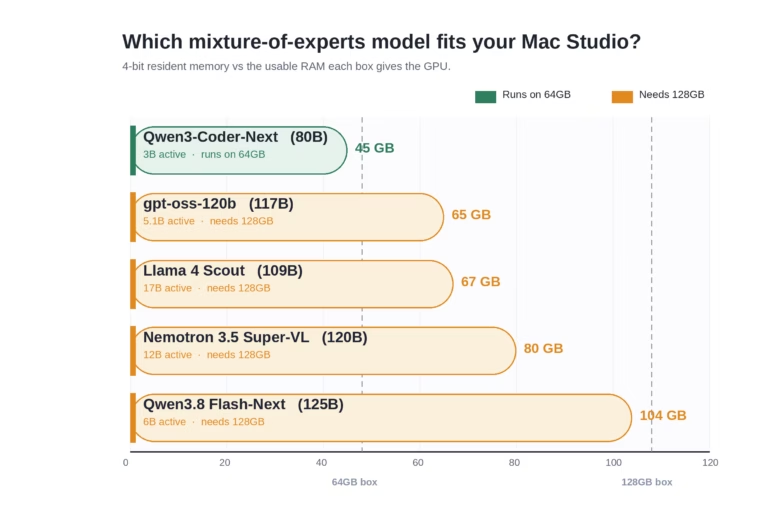
People running models at home on Nvidia cards are not the story this week, but the story still touches us. Nvidia’s hedge against its biggest customers building their own silicon — Google’s TPUs, Amazon’s Trainium, OpenAI’s Broadcom-designed chips — was a thriving open-weight ecosystem that needed CUDA. Customers are also finding the migration cost lower every quarter, because AI coding agents now do much of the porting work that once locked workloads in. If the post-Huang board tightens spending or export-control friction chokes supply, consumer and homelab pricing eventually moves with it. Nothing changes this week: my box still runs.
What to watch
- Tuesday, November 17: Nvidia’s Q3 earnings, Kress’s first market test as interim CEO.
- The successor search: whether the Haas approach goes anywhere, and whether the “bring Jensen back” current has any traction.
- The NDAA: whether the export-control bills survive conference, and whether the “remote access” loophole that reportedly let Chinese firms reach Megaspeed’s neocloud survives too.
- Neocloud financing: more Nscale-style funding scrambles would confirm the credit web is tightening.
Companies outlive founders more often than not. What doesn’t transfer cleanly is trust — with customers, with lenders, and with a government that is now holding all the cards. Nvidia spent three years convincing the world that compute was the new oil. It turns out the whole pitch had a single point of failure, and it wore a black leather jacket.