Grafana Alloy: The One-Binary Fix for Homelab Logging
The default homelab log strategy is SSH and journalctl, one machine at a time, after the fact. By the time you look, the container was recreated and its logs went with it, or the journal on a small root disk already rotated. You can fight that by building a stack from an old tutorial, but many of those tutorials are already out of date. Promtail, the standard Loki log shipper, reached end-of-life on March 2, 2026. If you’re still running it, the pipeline works but receives no security patches.
The fix is a single binary that handles logs, metrics, and traces in one configuration file, ships to the storage backend you already have, and runs on anything from a Raspberry Pi to a Mac mini. That binary is Grafana Alloy, and for a small number of self-hosted services it is the lowest-friction path to centralized logging that does not add a second monitoring stack.
Why the old path breaks
Two things make the “just use Promtail” path a trap today. First, the end-of-life means no more security updates, no new source types, and no bug fixes. Second, the old tutorials pair Promtail with a hand-built stack of sidecar agents, one per container, plus a separate metrics collector and a separate tracing agent. You end up running four or five small processes per host, each with its own config file, each to restart when the config changes, each a surface for drift between hosts.
Alloy collapses that into one component-based pipeline. One systemd unit. One config file. One binary. The same binary that ships Nginx access logs to Loki can also tail the systemd journal and read Docker container logs, with each source and output declared as a named component in a single config.alloy file.
What the pipeline looks like
A minimal Alloy deployment for a homelab host that runs Nginx, Docker, and systemd looks like this:
loki.source.file.nginx {
  targets = local.file_match.nginx_logs.targets
  forward_to = [loki.relabel.nginx_site.receiver]
}

loki.source.journal {
  forward_to = [loki.write.receiver]
}

loki.source.docker {
  forward_to = [loki.write.receiver]
}

loki.write {
  endpoint_url = "http://loki:3100/loki/api/v1/push"
}
That is the entire pipeline. Three sources, one output. The same config file runs on every host in the homelab with a different endpoint_url if the Loki host differs. No per-container sidecar, no Logstash, no Fluentd, no separate metrics agent. If you later want to add Prometheus metrics, the same Alloy binary can scrape and push them to a Mimir endpoint. If you want OpenTelemetry traces, the same binary can receive and forward them. One tool, one upgrade path, one config format.
Where it fits a homelab specifically
Three properties make Alloy the right call for a small, multi-host homelab rather than a larger observability platform:
It is already the standard shipper
If you already run Grafana Loki for log storage and Grafana for dashboards, Alloy is the collector Grafana itself ships and supports. It is not a third-party add-on. It is the official replacement for Promtail, merged into the same codebase. Installing it means one systemd unit and one config file, not a new language runtime or a JVM process.
It runs anywhere
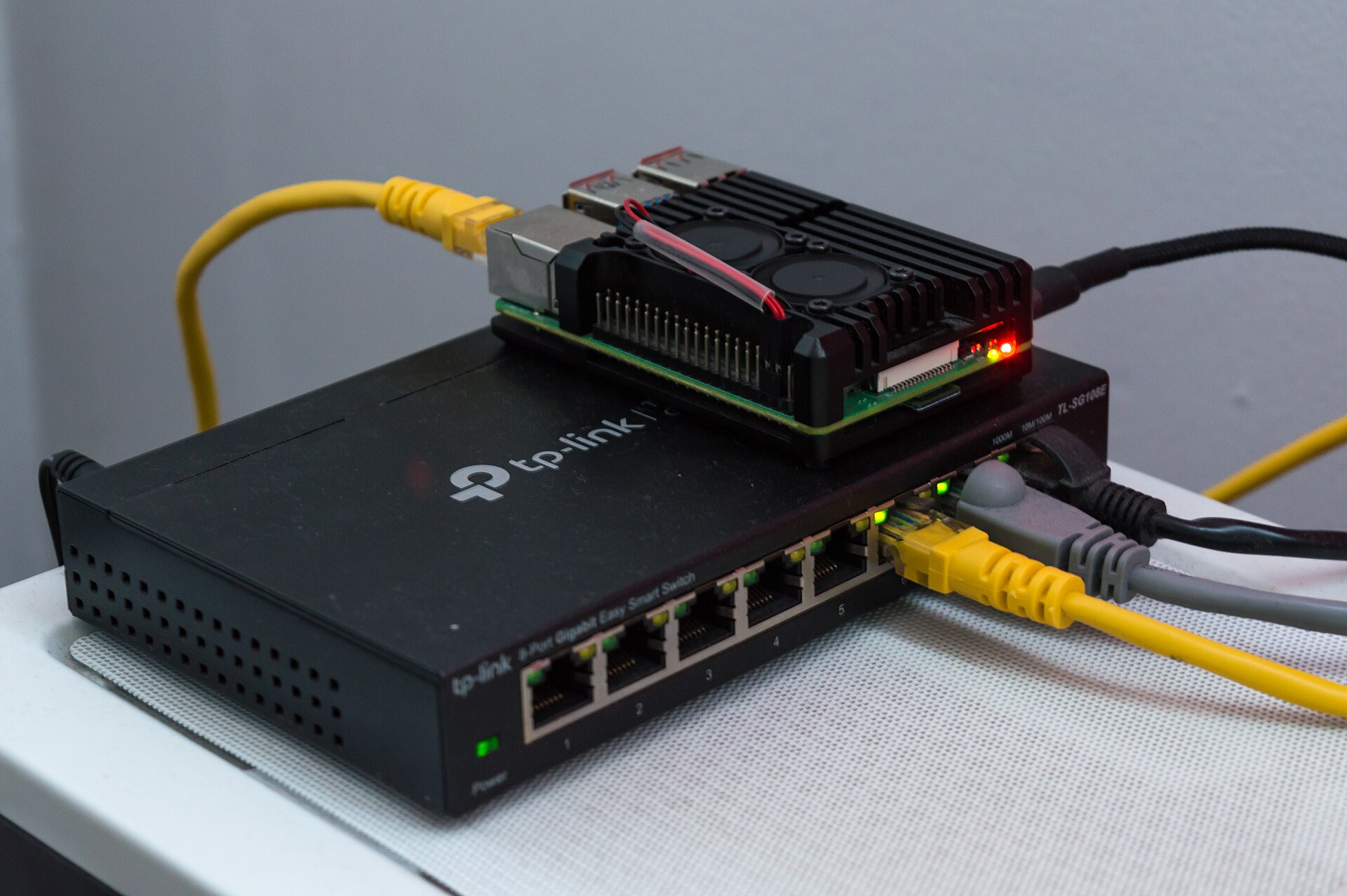
Alloy is a single static binary. It runs on Linux, macOS, and Windows. It runs on a Raspberry Pi and on a Mac Studio. In a homelab where the host fleet is heterogeneous by design, that matters more than it does in a uniform server room. The same alloy.service unit works on a Pi 5 running Docker and on a Mac mini running Ollama, with only the config file differing.
It does not require a second backend
The temptation with log aggregation is to pick a platform and run a second monitoring stack alongside it. OpenObserve is a Rust single-binary that is genuinely excellent, but running it means a second storage backend, a second query language, and a second dashboard surface. For a homelab that already has Loki and Grafana, the right move is to feed what you have, not to add a parallel system. Alloy ships to Loki’s native push endpoint with zero adapter. It is the cheapest possible path from “logs live on the host” to “logs live in a searchable central store.”
What it does not replace
Alloy is a collector, not a storage engine. It reads logs and forwards them; it does not index them or query them. That is Loki’s job. And Loki, in turn, is not a security information and event management system. If your use case is Windows Active Directory event forwarding with actor attribution and alerting, Alloy can ship those events via a syslog source, but the alerting and correlation logic lives in Grafana or a separate tool. Alloy is the pipe, not the sink.
For a homelab that wants centralized logging without the operational weight of a production SRE stack, Alloy is the collector that gets you there with the least moving parts. One binary, one config, one upgrade path. It is the right tool because it is the right size: large enough to collect from every source on every host, small enough to run on a Raspberry Pi without a second thought.