M5 Mac Studio for Local Models: 64GB Max vs 128GB Max vs 96GB Ultra — What to Buy
The short answer
M5 Mac Studio, M5 Max, 128GB — $4,799. Of the three configurations in question, it is the cheapest one that can actually hold the models you’ll want in two years, and it costs $700 less than the 96GB M5 Ultra while carrying 32GB more memory.
That is the whole argument in one line. The rest of this post is why.
The three options, and what they cost
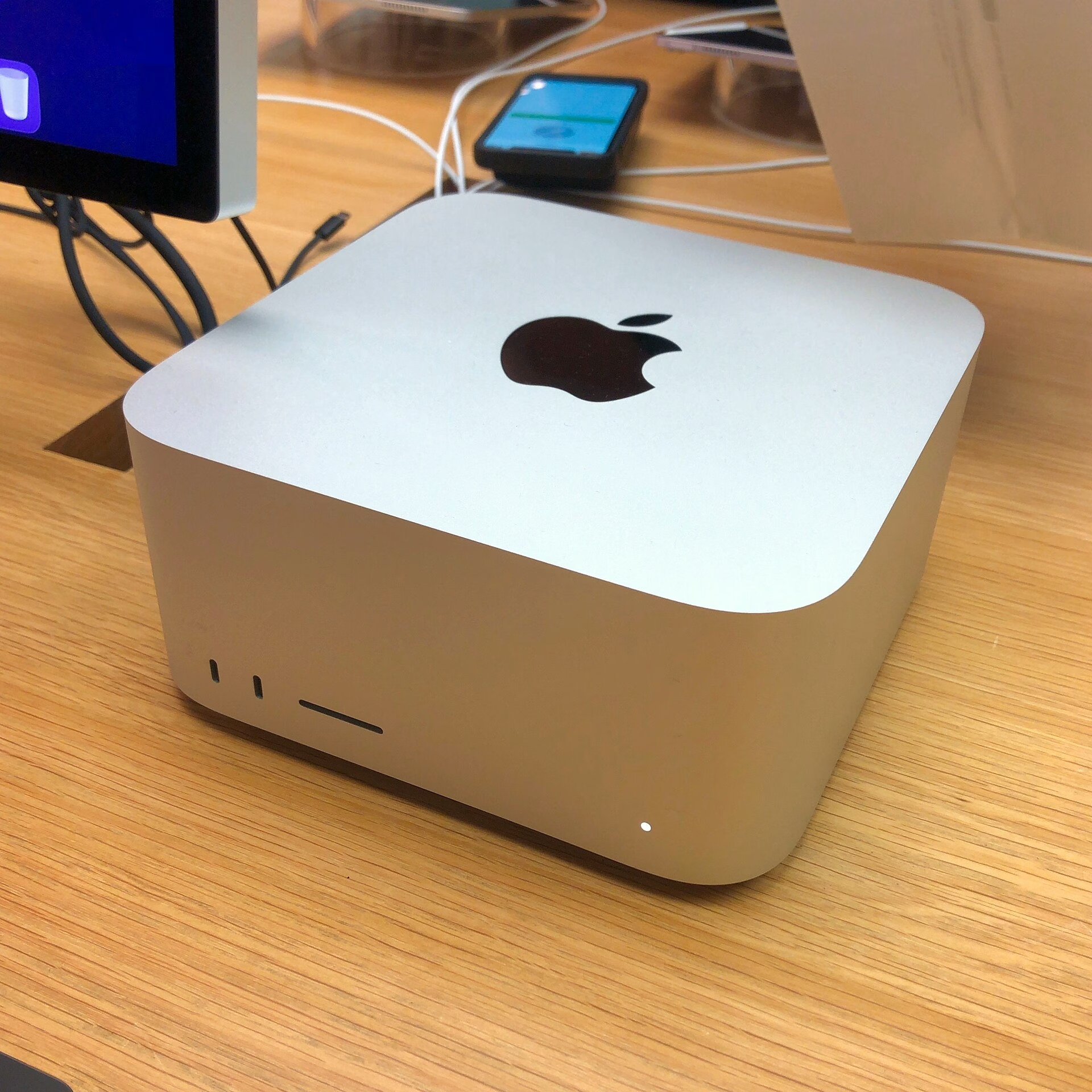
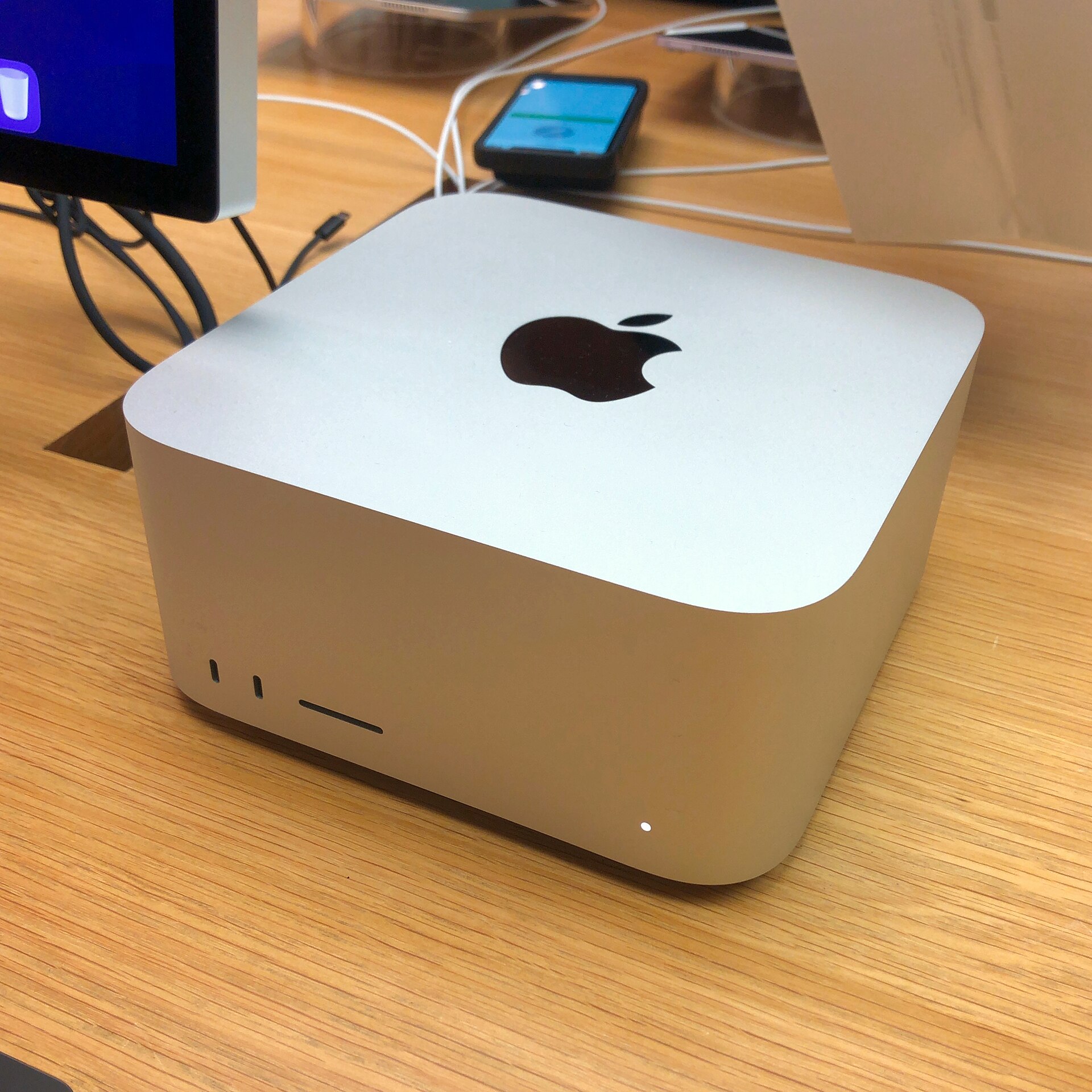
Apple opened pre-orders on August 25, 2026 and shipped on September 22. Announced US starting prices are $2,499 for M5 Max and $5,499 for M5 Ultra. Stripped of marketing, the three configurations stack up like this:
- M5 Max, 32-core GPU, 36GB — $2,499. The actual entry point. Note the GPU core count: it matters below.
- M5 Max, 40-core GPU, 48GB — $2,799 by the buyer-guide figure, and $3,100 by John Gruber’s correction of his own chart. The two numbers disagree; I’ll come back to that.
- M5 Max, 40-core GPU, 64GB — $3,199. The value pick for 32B-class work.
- M5 Max, 40-core GPU, 128GB — $4,799.
- M5 Ultra, 64-core GPU, 96GB — $5,499. Apple’s official price, and the configuration in the question.
The 512GB M5 Ultra arrives in late October with no announced price. Nothing here depends on it.
The hinge: memory is the only thing you can’t upgrade later
Every other spec in this decision can be worked around. Memory cannot. You cannot bolt unified memory into a Mac Studio after the fact, so the question is not “how fast,” it is “will it fit.”
Here is the concrete number that decides it. The 4-bit MLX build of Qwen3.5-122B-A10B on Hugging Face ships as fourteen shards totalling 69.59 GB of weights. That is measured from the actual file listing in the mlx-community/Qwen3.5-122B-A10B-4bit repository, not estimated from a parameter count. Add KV cache and you are past 70GB before you type anything.
Now the catch nobody mentions in the spec sheet: macOS does not hand the GPU all of your RAM. The default wired limit runs around 75% of physical memory, so roughly:
- 64GB → about 48GB usable by the GPU. A 70GB model does not load. Not “loads slowly” — does not load.
- 96GB → about 72GB usable. The 69.59GB model technically loads with a few gigabytes left over for context. In practice that is a party trick, not a workflow.
- 128GB → about 96GB usable. The model loads with roughly 26GB for context, and you can raise the wired limit with
iogpu.wired_limit_mbif you want more.
So of the three options on the table, exactly one runs the 100B-plus class comfortably. The 64GB is out on capacity. The 96GB Ultra squeaks in and suffocates. The 128GB Max is the floor, not the luxury option.
But the Ultra has twice the bandwidth
It does, and this is a real advantage — just not the one it looks like. Apple rates the M5 Max at 614 GB/s with the 40-core GPU and the M5 Ultra at 1.2 TB/s. Token generation is bandwidth-bound: producing one token means reading every active weight out of memory once. Divide bandwidth by bytes-per-token and you get a ceiling.
That math cuts differently depending on the model shape, and the difference matters more than the chip tier:
- Dense 70B at 4-bit (about 35GB of weights): Max ceiling ~17 tokens/sec, Ultra ~34. The Ultra’s bandwidth genuinely earns its money here.
- Dense 27B at 4-bit (about 16GB): Max ~45, Ultra ~89. Real-world decode lands near 60-70% of these ceilings.
- Sparse/MoE 122B-A10B: only about 10B parameters are active per token, so the bytes read per token are roughly a tenth of a dense 122B. Both chips stay fast. The Max’s bandwidth is not the bottleneck; the model’s 69.59GB footprint is, and the Ultra can’t hold it.
That last bullet is the reason I rank capacity over bandwidth for your stated goal. The models getting better right now are disproportionately large and sparse — big total size, small active footprint. They are exactly the class that punishes a 96GB ceiling and rewards a 128GB one.
The independent numbers that exist so far
Federico Viticci at MacStories tested a 256GB M5 Ultra — not the 96GB you’re considering — and the results are worth reading carefully:
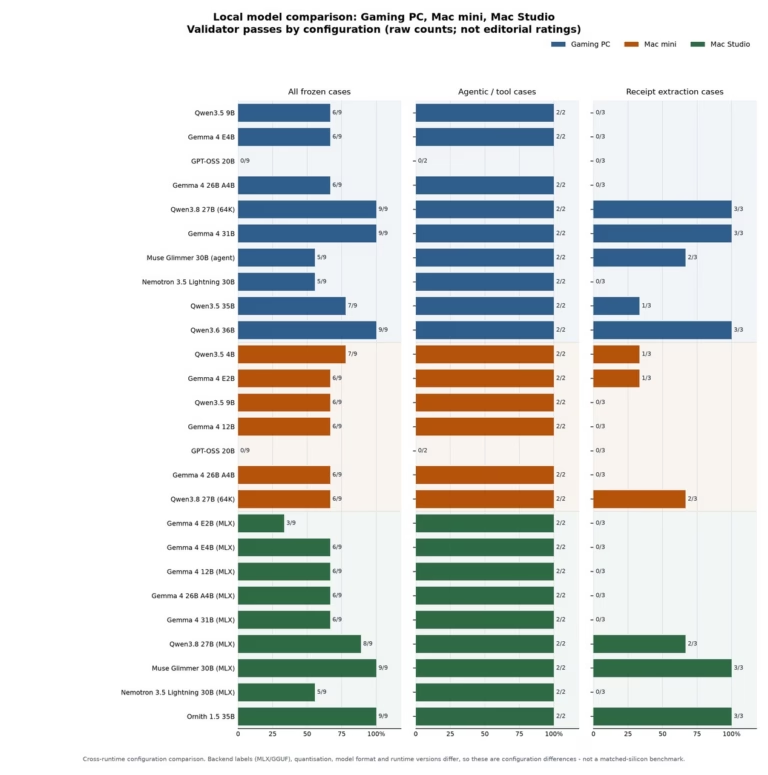
- 48 tokens/sec on the dense Qwen3.8-27B model; 52-143 tokens/sec on the large sparse model depending on the test.
- Prompt processing of 2,733 tokens/sec at 4K context versus 1,163 on the M3 Ultra — roughly +135%.
- Against an RTX 5090 on the same dense 27B: 59 tokens/sec for the Nvidia card versus 48 for the M5 Ultra. The 5090 also processed prompts faster (3,031 vs 1,701). What the 5090 cannot do is load a 155GB model at all.
Prompt processing deserves emphasis if you run agents or long documents. A long context is re-sent on every turn, so prefill speed compounds in a way single-token chat benchmarks hide.
The trap in the configurator
Two things to know before you click:
First, 64GB and 128GB require the 40-core GPU. The $2,499 entry model is a 32-core GPU part with 36GB, rated at 460 GB/s rather than 614. If you configure memory first and chip second, you will not end up where you thought.
Second, the memory options are tied to the chip variant — so changing the processor can silently change which memory tiers you’re even offered. Gruber flagged this and corrected his own price chart after misreading it.
On the price disagreement: buyer guides put the 40-core/48GB at $2,799, while Gruber’s account of the configurator flow makes it $3,100. I could not reach Apple’s live configurator pricing through an automated read — it renders client-side — so treat the mid-tier delta as approximate. The two numbers that matter most here, $4,799 for the 128GB and $5,499 for the Ultra, come from the same buyer-guide table and Apple’s own announcement respectively.
What each option is actually for
- 64GB ($3,199) — buy this if local models are a hobby and you live in the 7B-32B range. You give up every model above roughly 70B at 4-bit, permanently. For “models now and in the future,” it is a dead end.
- 96GB Ultra ($5,499) — buy this if you want speed on models that fit under ~72GB and you intend to serve several requests at once. The 1.2 TB/s is real and the concurrency is real. You are paying $700 more than the 128GB Max for 32GB less capacity.
- 128GB Max ($4,799) — buy this if you want the widest set of models that will actually load, for the longest time, at the lowest price of the three. It is the money-where-the-mouth-is choice for a machine you keep for years.
Verdict
M5 Max, 128GB, $4,799. Capacity first, because it is the constraint you can’t fix later, and because the frontier of open models is moving toward large sparse architectures that a 96GB machine cannot hold no matter how fast it reads memory. The Ultra is the better chip and the worse purchase for this particular goal: you would spend $700 more to load strictly less.
What would change my answer: an actual independent benchmark of the 64GB and 128GB M5 Max at long context, which nobody has published yet — every throughput figure for those configurations is currently bandwidth-derived, including mine. Apple and third-party figures also disagree on memory bandwidth in some places (one popular bandwidth write-up rounds the M5 Max to 700 GB/s and the Ultra to 1,400 GB/s against Apple’s 614 GB/s and 1.2 TB/s). I’ve used Apple’s figures throughout.
Sources
- Apple, Mac Studio technical specifications — core counts, memory tiers, 460/614 GB/s, 1.2 TB/s.
- Apple Newsroom, Mac Studio announcement — $2,499 and $5,499 starting prices, August 25 pre-orders, September 22 availability, 512GB in late October.
- MacStories (Federico Viticci), via Presenc’s compilation of M5 Ultra LLM benchmarks — 48 tokens/sec dense 27B, 52-143 sparse, 2,733 vs 1,163 prompt processing, RTX 5090 comparison. Presenc states none of the figures are its own measurements.
- Daring Fireball, M5 Max Mac Studio pricing notes — the 40-core GPU requirement, mutually exclusive RAM options, and the corrected price chart.
- Kingy.ai, Mac Studio M5 local AI buying guide — configuration price table and memory-tier capability mapping.
- Hugging Face, mlx-community/Qwen3.5-122B-A10B-4bit — the 69.59GB measured weight footprint.
- Contra Collective, memory bandwidth as the local inference bottleneck — the bandwidth/bytes-per-token roofline method and the 60-70% real-world factor.
Measured figures are cited to their source. Decode estimates derived from bandwidth are labeled as estimates, because no one has published independent tokens-per-second results for the 64GB or 128GB M5 Max yet. Prices are US, before tax, and configuration-dependent.