Vulcan Falls: ULA’s First Total Mission Failure Takes 40 Amazon Satellites and a Rocket the Moon Needs
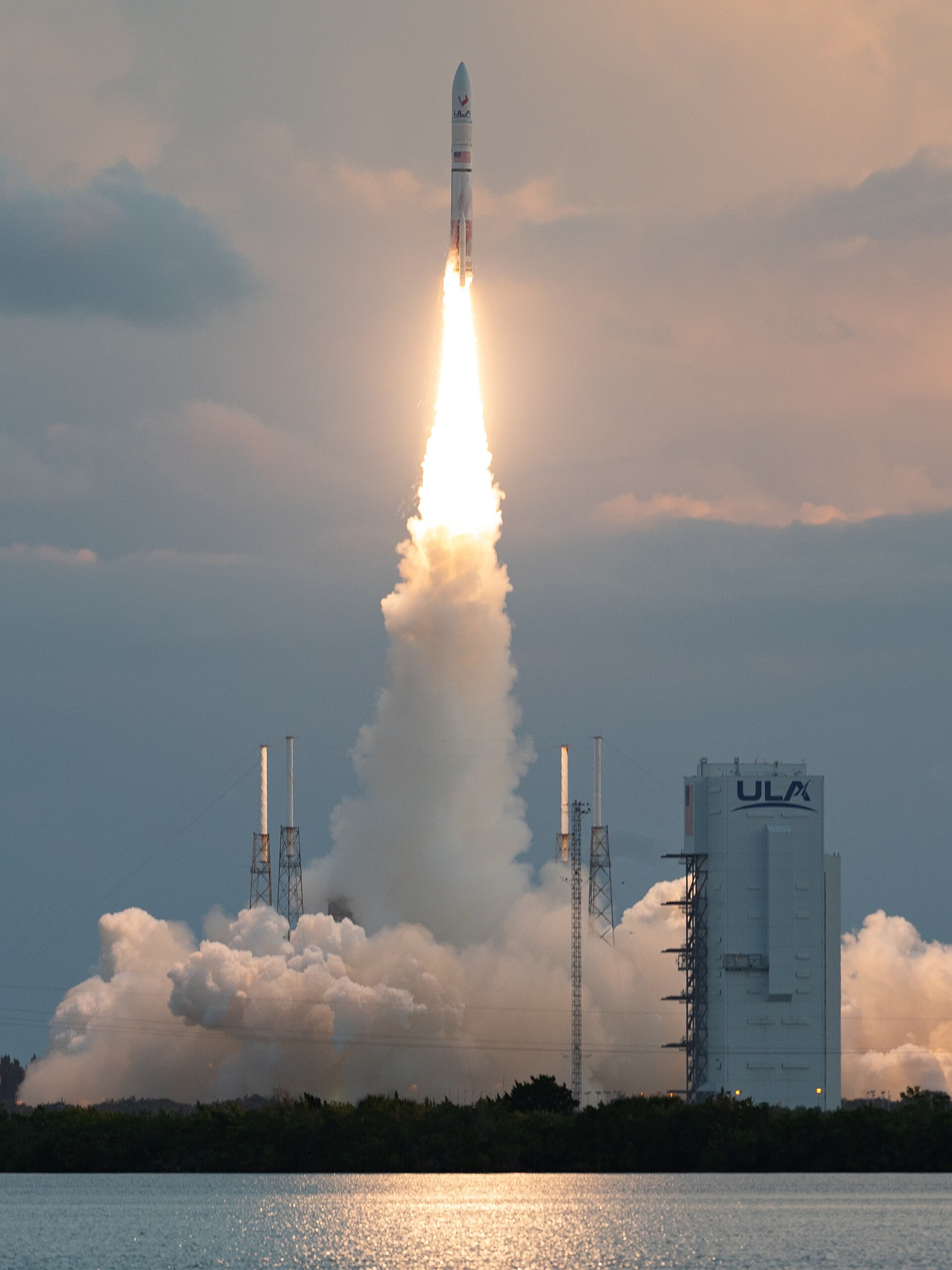
On Sunday afternoon, United Launch Alliance’s newest rocket did something the company had never done in twenty years: it failed outright. A Vulcan Centaur lifted off from Space Launch Complex-41 at Cape Canaveral Space Force Station at 12:40 p.m. local time carrying forty Amazon Leo broadband satellites, and roughly ten minutes into the flight it suffered an anomaly that left it unable to deliver the payload to orbit. The rocket and its cargo fell back to Earth. For ULA, the joint venture of Boeing and Lockheed Martin that has flown national-security missions for two decades, it was the first total mission failure of its entire history.
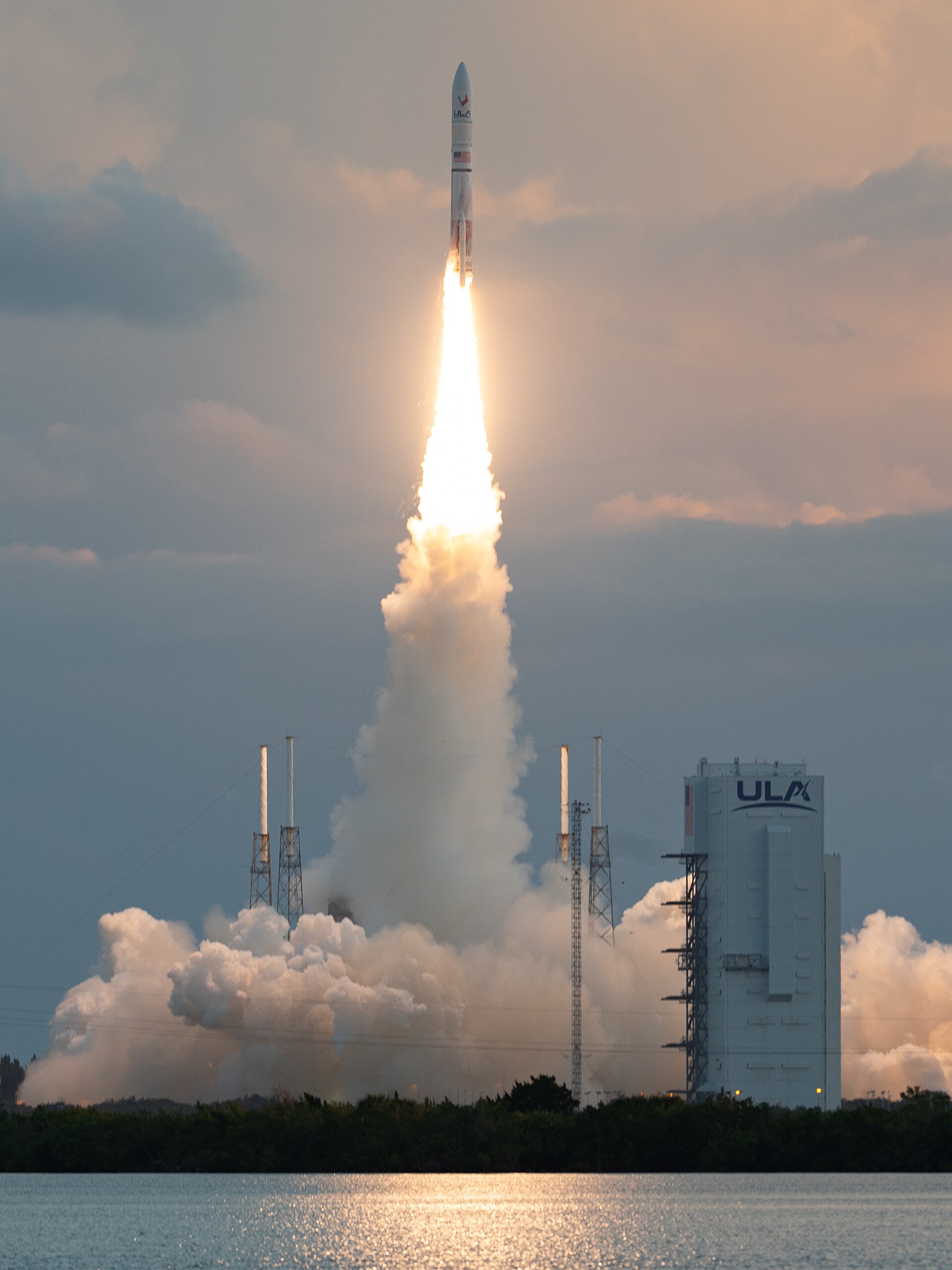
A rocket that had survived everything, until it didn’t
Vulcan is not a fragile newcomer. It has been to the edge of failure before. On two of its first four flights, one of its six solid rocket boosters misbehaved, and in each case the rocket corrected, kept flying, and delivered its payload. Those incidents triggered months-long reviews and investigations before ULA was cleared to fly again. Engineers had built a habit of treating Vulcan as a rocket that knows how to save itself.
Sunday was different. According to ULA, the rocket “suffered an anomaly 10 minutes into the flight and failed to deliver the Amazon mission to orbit.” The company said it did not immediately have “any specific data to understand what occurred.” Multiple sources told Ars Technica that the trouble began in the first booster stage — the methane-burning BE-4 engines supplied by Jeff Bezos’s Blue Origin — rather than in the Centaur V upper stage or the solid boosters. The telemetry ULA had been broadcasting showed the twin BE-4 main engines, which should have shut down just before the five-minute mark, continuing to fire for at least thirty additional seconds. That kind of overburn is consistent with a booster stage that was underperforming and burning longer in an attempt to make up the difference. A few seconds later the rocket began to spin, and the animation ULA was driving from real-time telemetry showed the Centaur’s two RL10 engines vectoring thrust in what looked like a last attempt to bring the vehicle back on course. ULA ended its live broadcast without discussing the anomaly and then declared the mission a failure in a statement on social media.
“ULA exists to provide assured access to space for our nation and for the customers who depend on us,” the company said. “That purpose is why we take on some of the hardest missions in spaceflight, and why we hold ourselves to the standard of mission success. Today, we did not meet that standard.”
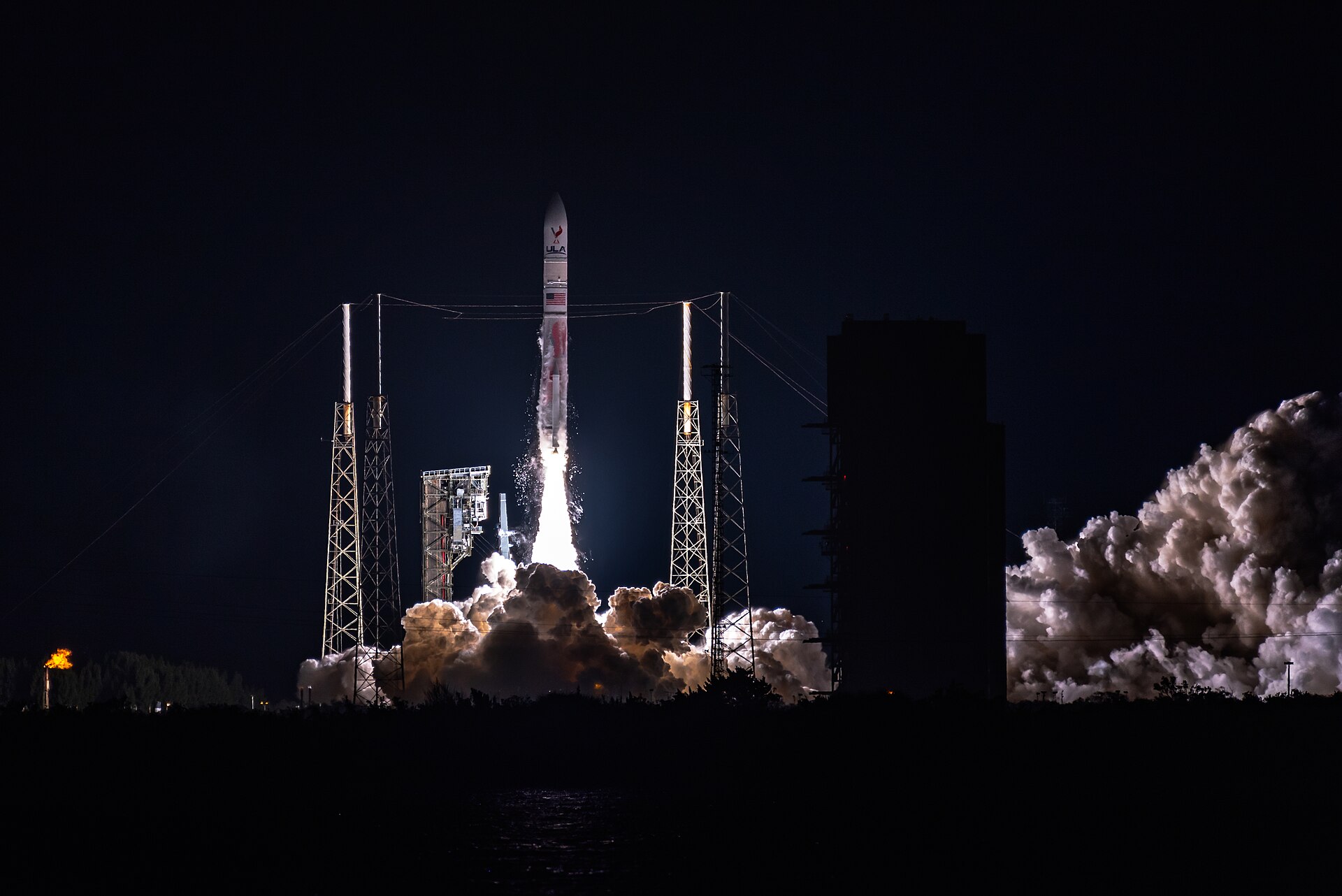
Why the payload matters more than the payload
The lost cargo is itself a footnote. Forty Amazon Leo satellites are a serious loss, but Amazon already has more than a thousand manufactured and in storage, and a few dozen are not what will reshape the industry. What matters is the grounding of the rocket that was supposed to launch them.
This was the first of 38 Vulcan launches Amazon had booked to build out its Amazon Leo constellation — the company’s answer to SpaceX’s Starlink. As of this week, Amazon Leo holds just 396 satellites in orbit, a fraction of the 3,292 first-generation spacecraft the FCC has licensed. Amazon told Ars in October that it has enough satellites to begin initial commercial service by the end of the year, but full capacity will take many more launches. With the primary launch vehicle now grounded for an investigation, that schedule is in serious doubt.
Amazon had built in redundancy, and the redundancy is what will keep its constellation alive. In 2022 the company signed with three launch providers at once: ULA’s Vulcan, Arianespace’s Ariane 6 out of French Guiana, and Blue Origin’s New Glenn. Arianespace now has 24 Amazon launches booked, with three flown and a fourth set to lift later this month. But New Glenn is not a safe harbor either. It uses the same family of BE-4 engine that flies on Vulcan, and in May a New Glenn exploded during a ground test in Florida — an incident investigators traced to a faulty valve on one of the booster’s BE-4 engines. If engineers determine that a BE-4 was responsible for Sunday’s failure, Blue Origin’s return to flight could slip past the start of next year, and with it the batch of Amazon Leo satellites it was meant to carry.
The fallback that keeps Amazon moving is its chief rival’s workhorse: SpaceX’s Falcon 9. Amazon has ten Falcon 9 missions booked and had previously contracted with SpaceX to accelerate its deployment after its own rockets kept stalling. But Musk’s company is rapidly moving Falcon 9 and Falcon Heavy toward retirement in favor of Starship, and has not yet certified Starship for national-security missions — a process that takes years. For the months ahead, Amazon will lean on the ten Falcon 9 flights and Ariane 6 to add any more Leo satellites to the network.
A national-security ripple
Amazon is not ULA’s only customer. The Vulcan is on contract to fly roughly half of the U.S. military’s national-security space missions over the next few years, and the Space Force relies on SpaceX and ULA to launch its most sensitive payloads. When Vulcan has slipped before, military officials already moved six national-security launches from ULA to SpaceX, using Falcon 9 and Falcon Heavy to get time-sensitive payloads into orbit sooner. Expect more of those swaps. For the foreseeable future, the Pentagon’s dependence on SpaceX will only deepen — a dependency complicated by the fact that Falcon 9 and Falcon Heavy are being phased out and that Starship is not yet cleared for the military’s needs.
The Moon, and why this story ends in Washington
The most consequential thread runs to NASA. The space agency recently selected a version of ULA’s Centaur upper stage for future flights of the Space Launch System, the rocket that will carry astronaut crews to the Moon, replacing a costlier and unproven Boeing design. NASA officials now need to rule out any problem with the Centaur V on the doomed launch as they aim to begin flying ULA’s Centaur on crewed lunar missions as soon as 2028.
That link connects this failure to an earlier Oddbyte story on Artemis and the Lunar Gateway, in which NASA chose ULA’s Centaur V as its new SLS upper stage to streamline logistics. The same upper stage that was meant to carry crews toward the Moon was on a rocket that just fell out of the sky. NASA Administrator Jared Isaacman offered an immediate response, writing that “the team at NASA is available to assist in all matters related to the investigation and remediation effort. Artemis, Moon Base, and the nation need ULA. We are in your corner and here to help.” The words are generous, but they underscore the stakes: a rocket that is now grounded is the same hardware the lunar program is quietly betting on.
What happens next
ULA has said engineers will investigate to “find the cause, determine the appropriate corrective action, and return to flight as quickly as possible,” and that it is “committed to full transparency with our customers.” Amazon was more measured, noting that “there is risk with any launch, and that’s especially true for inaugural missions like LV-01,” and that it “believe[s] they’ll learn from this mission and deliver on their long-term plans for Vulcan.”
The broader picture is one of a launch industry squeezed from every side. Amazon needs three different rockets to get its internet constellation in orbit, and two of them — New Glenn and now Vulcan — are in the middle of setbacks that may share a common cause in the BE-4 engine. The Space Force, racing to keep pace with China’s growing presence in orbit, is consolidating on the one provider it can reach: SpaceX, even as that provider prepares to retire the very rockets it now leans on. And NASA, planning its return to the Moon, is watching the failure of a component it just selected for its crewed launch system. A single misfired booster can ripple across a satellite internet, a national-security fleet, and a lunar program at once — and that is exactly what happened on a Sunday in Florida.