The Best Pet in the World: The Case for the Dog
For more than thirty thousand years, no other animal has held a place so central to human life. We did not merely keep dogs; we shaped them, carried them, fought beside them, and let them into our homes, our hospitals, our search-and-rescue teams, and the innermost chambers of our affections. Of every species on Earth, the dog alone occupies a paradox: it is at once a wild-descended predator and the most intimate domestic companion. This paper argues that the dog is, by every reasonable measure — biological, emotional, social, and practical — the best animal to have as a pet.
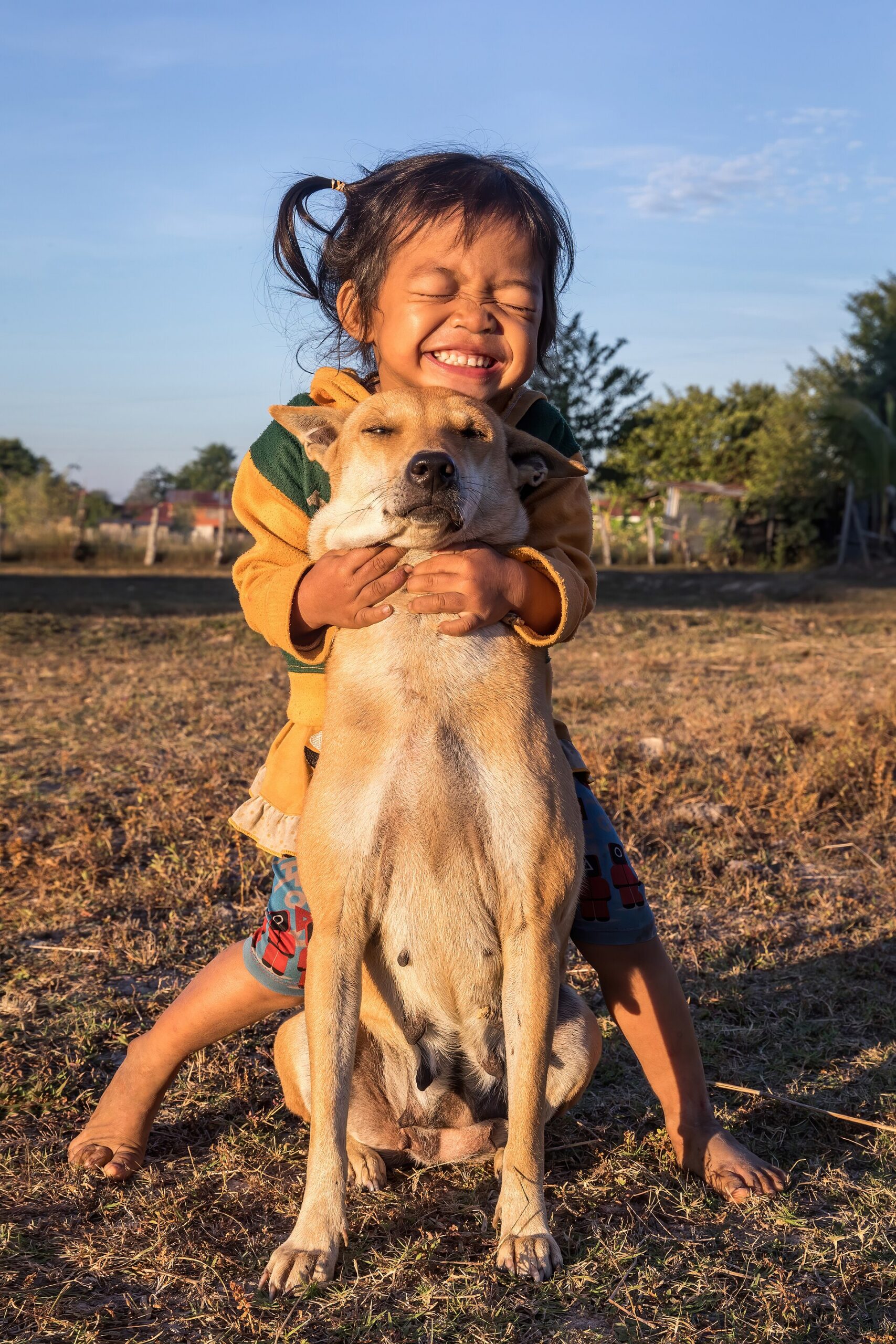
The argument is not that other pets are without merit. Cats are self-sufficient and charming; birds sing; horses offer companionship on the scale of shared landscapes. Yet each of these animals excels at a narrower set of qualities. The dog’s superiority lies in its range: a single species, bred and refined over millennia, now spans the size of a Chihuahua to that of a Great Dane, from the silent sentry to the exuberant greeter. Where another species offers a fixed temperament, the dog offers a menu — and the menu includes a member who fits nearly any human life. That versatility, combined with a depth of emotional attunement unmatched among domestic animals, is the foundation of the case.
The Long Partnership
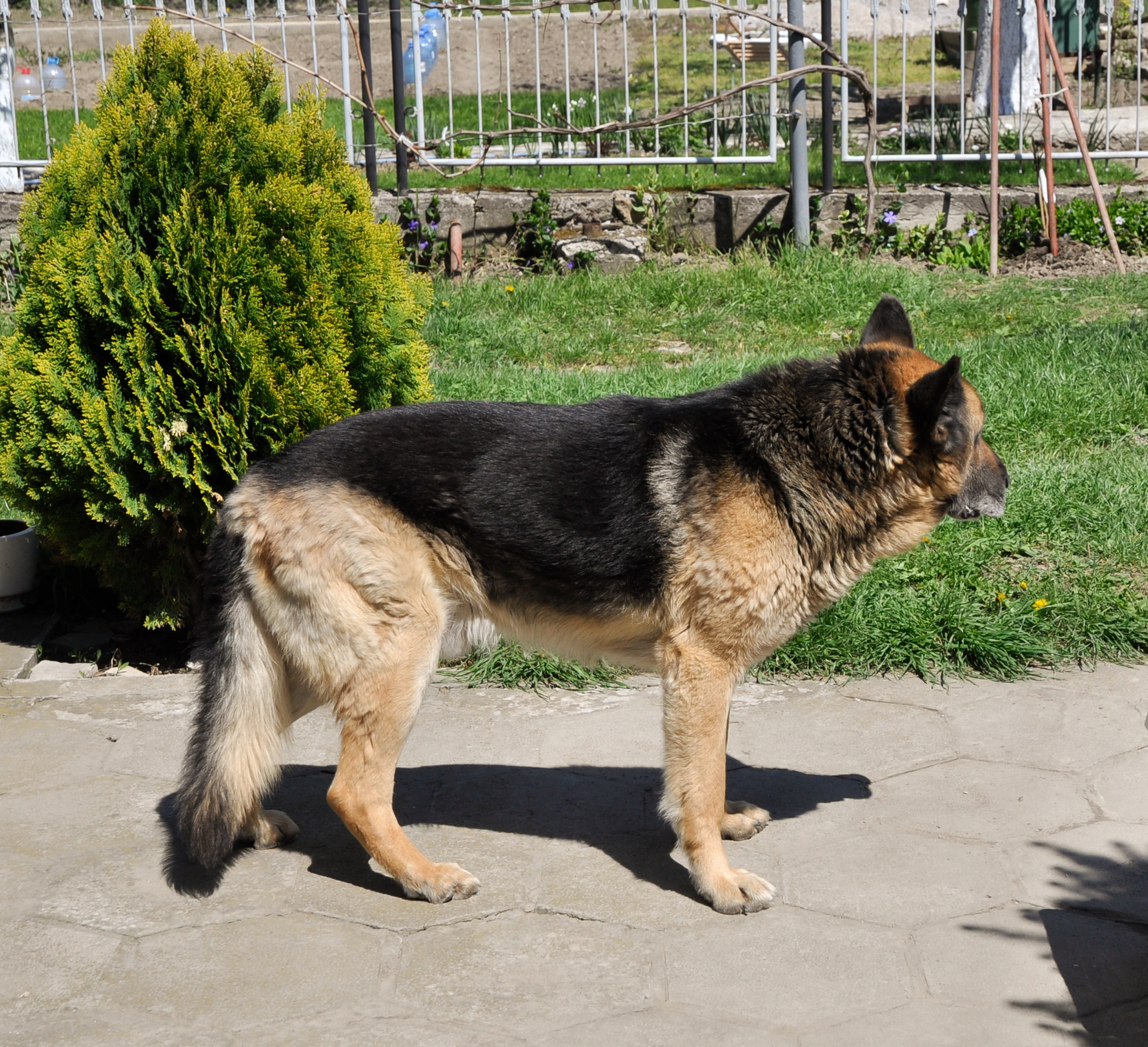
Humans and dogs are, in a real sense, co-evolved. As dogs settled near the first human camps, the individuals most tolerant of people, most willing to read human gesture, and most eager to cooperate survived and bred. The result is an animal whose social instincts are calibrated to us in a way no other species approximates. Dogs read our gaze, follow our pointing, and interpret our vocal intonation with a fidelity that researchers have found rivals that of a human child. A dog looks into your face the way a child does, and in that look is the origin of the bond — a mutual attunement that turns a relationship between two species into something that feels, to both, like kinship.
That partnership is not historical trivia; it is a present, living advantage. When you say “walk,” a dog understands not merely the word but the social transaction behind it. When you frown at a stranger at the door, your dog’s alertness rises in sympathy. This is not simple imitation; it is a shared emotional space, and it is the first pillar of why the dog is the ideal companion.
Companionship and Emotional Health
Nothing in the domestic animal kingdom rivals the dog’s capacity for emotional attunement. A dog does not merely coexist with you; it tracks your emotional state and responds to it. Owners report that a dog’s greeting can lift a depressive episode, that the simple act of walking a dog structures a day, that a dog’s presence lowers the tension of a lonely room. These are not sentimental impressions. Studies of dog owners consistently show lower rates of loneliness, lower resting heart rate, and higher reported well-being than in owners of other pets or of no pet at all. The dog is, in effect, a living intervention against one of the great modern harms — social isolation.
The mechanism is partly biochemical. Petting a dog raises a human’s oxytocin, the same hormone associated with bonding to infants and lovers, while simultaneously lowering cortisol, the stress hormone. A dog’s wagging tail, the warm weight of the animal across the foot of a bed, the steady gaze — these are not decorative. They are the physiological language of attachment, and the dog speaks it fluently. For a person navigating grief, anxiety, or the quiet erosion of a solitary life, the dog offers something rare: an affection that is, almost by nature, unconditional.

Consider the photograph above: a corgi at ease on a bed, tongue out, eyes half-closed in contentment. The expression is not performance. It is the visible signature of an animal that has learned, over the course of its life, that a human is a source of safety and joy. That is the emotional core of the argument. Among domestic animals, few — and perhaps none — can offer affection of that quality and that consistency. The cat may offer it; the dog offers it continuously, and with a volume and an eagerness that no other companion animal approaches.
The Range of Companionship
A second pillar is the dog’s extraordinary range. Other pets demand a specific kind of owner. A cat tolerates absence; a parrot requires hours of daily interaction; a horse demands land and expertise. The dog, by contrast, accommodates a startling variety of lives, and within that variety every owner can find a match.
The apartment dweller has the small breeds: the Cavalier, the Pug, the Bichon — animals that make a small flat feel like a home. The active athlete has the retriever or the border collie, for whom a long run is not a chore but a celebration. The senior who needs a reason to rise in the morning has the gentle dog whose loyalty makes the day bearable. The person with an open heart and no yard at all still has the option, because a dog does not require land, only time and attention. This flexibility is not a minor convenience; it is the reason the dog is the single most widely kept domesticated animal on the planet. Where a species must fit its owner, the dog is bred to fit the owner, in whatever form that life takes.
Practical and Social Value
Emotional value is the dog’s most celebrated gift, but the practical case is at least as strong. A dog is a security system that breathes: it will alert you to a smoke alarm, a visitor, a strange sound. It is a built-in incentive to exercise, to get out in the sun, to move the body every day — a structure that, for a sedentary person, may be the difference between a healthy and an unhealthful life. And it is a social technology of the first order. Dog walkers meet dog walkers. The dog is an icebreaker of remarkable reliability, opening conversations with strangers in a way that no other pet facilitates.
The working dog extends the case still further. Service dogs, guide dogs, therapy dogs, police dogs, search-and-rescue dogs — the dog is the animal we trust with the heaviest human tasks. A guide dog does not merely carry a load; it interprets the world for a blind person, deciding when a step is safe, when a curb must be climbed, when to stop. That is not training a dog to perform tricks. It is entrusting the animal with the freedom of its owner, and the dog does not fail that trust. No other domestic animal approaches this level of responsibility. The dog does not just live with us; it acts on our behalf, and acts well.
The Joy of the Shared Life
There is a third, less quantifiable dimension: the sheer joy of a life shared with a dog. A dog turns an ordinary day into a sequence of small, bright events — the walk that begins it, the game that punctuates it, the warm body that ends it. The dog does not ask for anything that is not already freely given. It asks only for the walk, the meal, the presence. And in return it gives a loyalty that is, among all domestic animals, the most unambiguous. The cat may offer its affection on its own terms; the dog offers it without reservation.
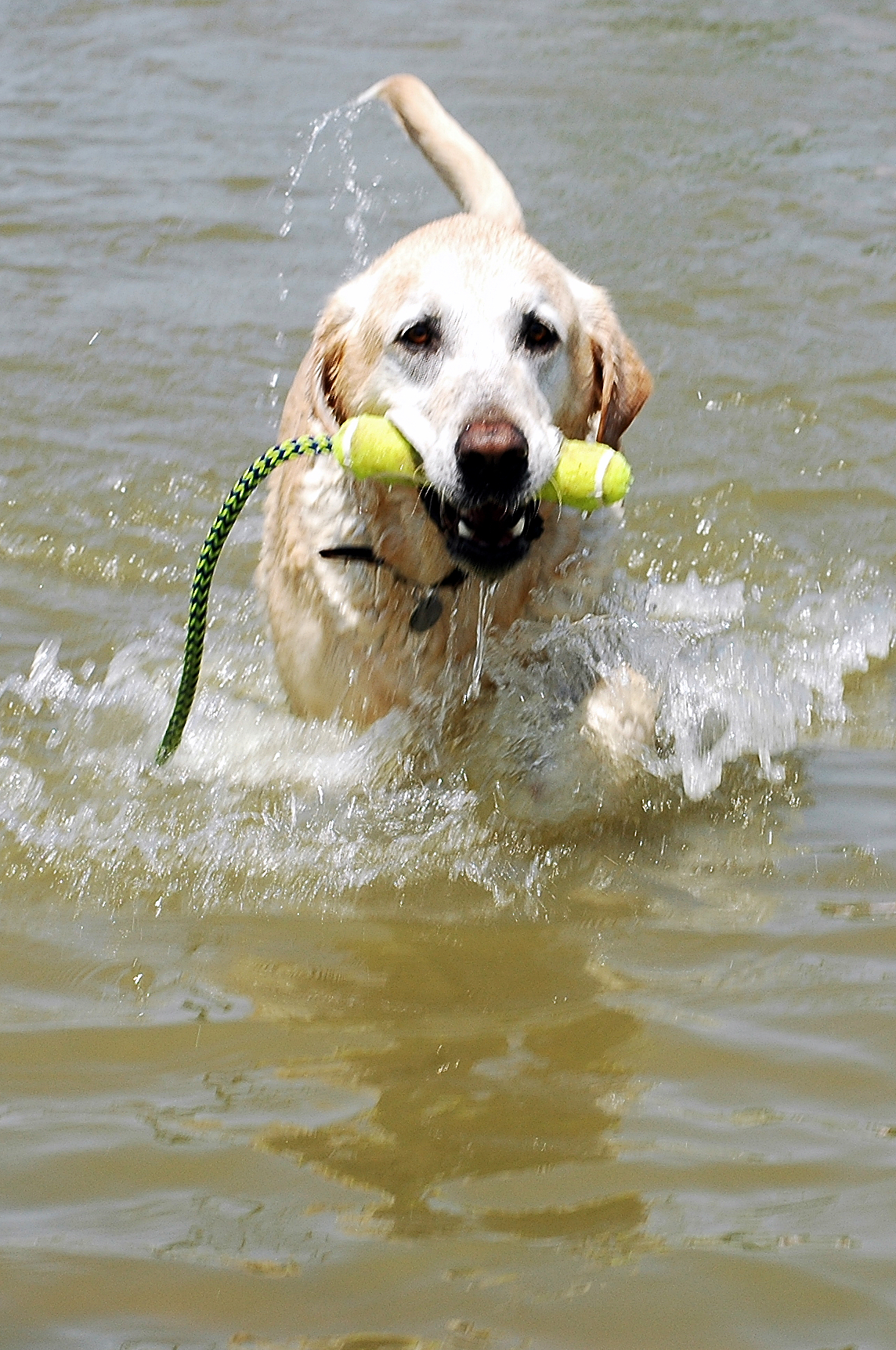
The photograph above is of a yellow Labrador carrying a toy through the shallows, tail high, body alive with motion. It is a picture of what a dog is at its best: an animal for whom the act of retrieving — of taking what you offer and returning it, again and again, with no fatigue of spirit — is a pure joy. The game of fetch is not a trick. It is the dog’s expression of trust. When a dog brings the ball back, it is saying, in the only language it needs, “I will keep doing this for you, because I love you, and you love me back.” That transaction, repeated a thousand times, is the fabric of a shared life, and it is a thing that no other domestic animal offers with such consistency and such depth.
The Dog as a Teacher
A final, and perhaps the most overlooked, reason the dog is the best pet is that it is a teacher. A child who raises a dog learns responsibility — the animal must be fed, walked, cared for, on a schedule that does not bend to the child’s convenience. The child learns empathy, because the dog’s needs are felt before they are spoken. The child learns the meaning of loyalty, and, in the end, the meaning of loss, because a dog’s life, though long by the standard of the wild, is short by the standard of the human. Each of these lessons is offered freely, without instruction, simply by the presence of the animal.
For the adult, the lessons are different but no less profound. A dog teaches patience, in the long work of training; it teaches attentiveness, in the daily reading of the animal’s mood; it teaches the capacity for a love that asks nothing in return but the fact of the other’s existence. In a world that increasingly rewards performance and extraction, the dog offers a relationship that is, at its heart, a gift — and in that gift the owner learns something that the rest of the world too often forgets: that it is possible to be loved without condition, and to love in return without reservation.
The Life at Every Age
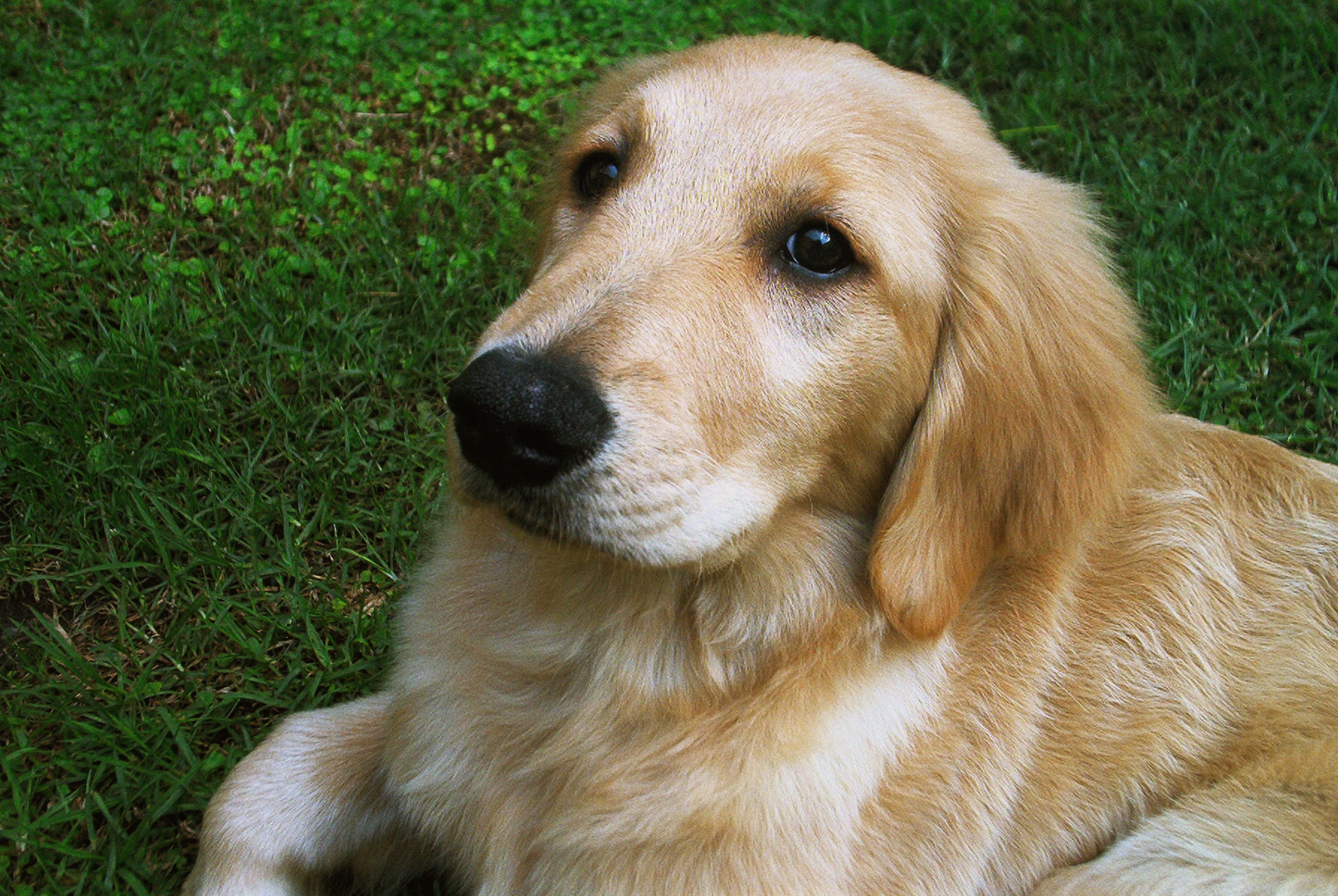
A dog is a companion for a life in full. A golden retriever puppy, eyes open wide on the grass, looks at the world the way a child does — with total trust and total wonder. A golden retriever is among the most beloved breeds for good reason: it is patient, gentle, and endlessly forgiving, a dog that can move from the energy of youth to the grace of age without losing its essential warmth. To bring a puppy into a home is to invite a small, living witness to every important day, and that witness, as the years pass, becomes a fixture of the family — a member whose presence marks the passage of time itself.
Addressing the Objections
The case is not without its critics. Dogs demand more than cats: they must be walked, trained, socialized, and cared for with a consistency that a working person may find hard to maintain. They shed, they bark, they chew, and they demand time. A person who is absent for long stretches may not be the right owner. These are real limitations, and they should not be minimized. But they are not flaws in the dog; they are the necessary cost of a relationship of this depth. The cat’s independence is a virtue for the person who cannot commit; the dog’s dependence is a virtue for the person who wants a bond. To call the dog’s demands a weakness is to confuse obligation with attachment. The dog asks for your time because it values your presence. That is not a burden; it is the price of the most complete companionship available to a human being.
There is also the objection that the dog’s short life is a cruelty — that to love an animal that will die before you is to court a grief that could have been avoided. This is the hardest objection, and it deserves a full answer. It is true that a dog’s life, measured in years, is shorter than a human’s. But it is also true that the depth of the bond is not measured in years but in presence, and that a life of ten years, fully lived in the company of a dog, offers a concentration of love, loyalty, and joy that a longer but shallower companionship cannot match. The dog’s shortness of life is not a flaw in the relationship; it is the condition that makes it luminous. What we do not have forever, we do not take for granted, and the dog’s mortality is part of what teaches us to love without reservation.
Conclusion
The dog is the best animal to have as a pet not because it is the most convenient, the most beautiful, or the most useful in any single measure — though it is, in each of these, a contender — but because it is the animal that gives the most complete relationship a human being can have with another living creature. It gives emotion, in the form of unconditional affection; it gives structure, in the form of the daily walk and the shared routine; it gives safety, in the form of the alert that watches the door; it gives joy, in the form of the game played and the body that warms the bed; and it gives meaning, in the form of the lessons of responsibility, empathy, and the cost of a love that ends. No other domestic animal offers all of these, and few offer any one of them as fully. The dog does not merely fill a room; it fills a life. And that, above all, is why the dog is the best animal to have as a pet.