For Love of Waterkind: The Shedd Aquarium Story
A Temple Dedicated to Water
For Love of Waterkind. Shedd Aquarium stands as Chicago’s most enduring gift from one citizen to his city, born from the generosity and vision of John G. Shedd, a former Marshall Field & Company executive who rose from stock boy to department store president.
In 1924, while still living in Milwaukee, Shedd donated $2 million — roughly $35 million today — with one clear purpose: Chicago must have the best aquarium in America. “Every great city has these institutions,” he wrote. “Chicago is a great city and should have a good aquarium.” His widow added another $1 million after his death in 1926, ensuring the dream could begin.
Architecture as Amphibious Allegory
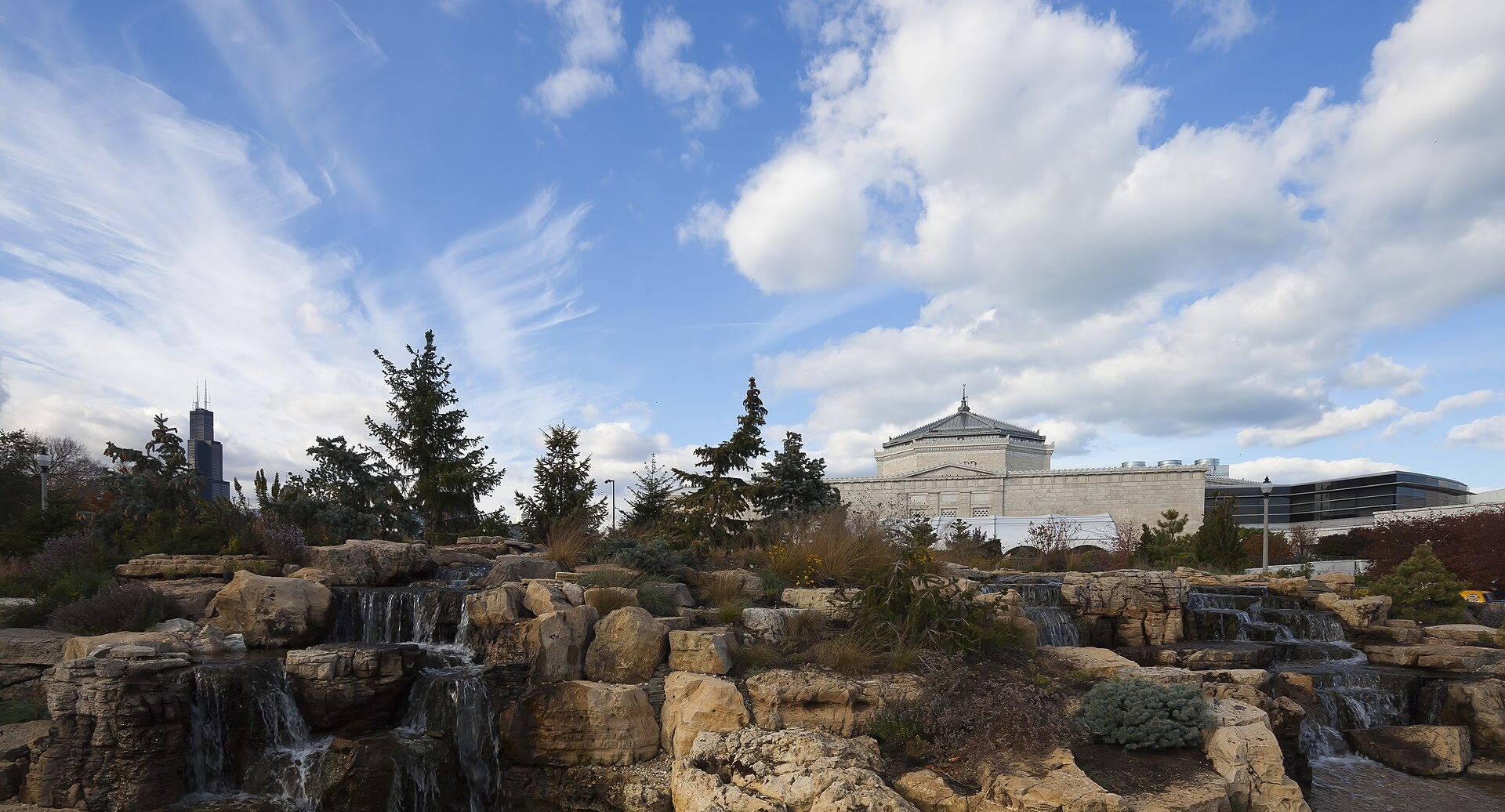
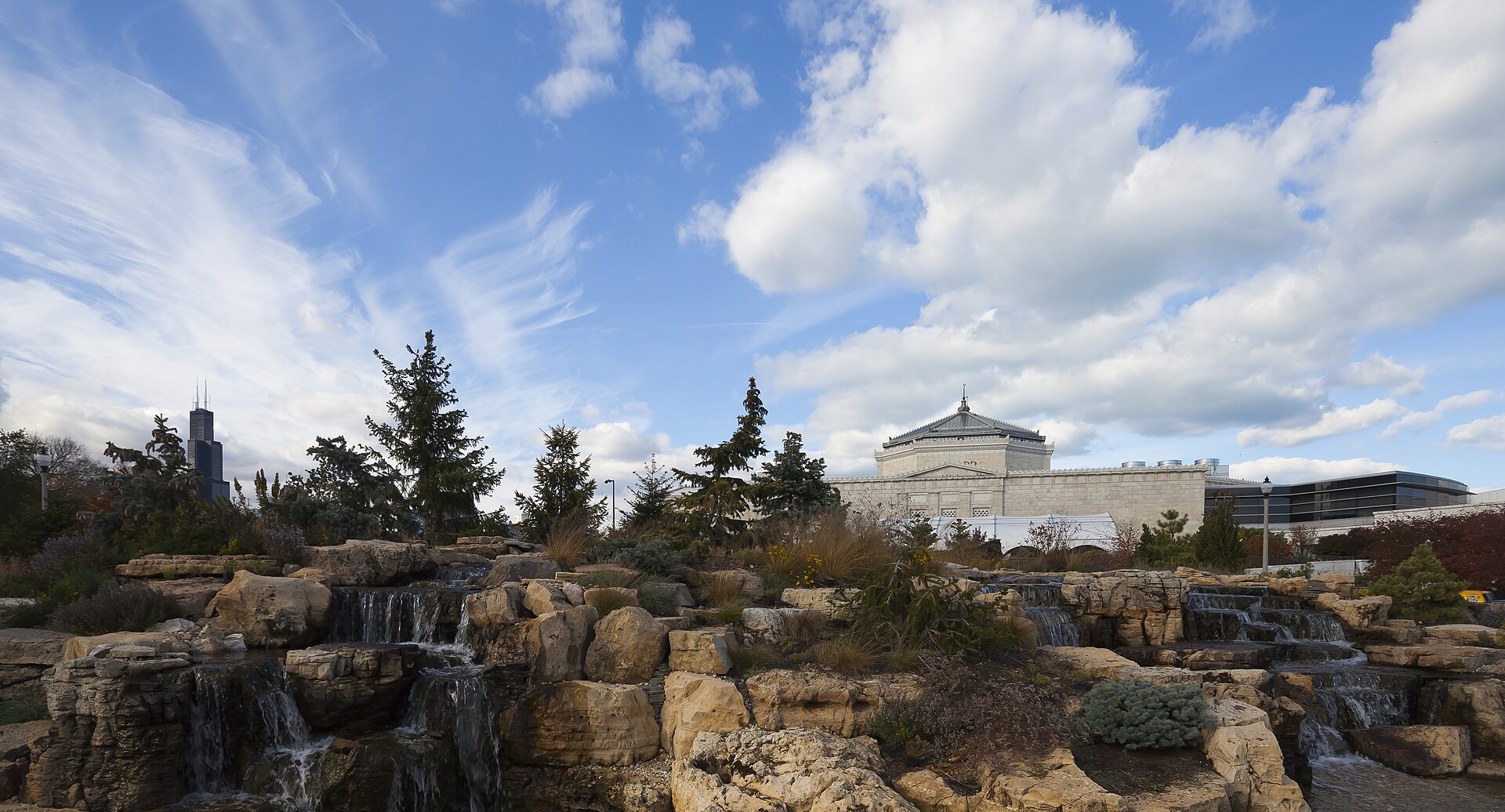
The building, designed by Graham, Anderson, Probst & White — the same firm behind the Field Museum and Wrigley Building — is a Beaux-Arts masterpiece built entirely of white Georgia marble and terra cotta. Where Greek temples rest on a circle-in-a-cross floor plan, Shedd’s original structure is octagonal, a deliberate choice to maximize water surfaces in an era when tank geometry dominated exhibition design.
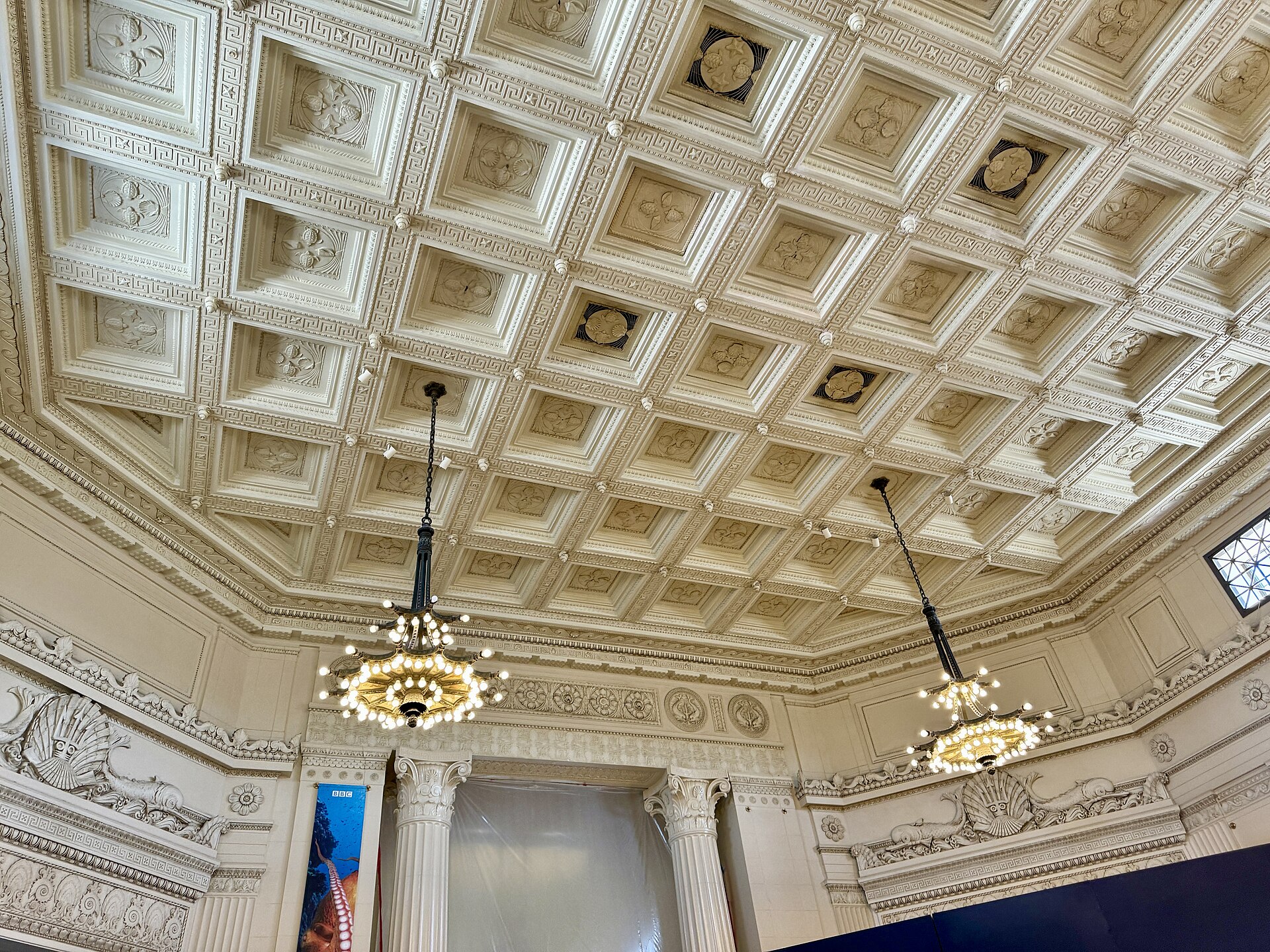
Around the central rotunda, where today you might gaze at sharks gliding past stingrays, once hung “The Fish of the World,” a 20,000-gallon tank that drew millions. Every surface tells marine tales: limestone embedded with actual sea fossils; marble carved with fish, turtles, octopuses, and Neptune’s trident (from which the dome is crowned); terracotta reliefs showing creatures from every ocean basin.
The lobby clock displays aquatic symbols marking the time — dolphins swimming through the numbers rather than clock hands. It exemplifies why the architects insisted: “Wherever consistent with the classic designs, various aquatic motifs were worked into the marble and tile…Fishes, turtles, shells and invertebrates, all modeled from life, are seen on every hand.” That dedication remains today.
Granddad (the full name was Grand Dad, but everyone shortened it), a beluga whale who arrived in 1933, became a beloved fixture for three generations until his death in 2017. His story appeared in daily newspapers and drew children from coast to coast. “He taught them about whales,” said longtime staff member Mary Chase Perry Stratton.
Ten Thousand Gallons: Caribbean Reef
Shedd opened with only 5 million gallons of water — about what today 14 large pools would hold. That expanded to 270,000 gallons in 1933, then nearly trippled again after the first major addition connected to the original via a covered tunnel.
But the greatest single expansion came in 1971 with Caribbean Reef, which placed 85,000 gallons in view from the rotunda’s center. Then another expansion added 326,900 gallons — making the total water collection visible to guests then over 438,000 gallons (approximately 1.6 million liters).
Beluga Country: Abbott Oceanarium
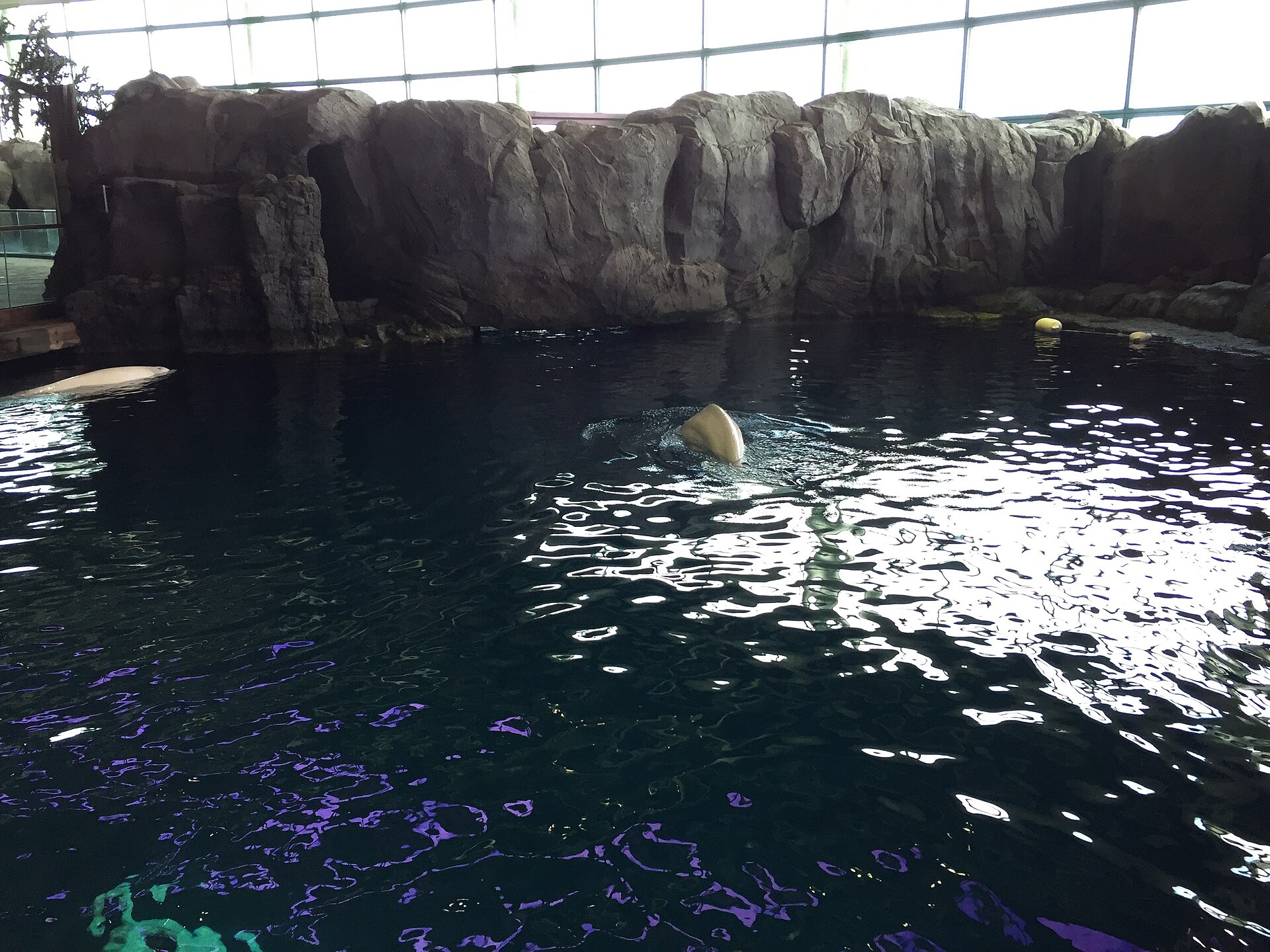
The largest addition ever came in 1991: the Abbott Oceanarium. Its white Georgian-marble exterior matches the original building while housing a revolutionary system connecting four tanks with windows for guests to observe belugas swimming between them.
When beluga whales took residence, they held some 3 million gallons (over 11 million liters) of Pacific Northwest coastal water across the interconnected habitats. Visitors could watch calves play, mothers nursing, or families resting — and later learn that research here on acoustics, diet, and stress has informed captive care worldwide.
Belugas remain a special focus, representing Shedd’s ongoing commitment to species-specific expertise and conservation education through real observation rather than mere spectacle.
What You Can’t See Is What Matters
Since 1930, Shedd has expanded twice underground without breaking the temple facade visitors walk up to see. Wild Reef opened in 2003 beneath the original south terrace — invisible from street but hosting sharks as large as a school bus.
Those additions nearly doubled square footage and habitat volume while leaving the building that earned National Historic Landmark designation unchanged by construction noise or scaffolding. A third expansion plan envisions even more beneath those terraces for the aquarium’s centennial celebration.
The Promise Keeps
Today, Shedd houses 25,000 to 32,000 animals representing 1,500 species — roughly as many as the entire U.S. population holds in marine mammals alone. It draws around 2 million guests yearly.
And that number keeps growing. In August 2024, Shedd celebrated over a decade of Beluga Rescue programs that have successfully returned three newborn belugas to the wild. The work continues because Shedd’s promise remains: this aquatic temple serves Chicago not just as entertainment, but as education and conservation.
For Love of Waterkind — John G. Shedd’s words in 1924 — still guides every gallon added, every tank improved, and every animal cared for at the aquarium on 1200 S. DuSable Lake Shore Drive, Chicago, IL 60605.
Visit Shedd Aquarium: sheddaquarium.org
Address: 1200 S. DuSable Lake Shore Drive, Chicago, IL 60605